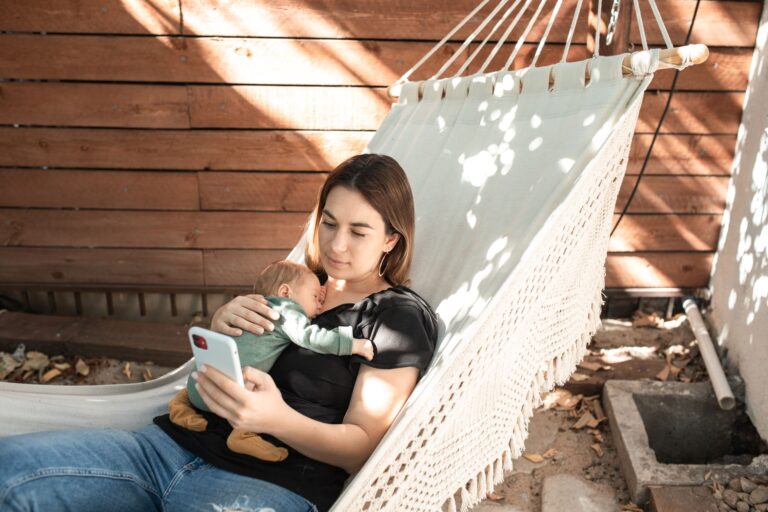
Separation anxiety is distress that appears when a child is separated from a parent or caregiver, marked by clinging, crying, and fear—and it's normal development in children under 3, peaking around 18 months. Most children ease into separations naturally by age 3 or 4; if it persists severely past elementary age or prevents school attendance, professional support can help.
The goal is to help a child build confidence that separations are temporary and survivable. This happens through small, consistent steps: predictable routines, calm goodbyes, and gradually increased time apart. Your own calmness matters as much as any strategy—children read your anxiety and mirror it—so managing your stress becomes part of easing theirs.
Table of Contents
- Is This Normal Separation Anxiety or Something More?
- How Gradual Exposure Reduces Fear
- Create Predictable Daily Routines and Transitions
- Master the Goodbye Ritual and What to Avoid
- Recognize How Your Own Anxiety Affects Your Child
- When and How to Seek Professional Help
- Understand Family-Based Cognitive Behavioral Therapy
- Consider Medication When Therapy Alone Is Not Enough
- Manage School Drop-Off and Preschool Transitions
- Daily Strategies That Make a Difference
- Frequently Asked Questions
Is This Normal Separation Anxiety or Something More?
Separation anxiety is a normal developmental milestone. According to Nemours KidsHealth and Mayo Clinic, separation anxiety typically peaks around 18 months and persists into early elementary years, with children showing distress, crying, and fear of being separated from caregivers, particularly during transitions to new environments like preschool or kindergarten. Between ages 6 months and 3 years, watching you leave is genuinely frightening for a child—they lack the understanding that you still exist when out of sight.
The difference between normal anxiety and a clinical disorder is duration and impact. A diagnosis of separation anxiety disorder requires symptoms to persist for at least one month and significantly impair daily functioning (eating, sleeping, school attendance), while normal developmental separation anxiety typically resolves by age 3-4 without intervention. A preschooler who cries at drop-off but settles quickly is typical; a school-age child who refuses to attend school for weeks is not.
Red flags suggesting clinical anxiety include panic-like symptoms such as racing heart or difficulty breathing, physical complaints that appear only before separation, or refusal to be in any room alone. If your child loses sleep, stops eating, or has nightmares about separation lasting weeks, mention this to your pediatrician. These patterns indicate anxiety beyond the typical range.
Most children outgrow normal separation anxiety without formal treatment. The pivotal shift happens around age 4, when children develop a stronger sense that you will return and can tolerate longer gaps. until then, your role is building confidence through consistency and showing, through your calm presence, that separations are survivable.
Age matters significantly in how separation anxiety shows up. Toddlers cry and cling; school-age children may develop stomachaches or school refusal; adolescents may experience panic about illness befalling a parent. What looks different across ages is often the same underlying fear: that something bad will happen during the separation. If symptoms have persisted beyond a month and are affecting school, friendships, or sleep, do not wait.
Early intervention is simpler than managing avoidance patterns that have solidified over time. A pediatrician can distinguish typical anxiety from a disorder requiring therapy.
How Gradual Exposure Reduces Fear
Desensitization works by slowly increasing separation time so your child's nervous system learns that separations are safe and survivable. Gradual exposure through short, controlled separations helps children become desensitized to separation fears; parents should consistently increase time apart as the child's comfort increases, while avoiding prolonged goodbyes that reinforce anxiety. Start with the smallest possible gap your child can tolerate—even two minutes—and repeat it until distress stops appearing.
A practical progression looks like: two minutes apart for three days, then five minutes for three days, then ten minutes for a week. Move at your child's pace; jumping steps usually triggers setbacks. The goal is reaching a gap where your child no longer shows anxiety before you leave or searches for you immediately after you return.
That signals their brain has learned the separation is routine and safe. Where you separate matters early on. Start in your home, where the environment feels familiar. Your child stays in one room playing with a toy while you step into another, returning before any escalation. This teaches the core message: you leave, the world keeps going, you return.
It's the safest way to learn the lesson. Once calm with short home separations, move to slightly longer gaps in the same setting. Then try leaving the room while someone trusted is present. Only after comfort builds in low-stakes situations should you move to external separations like childcare or preschool.
Each step prepares for the next. Many parents rush exposure because guilt or urgency feels pressing. Resistance means slow down, not push through. A child who is panicked is learning that separation is dangerous—the opposite of your goal. A child who feels mildly uncomfortable but safe is learning resilience. Track what triggers the most distress.
Is it bedtime? Morning school drop-off? Separations from a specific parent? Once you identify the trigger, you can practice smaller exposures to that specific scenario. Morning anxiety might improve fastest if you practice short morning separations on weekends before school-week pressure arrives.
Create Predictable Daily Routines and Transitions
Predictability is a child's most powerful anxiety buffer. Predictable daily routines—consistent mealtimes, sleep schedules, and transition rituals—reduce anxiety by helping children anticipate what comes next and providing a sense of control over their environment. When your child knows what comes next, they feel less helpless and more secure in uncertain moments.
Build structure into every transition. Bedtime is a separation anxiety peak for many children. A consistent routine might be: bath, story, song, cuddles, then lights out. The specific order matters less than absolute consistency. Your child's brain learns the pattern and relaxes into it. They know what comes next because they've lived it 50 times before.
Morning departures also need structure. A predictable drop-off ritual might be: breakfast, get dressed, read one story, shoes on, hugs and kiss, then "I'll pick you up after snack time." Repeat the exact sequence every day. The words become a map your child's nervous system follows. They stop having to wonder what's happening. Transitions are anxiety peaks for all children, and structure helps enormously.
Ten minutes before leaving for school, give a five-minute warning: "We're leaving in five minutes." Then at two minutes: "Two minutes until we go." This prevents the shock of surprise and gives your child's nervous system time to shift gears. Your own schedule matters. If mornings are chaotic—rushed, forgotten lunch boxes, last-minute scrambling—your child absorbs that stress even if you say reassuring words.
If mornings are calm, with time to spare, your child feels safe even in a transition. Children read your stress through your body. Visual schedules help older toddlers and preschoolers significantly. A chart showing pictures of the day's events—breakfast, preschool, snack, pickup, dinner—lets your child see what comes and when. Many children worry about being forgotten; seeing "pickup" on the schedule settles that fear concretely. A picture is more powerful than words alone.
Master the Goodbye Ritual and What to Avoid
The goodbye ritual is the single most powerful tool you have. Short, calm goodbyes with a consistent ritual (not prolonged farewells) help children feel secure; parents should remain confident, reassuring, and then leave promptly rather than delaying the transition. A three-minute goodbye done the same way every day is far more effective than a ten-minute goodbye full of reassurance.
Create a goodbye ritual and do it exactly the same way each time. Examples: a specific handshake, a hug and three kisses, or singing a two-line goodbye song together. Keep it short, predictable, and brisk. Your child's brain learns to expect it and regulates around that known quantity. What to avoid is equally crucial to what you do.
Do not sneak out—your child will become hypervigilant, always scanning for your disappearance. Do not linger and offer repeated reassurances ("You'll be fine… don't worry… I'll be back soon"). Do not come back after you've said goodbye; it teaches your child that distress makes you return. Do not express doubt. After the ritual, leave confidently and promptly.
If your child escalates—screaming, clinging—keep your body language calm and your voice level. "I know this is hard. I'm leaving now. Your teacher will help you." Then go. Returning signals your child's panic works, which prolongs the problem. The hardest part for parents is managing guilt and anxiety in the goodbye moment. If you hesitate at the door or look distressed, your child's brain reads confirmation: something bad is about to happen.
Your calm departure is the most reassuring thing you can do, more reassuring than any words. If your child cries, that is not a sign you're doing something wrong. Some children cry; others don't. Crying does not mean they won't be fine five minutes after you leave. Childcare providers see this regularly: a wailing goodbye followed by happy play within moments. The memory is real but the distress is brief.
Recognize How Your Own Anxiety Affects Your Child
Parental anxiety is one of the strongest predictors of child anxiety—often stronger than the child's inborn temperament. Parental anxiety directly influences child anxiety levels; parents who manage their own stress through self-care, exercise, and social connection model resilience and help their child feel more secure. If you're worried about separation, your child will sense it and mirror it back to you.
Notice your own anxiety triggers and sources. Do you worry your child might panic and feel abandoned? Do you fear judgment from teachers if your child cries? Do you feel guilty for working or needing time alone? These fears, while real and human, can be inadvertently communicated through tension in your body, hesitation in your goodbye, or anxious over-reassurance.
Self-care is not selfish; it's a parenting tool. When you exercise, sleep enough, maintain friendships, and manage stress, you're calmer. Your child feels that calmness and learns from it. A parent who appears anxious about separations teaches a child that separations are genuinely dangerous. A parent who appears calm teaches the opposite. If you have your own anxiety disorder, seek support for yourself.
Therapy or medication can make you more available to your child emotionally. Your mental health and your child's are connected in ways that feel abstract until you experience the difference that your own treatment makes. Some parents need to challenge their own beliefs about separation. Beliefs like "my child needs me constantly" or "something bad will happen if I'm not there" are often parental anxiety, not parental fact.
A child in the care of a trusted adult is safe. Practicing separations teaches them that you are reliable and that they can survive without you present. Talk to your partner or a trusted friend about your anxieties. Often naming them reduces their power. If separation anxiety in your child is triggering your own anxiety disorder, discussing this with your own therapist can help you separate your fears from your child's developmental needs.
Model confidence in your caregivers. If you seem doubtful about your child's teacher or babysitter, your child will feel unsure too. If you explicitly trust them and say so, your child learns to trust them. Your confidence is contagious.
When and How to Seek Professional Help
Contact your pediatrician if separation anxiety is affecting school attendance, sleep, or eating for more than a few weeks, or if your child has panic-like symptoms. Early intervention prevents avoidance patterns from becoming entrenched. A child who misses school for months due to anxiety is harder to treat than one who receives help within weeks.
Your pediatrician can rule out other medical causes (illness, thyroid dysfunction, sleep apnea) and assess whether anxiety meets the threshold for a formal diagnosis. They can refer you to a child psychologist or psychiatrist who specializes in anxiety disorders. This referral is often the hardest step parents take. Ask your pediatrician specifically about cognitive-behavioral therapy.
Cognitive behavioral therapy (CBT) resolves separation anxiety in approximately two-thirds of treated children, with 91-100% of 5- to 7-year-olds showing significant improvement. This means roughly two out of three children recover substantially, and younger school-age children respond exceptionally well. A good therapist will assess your child's specific triggers and severity, teach coping skills (breathing, self-talk), and work with you to practice exposures at home and in real settings.
Progress is measured with a clear plan to step up exposures gradually. Therapy is not quick; most programs run 12–20 sessions over several months. Insurance often covers therapy with a pediatrician's referral. If cost is a barrier, community mental health centers offer sliding scale fees. Some therapists offer virtual sessions, which can be more flexible for families managing schedules and anxiety itself.
A child avoiding school should start therapy before refusal becomes severe. Once a child has missed weeks of school, reintegration becomes a separate clinical challenge layered on top of treating the separation anxiety. Prevention is far simpler than recovery.
Understand Family-Based Cognitive Behavioral Therapy
Family-based CBT is the most evidence-supported treatment for childhood separation anxiety, especially in school-age children. Family-based CBT shows particular advantage for school-age children ages 8-13. This approach treats your child's anxiety and your role in maintaining it simultaneously. Both matter. In family-based CBT, the therapist works with both child and parent together. The parent learns to avoid reassurance loops—repeatedly reassuring your child does not reduce anxiety; it actually reinforces the idea that the situation is dangerous.
You learn to practice calm presence during your child's distress rather than rescue them from it. Your role shifts to consistently enforce exposures your child has agreed to, rather than allowing avoidance. You tolerate your child's discomfort without rushing to fix it. This is hard work because your instinct is to soothe. A skilled therapist coaches you through this.
The child learns why avoidance makes anxiety worse—it teaches their brain the feared situation is dangerous. They learn breathing and grounding techniques to tolerate mild anxiety. They learn that anxiety decreases naturally if you stay in the situation. They challenge anxious thoughts: "Something bad will happen" becomes "I've been apart from Mom before and I was fine." Sessions typically involve the child and at least one parent together.
A skilled therapist adjusts the balance—more child work for younger kids, more parent coaching for teens. The mix depends on what will help most. The work between sessions is crucial. A therapist might assign your child a weekly exposure and assign you to resist over-reassurance. These "homework" assignments are not punitive; they're how learning sticks.
Progress is not linear; setbacks happen. Consistency matters most.
Consider Medication When Therapy Alone Is Not Enough
Medication is reserved for moderate-to-severe separation anxiety, especially when a child's functioning is significantly impaired or therapy alone has not been sufficient. Selective serotonin reuptake inhibitors (SSRIs) are evidence-supported for moderate-to-severe separation anxiety disorder when combined with therapy; the American Academy of Child and Adolescent Psychiatry (AACAP) recommends medication alongside CBT for clinical-level cases. Medication is never a substitute for therapy; it is a tool to make therapy possible.
SSRIs take 4–6 weeks to begin working and may need dosage adjustments over that period. Common options include sertraline, paroxetine, and fluoxetine. Your child's psychiatrist will start at a low dose and increase gradually based on response. Patience is required before you see change. Potential side effects in children include activation (restlessness), nausea, or sleep changes early on.
These usually subside within a week or two. More rarely, SSRIs can increase suicidal thoughts in children, which is why close monitoring is essential. A psychiatrist should see your child every 1–2 weeks initially. Medication does not fix anxiety; it reduces the noise enough that your child can engage in therapy and practice exposures. Think of it as turning down the volume on panic so other work becomes possible.
A child on medication still needs to do the hard work of facing separations and learning they're survivable. Not every child with separation anxiety needs medication. Mild-to-moderate anxiety often responds well to therapy alone. Medication is most helpful when anxiety is so high your child cannot focus, or when school refusal is imminent or already underway.
If medication is recommended, ask your psychiatrist why this medication for your child specifically, what side effects to watch for and when to report them, how long your child might need to stay on it, and what the plan is for tapering once anxiety improves. Clear expectations prevent surprises. Psychiatrists are M.D.s or D.O.s with additional training; they can prescribe medication.
Psychologists hold Ph.D. or Psy.D. degrees and cannot prescribe in most states unless specially trained. Either can provide therapy, but different credentials matter for different services.
Manage School Drop-Off and Preschool Transitions
The first weeks of preschool or kindergarten are peak separation anxiety moments for many children. Preparation reduces distress significantly. Visit the classroom before the first day if possible. Let your child meet the teacher, see the toys, explore the bathroom, and practice the goodbye ritual in that space. Familiarity calms. Read books about starting school together.
Stories normalize the experience and give your child language for what to expect. Examples include "The Kissing Hand" and "Llama Llama Misses Mama." These stories show other children feeling scared and surviving—powerful reassurance. Talk matter-of-factly about what will happen: "You'll play, have snack, play more, then I'll pick you up after snack time." Do not ask "Are you worried?" repeatedly or offer endless reassurance.
Your calm, routine tone communicates that school is safe and normal. On the first day, arrive early so your child is not rushed and panicked before you even arrive. Do your goodbye ritual, then leave promptly. If your child has an especially hard time, coordinate with the teacher: "I'll pick up early tomorrow (20 minutes early) to build success, then we'll gradually extend time." Consistency and small wins matter.
Most children cry on day one and settle by day three. Some take weeks. This pattern is entirely normal; persistence is what matters. Avoid the trap of keeping your child home on hard mornings; that teaches their brain that distress works as an escape strategy. The teacher's role matters enormously. A warm, consistent teacher who validates feelings ("I see you miss your mom, and I'm here with you") without trying to fix them is ideal.
Avoid teachers who punish crying or shame children for being upset. The wrong teacher can entrench anxiety. Some preschools offer transition periods (half-days or limited hours weekly) specifically to ease separation. If yours does not, you can create your own: start with short days and extend time as comfort builds. Many children do better with structured, gradual increases than abrupt full-day starts.
Daily Strategies That Make a Difference
Small, daily practices compound over time. Maintain consistent sleep and meal schedules; hunger and tiredness intensify anxiety dramatically. A well-rested, well-fed child is more resilient and better able to manage transitions. Practice separations in low-stakes moments routinely. When your child is playing happily, step out of the room for 30 seconds and return. Praise them: "You played while I was gone.
That's brave." Frequent, tiny successes build confidence faster than you'd expect. Use a comfort object for separations—a stuffed animal, blanket, or photo. It's not a crutch; it's a bridge. Many children eventually stop needing it, but having it available when distressed is genuinely helpful and age-appropriate. Label your child's emotions in calm moments, not during distress.
"Sometimes it feels scary when we say goodbye. That feeling is called separation anxiety. Your body thinks something bad might happen, but it won't." Naming the experience reduces shame and isolation. Avoid threats or bribes. Saying "If you cry, there's no screen time" or "If you don't cry, you get a treat" creates pressure and backfires.
Separations will sometimes be hard; accept that rather than trying to eliminate distress through consequences. Celebrate small wins explicitly. Did your child go 15 minutes without asking when you're returning? Progress. Did they ask for their comfort object instead of clinging? A coping skill. Mark these moments positively without over-celebrating in a way that suggests distress was expected.
Keep a simple log of progress over weeks or months. When a hard week arrives, looking back at what your child has managed reminds both of you that improvement is real. Progress is the best motivator for continuing.
Frequently Asked Questions
When does separation anxiety usually start and stop?
Separation anxiety typically emerges around 6 months and peaks around 18 months. Most children naturally outgrow it by age 3 or 4. If it persists significantly past elementary school or prevents your child from attending school, professional support can help.
Is it normal for my 4-year-old to still cry at preschool drop-off?
Mild crying is normal. If your child settles within a few minutes and is happy when you pick them up, they're on the typical path. If crying persists for weeks, your child refuses to enter the classroom, or they ask not to go to school, mention it to your pediatrician.
Should I sneak away when my child isn't looking?
No. Sneaking out teaches your child to always watch for your disappearance, increasing hypervigilance. A consistent goodbye ritual, though harder in the moment, builds security long-term and is far more effective.
How long does therapy for separation anxiety take?
Most therapy programs run 12–20 sessions over several months. Cognitive-behavioral therapy shows the most evidence, with about two-thirds of children showing significant improvement. Progress depends on consistency and your participation between sessions.
Can medication help my child's separation anxiety?
Medication (usually an SSRI) can help children with moderate-to-severe anxiety, but only alongside therapy, not instead of it. It reduces anxiety noise so your child can engage in therapy and practice separations. It takes 4–6 weeks to work and requires close monitoring.
What if my child has panic symptoms—racing heart, trouble breathing—when I leave?
Contact your pediatrician. While normal separation anxiety involves crying and clinging, panic-like physical symptoms suggest clinical anxiety that may benefit from evaluation and therapy. Your child is not in danger, but professional support can help them.