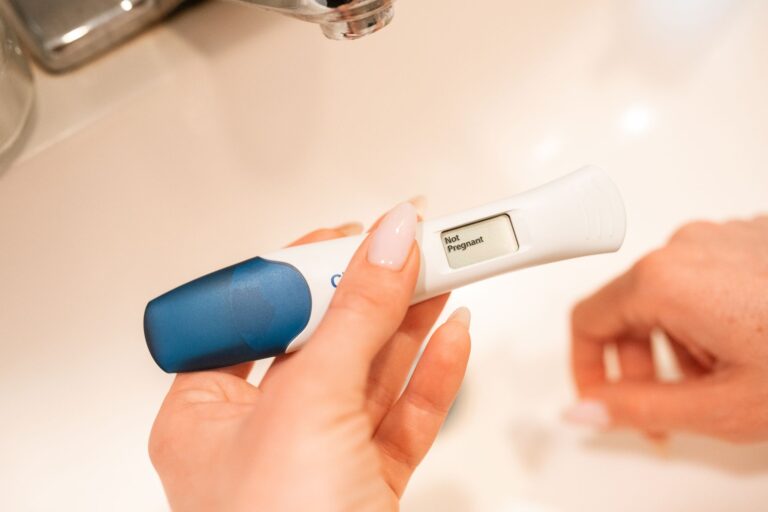
See a fertility specialist if you have been trying to conceive for one year without success, or six months if you are 35 or older. A fertility specialist (a reproductive endocrinologist) can identify whether a medical reason exists, evaluate both partners, and discuss treatment options that fit your goals.
Fertility declines gradually with age, and the pace accelerates after 35. Many couples conceive without medical help, but when months pass without pregnancy, a specialist can answer whether the delay is a timing issue, a treatable condition, or something that requires more advanced support. Seeking an evaluation early does not commit you to treatment—it gives you information to make decisions.
Table of Contents
- Age-Based Timing for First Consultation
- Why Age and Ovulation Patterns Matter
- Reasons to Seek Help Before the Standard Timeline
- What Happens During an Initial Consultation
- Common Diagnostic Tests and What They Show
- Male Factor Fertility Assessment
- Treatment Options Overview
- Preparing Emotionally and Practically for Treatment
- Understanding Costs and Insurance Coverage
- When to Seek a Second Opinion
- Frequently Asked Questions
Age-Based Timing for First Consultation
The standard recommendation is to see a fertility specialist after one year of unprotected intercourse without pregnancy. This timeline applies to couples under 35. If you are 35 or older, the threshold drops to six months, because fertility—particularly the ability to produce eggs without chromosomal abnormalities—declines more steeply after that age.
If you are over 40, do not wait six months. Schedule a consultation within two to three months of deciding to conceive or immediately if you have already been trying for several months. At 40 and beyond, time is genuinely a factor; a delay of months can mean the difference between a treatable condition and a harder path forward.
Some couples choose to consult earlier even if they meet the "normal" timeline criteria. If you have a known medical condition that affects fertility, a history of irregular periods, previous miscarriages, or concerns about your partner's health, an earlier appointment makes sense. There is no penalty for seeking evaluation sooner than the standard threshold. The "one year" or "six months" clock begins when you start actively trying to conceive—intercourse around ovulation, consistently, without contraception.
If you have been using apps or ovulation tests to time conception, that effort counts toward the timeline. Irregular timing and less frequent intercourse may extend the time before pregnancy occurs naturally, which does not automatically mean a problem exists. If you have been charting cycles and have a clear picture of your ovulation pattern, that information is valuable to bring to a specialist.
The more data you have about your cycle length, flow, and symptoms, the more efficiently a clinician can assess you. Cycle tracking apps and ovulation tests are optional—they speed up diagnosis but are not required to start.
Why Age and Ovulation Patterns Matter
Egg quality—the genetic and chromosomal health of eggs—declines with age, beginning gradually in the early 30s and accelerating sharply after 35. This is not because a woman's body is "breaking down"; it is a biological fact about how eggs are produced. A woman is born with all the eggs she will ever have, and they age alongside her body.
Younger eggs are more likely to divide correctly after fertilization, which means fewer miscarriages and lower risk of chromosomal conditions. This is one reason why age shapes fertility: a 25-year-old trying to conceive faces different odds than a 42-year-old, even if both are healthy. The difference is measurable but not absolute—many people conceive naturally at 40 or beyond, and age does not guarantee difficulty.
Ovulation patterns also matter. Regular cycles, typically 21 to 35 days apart, suggest ovulation is occurring on a predictable schedule. Irregular cycles, very heavy periods, or skipped periods can indicate that ovulation is infrequent or absent. These patterns help a specialist narrow down the cause of any delay. Time to conception also depends on male factor fertility, which does not change with age the way female fertility does.
Sperm production continues throughout life, though sperm quality can be affected by health, habits, medications, and infections. A partner's health history, previous testing, or known conditions are all relevant to whether you both need evaluation.
Reasons to Seek Help Before the Standard Timeline
Some couples should consult earlier than the age-based guidelines suggest. If you have been diagnosed with a condition that affects fertility—such as endometriosis, polycystic ovary syndrome (PCOS), a history of pelvic surgery, or abnormal pap smears—discussing conception timing with a specialist before you start trying is reasonable. If you have had multiple miscarriages (typically defined as two or more consecutive losses), an evaluation is warranted.
Recurrent pregnancy loss has many potential causes, some treatable and some not, and a specialist can help clarify what might be happening and what testing or treatment options exist. If your partner has a known fertility concern—low sperm count from a previous test, a history of cancer treatment, an undescended testicle, or a condition like cystic fibrosis that carries fertility implications—consulting a specialist before trying to conceive allows you to plan.
If you have used hormonal contraception for many years and are concerned about delayed return to fertility, or if you have other medical conditions (diabetes, thyroid disease, autoimmune conditions), discussing your specific situation with a reproductive specialist can clarify what to expect. If you are in a same-sex relationship or are planning to use a donor (egg, sperm, or embryo) or a surrogate, consulting a fertility clinic is essential. These paths have specific medical and legal steps, and a clinic can guide you through the process from the start.
What Happens During an Initial Consultation
Your first visit to a fertility clinic typically includes a detailed medical and reproductive history for both partners. The specialist will ask about cycle regularity, menstrual flow, any pain with periods or intercourse, previous pregnancies or miscarriages, contraception history, and lifestyle factors like smoking and alcohol use. For your partner, questions will cover sexual function, previous fertility testing or treatment, medical history, and any known conditions affecting sperm.
You will be asked about when you started trying to conceive, how frequently you have intercourse, and whether you have been using ovulation tracking or any fertility supplements. The clinician may also ask about stress, sleep, diet, and exercise—not to blame you for any delay, but because some factors genuinely affect fertility and are worth addressing.
A physical examination typically includes a pelvic ultrasound to visualize your ovaries and uterus, check for cysts or fibroids, and assess ovarian reserve (a rough measure of the number of eggs remaining). This ultrasound is not painful, though it is slightly uncomfortable for some. The exam may also include a general physical and, for your partner, an examination of the genitals and a discussion of reproductive history.
The specialist will review your insurance coverage, discuss what testing they recommend, explain the timeline, and talk about options if testing reveals a problem. Some clinics offer financial counseling at the first visit; others handle cost questions separately. Be direct about what you can afford and what your insurance covers—these details shape what testing and treatment options make sense for you.
Not all initial visits lead immediately to extensive testing. Sometimes the history and exam suggest the problem might resolve with timing advice or lifestyle changes. Other times, baseline testing is ordered right away. Your specific situation determines the pace.
Common Diagnostic Tests and What They Show
If irregular periods or missing ovulation is suspected, blood tests for hormones—including FSH (follicle-stimulating hormone), LH (luteinizing hormone), and prolactin—help clarify whether ovulation is occurring. These tests are usually drawn early in the cycle (days 2 to 5). Thyroid function and androgen levels may also be checked, since thyroid disease and elevated androgens can interfere with ovulation.
An ovulation predictor test or a progesterone level (drawn about one week before the expected period) can confirm whether ovulation is happening. Some clinics recommend tracking basal body temperature or using ovulation apps for one to two cycles before the first visit, which gives the clinician useful information. An ultrasound can reveal structural problems: fibroids (benign growths inside or on the uterus), polyps, scar tissue (adhesions), or irregularities in the shape of the uterus.
Ovarian cysts are common and usually not concerning; the specialist will explain if any finding needs attention or follow-up. A hysterosalpingogram (HSG) is an X-ray test with dye injected through the cervix to check whether the fallopian tubes are open and to visualize the uterine cavity. It is done in the days after your period ends and typically takes 15 to 30 minutes.
Some people experience cramping; others have minimal discomfort. Results are available immediately or within a day. For your partner, semen analysis is a standard first step. This test measures sperm count, movement (motility), shape (morphology), and volume. A single low result does not confirm infertility; the test may need to be repeated, since sperm production varies.
The sample is typically collected at the clinic or at home and brought in within an hour. Additional tests depend on your history and initial results. These might include genetic testing, testing for infections, or advanced imaging if structural abnormalities are found. Your specialist will explain which tests they recommend and why.
Male Factor Fertility Assessment
Male factor infertility accounts for a significant portion of couples' fertility difficulties. Common reasons include low sperm count (oligospermia), poor sperm movement (asthenospermia), or abnormal sperm shape (teratospermia). These conditions can coexist or occur alone. Semen analysis results are reported as counts (millions per milliliter), motility (percentage moving), and morphology (percentage with normal shape). The lab will also note if the sample has a normal pH, viscosity, and volume.
Current guidelines consider a count below 15 million per milliliter, less than 40 percent motility, or less than 4 percent normal morphology as below typical range. Low sperm counts can result from infections, heat exposure (frequent hot baths or saunas, tight underwear), smoking, alcohol use, certain medications, or genetic factors. Improving general health—stopping smoking, limiting alcohol, maintaining a healthy weight, reducing stress, and avoiding heat exposure—can improve sperm quality over a few months.
In some cases, a urologist specializing in male fertility may need to evaluate your partner. This can include a physical examination, detailed medical history, and sometimes imaging or genetic testing. Conditions like a varicocele (enlarged veins in the scrotum) are treatable and can improve sperm quality. Erectile dysfunction or other issues with intercourse timing and frequency should be discussed openly with the specialist. These are common concerns and are often addressable with straightforward strategies or, if needed, medication.
Treatment Options Overview
Treatment depends entirely on what testing reveals. If no clear cause is found after basic evaluation, a couple may be diagnosed with "unexplained infertility." In this situation, time, lifestyle changes, or fertility treatments like intrauterine insemination (IUI) or in vitro fertilization (IVF) are options to discuss. If ovulation is absent or infrequent due to PCOS, thyroid disease, or other hormone imbalances, medication can often restore regular ovulation.
Metformin is sometimes used for PCOS; other medications directly stimulate ovulation. These treatments are typically tried first because they are less invasive and less expensive than assisted reproductive technology. Intrauterine insemination (IUI) places processed sperm directly into the uterus around the time of ovulation. This is sometimes paired with ovulation-stimulating medications. IUI is less invasive than IVF and less expensive, but success rates depend on age, egg quality, and sperm quality.
In vitro fertilization (IVF) involves removing eggs, fertilizing them in a lab, and transferring an embryo into the uterus. IVF can overcome many barriers to conception and is often recommended when other treatments have not worked or when a specific condition—such as blocked tubes or severe male factor infertility—makes it the most logical first step.
Surgical options exist for some problems: removing fibroids, treating endometriosis, or correcting a uterine abnormality. Whether surgery is recommended depends on the specific condition, your age, and your overall fertility picture. Donor egg, donor sperm, or gestational surrogacy are paths some couples pursue. These options have their own medical, legal, and ethical dimensions; a fertility clinic can explain what is involved.
Preparing Emotionally and Practically for Treatment
A fertility evaluation and any subsequent treatment can be emotionally taxing. Months of testing, a diagnosis of infertility, or treatment cycles with uncertain outcomes can trigger grief, anxiety, and strain on a relationship. Many clinics offer counseling or support groups; ask whether yours does and consider taking advantage. Some people find that understanding the biology—knowing what is being tested, why, and what the results mean—reduces anxiety.
Others find that having a clear plan forward helps them feel less passive. Talk with your partner about what kind of support each of you needs and what information you want to receive. Treatment timelines vary. Basic testing might take two to four weeks. If treatment is recommended, a cycle might take four to six weeks or longer, depending on the approach.
Understanding the timeline helps you plan work, childcare, and other responsibilities. Not all treatment attempts succeed on the first try. Having realistic expectations—understanding that multiple cycles are sometimes needed—protects your emotional resilience. Your specialist should discuss success rates for your specific situation and what "success" means (pregnancy, live birth, number of attempts typically needed). Taking care of your physical health supports fertility and overall well-being.
Sleep, exercise, stress management, and nutrition all matter. Extreme dieting or excessive exercise can be counterproductive; balance and consistency are what support fertility.
Understanding Costs and Insurance Coverage
Fertility testing and treatment can be expensive. Costs vary widely by region, clinic, and type of treatment. A single cycle of IVF can cost $12,000 to $20,000 or more; less intensive treatments like ovulation stimulation or IUI cost less but still represent a significant expense. Insurance coverage for fertility care is uneven. Some insurance plans cover diagnostic testing but not treatment; others cover IUI but not IVF.
Some states mandate that insurance plans cover some fertility services, while others do not. Review your policy or call your insurance company to understand what is covered, what requires pre-authorization, and what counts toward your deductible. Many fertility clinics offer financial counseling and can estimate costs for your specific plan. Some offer payment plans, discounts for multiple cycles, or shared-risk programs (you pay a flat fee for a certain number of cycles, and if none result in a live birth, you get a refund).
These programs have eligibility criteria and are not right for everyone. Employer-sponsored fertility benefits are becoming more common. Ask your employer's HR department whether fertility treatment is covered under your health plan or offered as a separate benefit. Some companies offer reimbursement for some or all of the cost. Grants and loans specifically for fertility treatment exist through nonprofits and private lenders.
Some employers also offer assistance. Researching these options before treatment begins gives you a clearer picture of what you can afford.
When to Seek a Second Opinion
If your specialist recommends a treatment plan that feels aggressive, expensive, or uncertain, seeking a second opinion is reasonable. A second opinion does not imply distrust; it is a standard practice and most clinics expect patients to do this. If testing reveals a diagnosis you do not understand or do not agree with, ask for clarification from your current specialist.
If their explanation does not satisfy you, a second opinion from another clinic can help you feel more confident in the direction forward. If you have completed one or more treatment cycles without success and your specialist is unable to explain why, exploring a different clinic's perspective is worth considering. A fresh set of eyes might identify something missed or suggest a different approach.
If you are considering a more invasive or expensive treatment—like IVF when you have not tried IUI, or surgery when medication might work—consulting another specialist can help you weigh the trade-offs. Second opinions do not need to come from a different hospital or health system. They can come from another reproductive endocrinologist in your area or, if you prefer, from a specialist at a major academic medical center with fertility expertise. Most clinics will transfer your records on request.
Frequently Asked Questions
What is the difference between a gynecologist and a fertility specialist?
A gynecologist provides general reproductive care, including annual exams and contraception. A fertility specialist (reproductive endocrinologist) has additional training in conditions affecting conception and pregnancy loss, and in treatments like IUI and IVF. Your gynecologist can evaluate for common fertility problems and refer you to a specialist if needed.
How long does it usually take to get pregnant after seeing a specialist?
It varies. If ovulation is restored with medication, pregnancy can occur within one to three cycles. If IUI is recommended, success is typically evaluated after three to six cycles. IVF cycles take about four to six weeks from start to pregnancy test. Success also depends on age, the underlying cause of infertility, and individual factors.
Can I get pregnant naturally if I have been diagnosed with infertility?
Yes. "Infertility" means a couple has not conceived after one year of trying (or six months if 35 or older), not that natural pregnancy is impossible. Some couples diagnosed with infertility conceive naturally, especially after successful treatment or while waiting for an appointment. Others benefit from medical intervention.
Do I need to stop trying to conceive naturally while pursuing treatment?
No. You can continue having intercourse during treatment cycles, though your specialist may recommend timing around the treatment (for example, not having intercourse during the egg retrieval recovery period in IVF, or timing intercourse with IUI procedures). Discuss this with your clinic.
What if my insurance does not cover fertility treatment?
Ask your clinic about payment plans, discounts for multiple cycles, or shared-risk programs. Some nonprofits offer grants. Some employers offer fertility benefits separate from health insurance. Medical loans exist for fertility treatment. Research your options before committing to treatment so you can plan financially.
How much does a fertility consultation cost?
An initial consultation typically costs $300 to $600, depending on the clinic and region. Some insurance plans cover this; others do not. Call your clinic ahead of time to confirm the cost and whether your insurance will cover it.