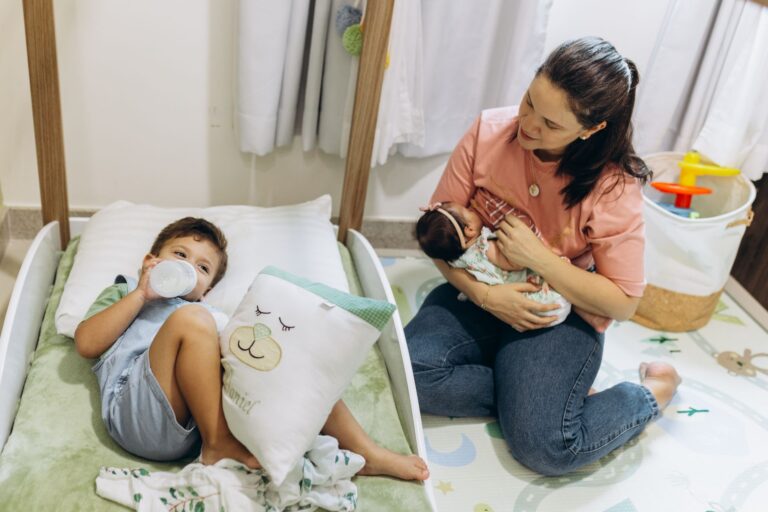
Yes, you can start potty training before age 2—some children show readiness signs by 18 months—but it is uncommon, requires high parental consistency, and works differently than training a 2.5- or 3-year-old. Most children are not developmentally ready until closer to age 2.5 or 3, when they have both the physical capability and the cognitive awareness to recognize and communicate the need to use the toilet. Starting early is not inherently wrong if your child shows clear signs and you are prepared for a much slower process with frequent setbacks. This article will help you understand what readiness actually looks like, what happens when you start before most children are ready, and how to decide whether early training makes sense for your family.
Table of Contents
- What Early Potty Training Actually Means
- Physical and Developmental Readiness Before Age 2
- What Happens When You Start Training Too Early
- Signs Your Under-Two-Year-Old Is Ready to Start
- Deciding Whether to Start Before Age 2
- What Early Training Actually Looks Like Day to Day
- Methods and Approaches That Work Best
- How Early Training Differs From Training at Age 2.5 or 3
- When to Pause, Stop, or Change Course
- Common Concerns and When to Involve Your Pediatrician
- Frequently Asked Questions
What Early Potty Training Actually Means
Potty training before age 2 looks very different from the process at age 3. At 18 months, your child cannot reliably tell you they need to go, cannot hold their bladder or bowel for long, and may not understand cause and effect yet. What parents often call "early potty training" is actually infant toilet communication (sometimes called elimination communication) or timing-based practice rather than true training.
With timing, a parent watches for patterns in when a baby typically urinates or has a bowel movement, then places the child on the toilet or potty at those windows. You are watching the child's schedule, not waiting for the child to ask. This requires multiple daily attempts, close observation, and celebration of successes—but many of them happen by chance, not conscious effort from the child.
The difference between 18 months and 2.5 years is enormous developmentally. By 2.5 or 3 years old, most children can stay dry for two hours, recognize the feeling before they go, communicate the need, and understand that the toilet is where they should go. They also care about staying clean and earning your approval. None of this is firmly in place at 18 months.
If you begin before age 2, expect the process to take a long time—often 12 to 24 months—with many accidents and reversals. Dryness at night typically does not happen until much later, even in children trained early. Some parents find this gradual approach works for them; others find it exhausting without clear progress. The term "potty training" itself is misleading at this age.
You are introducing the toilet and building a routine habit, but the child is not yet training themselves. The mental and physical skills that let children self-initiate and complete the process independently come later.
Physical and Developmental Readiness Before Age 2
your child's physical ability to control their bladder and bowels develops on its own timeline and cannot be rushed. Bowel control usually develops before bladder control, and staying dry at night is the last skill to emerge—often not until age 4, 5, or even later, regardless of when daytime training started.
Around 18 months, some children show the early signs that make training possible, though not yet easy. These include staying dry for an hour or two, showing interest in the bathroom, being able to follow a two-step instruction, and recognizing that they are peeing or pooping (often by commenting on a wet diaper). None of these is sufficient on its own; you need several together.
One key skill is the ability to recognize the sensation and communicate about it. Before 18 months, this is rare. Your child might tell you after the fact—"poop" while pointing at a wet diaper—but this is still helpful feedback. True readiness includes noticing the urge before it happens and being able to tell you in time.
Muscle control in the sphincter (the muscle that holds urine) is gradually developing, but at 18 months it is still immature. Accidents are not a failure; they are normal neurological development. Expecting a child under 2 to stay consistently dry is setting up both of you for frustration. Nighttime dryness depends on both bladder capacity and the production of a hormone (antidiuretic hormone) that concentrates urine at night.
This is not something training can influence. Some 2-year-olds have it; many do not until school age. Do not view nighttime dryness as a goal before age 3 or 4, regardless of daytime progress.
What Happens When You Start Training Too Early
Starting potty training before your child is ready does not speed up the underlying developmental process, but it can create stress, shame, and power struggles. If a child is forced or pressured to use the toilet before they understand or control their body, they may develop anxiety around toileting that lasts years.
Some parents who start very early report that their child resists the toilet, hides to poop, or regresses when a new sibling arrives or life changes. These reactions are not character failures; they are signs that the approach was ahead of the child's capacity. A child who is pushed too fast may also develop constipation—avoiding pooping to resist the pressure—which then makes toileting genuinely harder.
Accident shame is a real risk. If you or other caregivers react with frustration or disappointment to accidents, the child learns that their body is not trusted and that they have failed. This is especially damaging before age 3, when children cannot yet control most accidents and cannot reason about intentions. Patience and neutrality are essential, and many parents find them harder to maintain over a long, slow process.
There is also the practical burden on you. Starting potty training before age 2 requires your active participation in dozens of bathroom visits daily for months or years. If your stress level is high or your schedule does not allow for this, the training becomes a source of daily conflict. Your wellbeing matters too. Delaying training is not harmful.
Children who are trained at 3 or 4 usually learn quickly because they are developmentally ready. They do not arrive at kindergarten in diapers. The small differences in toilet independence before age 3 disappear within a year or two.
Signs Your Under-Two-Year-Old Is Ready to Start
If you do want to introduce toilet communication or early practice with your under-2-year-old, look for a constellation of signs rather than waiting for one. Your child should show interest in the bathroom or adult toileting, stay dry for at least an hour at a time fairly consistently, and be able to follow a simple instruction like "sit down." The child should also be able to tell you after the fact—or during—that they are going.
This might be a word, a gesture, or a grunt. They do not need to ask you in advance yet, but awareness is starting. Some children point to their diaper and say a word; others squat or show clear concentration during pooping. Your child should be developmentally calm and not in a phase of strong power struggles or defiance.
Potty training is a moment when the child's own body is involved, and if the relationship is already tense, the toilet becomes another battleground. Schedule is another factor. You need to be home and present most of the time, able to watch your child closely and respond quickly to signs. If you are returning to work or another major transition is happening, waiting is often the better choice.
Your child should show genuine willingness to try sitting on the toilet (even clothed at first) or the potty chair. Forcing a terrified or resistant child onto a toilet will make them hate it. Willingness to try is different from understanding what it is for, and that gap is important to recognize.
Deciding Whether to Start Before Age 2
Starting potty training before age 2 is a choice, not a necessity. Some parents do it for practical reasons: another baby coming, returning to work and wanting to reduce diaper costs, or cultural norms in their family or community. Others feel pressure but do not actually want to start yet, and that hesitation is worth listening to.
Ask yourself honestly: am I doing this because my child is showing clear readiness signs, or am I doing this because I think I should? If the latter, waiting is perfectly reasonable. Diapers are temporary. Toileting stress can last. If you do decide to try, commit to a low-pressure approach. Use a small potty chair placed in a common room, not a toilet seat yet.
Dress your child in clothes that are easy to remove—or no pants indoors if weather permits. Never force sitting; make it optional. Celebrate successes, even accidental ones. Set a realistic timeline in your mind. If you are starting at 18 months, plan to spend at least a year on this process. You may see progress, then regression, then progress again.
Some months will feel like nothing is happening. This is normal. Prepare other caregivers—family members, daycare providers—for consistency. Early training only works if the same approach is used everywhere. If caregivers pressure the child or use a different method, the child becomes confused and training breaks down. Finally, decide in advance when you will pause or stop.
If your child resists strongly, if you find yourself frustrated daily, if life gets busier, or if the process stops progressing for months, stopping is the right call. You can always restart at age 2.5 or 3 when it is easier for everyone.
What Early Training Actually Looks Like Day to Day
If you are attempting early potty training, most of your effort happens during the day at home. You are looking for patterns: does your child usually go within 15 minutes of waking? After meals? Before bed? Within 30 minutes of finishing a snack? Once you identify a pattern, you place the child on the potty chair at those times.
You do not force; you invite. "Let's go sit on the potty after breakfast." Sometimes the child sits, sometimes they refuse. If they sit and something happens, great. If nothing happens, you let them up with no disappointment shown. If they refuse, you do not push. Many successes in early training are actually timing—you have learned the pattern, not the child having learned to ask.
You might see your child go to the potty chair on their own occasionally, usually after showing a clear sign like squatting or concentrating. Celebrate that moment, but do not expect it to happen consistently for a long time. Accidents happen constantly. Your child's body releases urine or poop throughout the day, and they will not make it to the potty every time or even most times.
You will change clothes and clean up many times daily. Calm, matter-of-fact responses—no scolding, no drawn-out clean-up lectures—help the child eventually understand cause and effect without shame. Nighttime is usually not part of early training. Your child sleeps in a diaper or pull-up at night, and that is correct. If they happen to wake dry, that is fine, but you do not use nighttime as a measure of training success.
Bowel training often comes before bladder training, but not always. Some children are months ahead on one, behind on the other. This variation is completely normal. You may notice your child asks to sit when they need to poop long before they show any awareness of needing to pee.
Methods and Approaches That Work Best
The most successful early potty practice is observation-based, not force-based. You watch your child for their own patterns and signs, then offer the potty at those times. The child is not asked to do anything unusual; you are just providing the toilet at moments they are likely to use it. Some parents use a small potty chair instead of a toilet seat because it feels less intimidating and gives the child independence to sit and get up on their own.
Others use a seat reducer on the adult toilet with a step stool. Neither is inherently better; it depends on your child's size and comfort. Positive reinforcement—a specific comment like "your pee went in the potty"—works better than pressure. Your tone should be calm and matter-of-fact. Enthusiastic celebration can actually backfire, making the child perform for approval rather than learn the actual skill.
Reading books about the toilet can help normalize it, though do not expect a child under 2 to understand what a story means about their own body. Books are more for you to know what to expect and to see that others use toilets. Some families use a bare-bottom time indoors during warm months, letting the child go pantless so they can sit quickly if they need to.
This can speed awareness of where the action is happening. Others find it messy and do not bother. Either is fine. Consistency across all caregivers is important. If your child goes to daycare, talk to providers about whether they are willing to incorporate potty time into their routine with the same low-pressure approach. If they are not on board, the mixed messages confuse the child and slow progress.
How Early Training Differs From Training at Age 2.5 or 3
The biggest difference is initiation. At 3 years old, most children can tell you they need to go before the accident happens. They have the bladder control, the awareness, and the language. At 18 months, you are initiating every sit, every time. The child is still dependent on your memory and observation. Learning speed is also different.
A 3-year-old who is ready usually shows visible progress within weeks or a few months. An 18-month-old learning takes a year or longer, with much slower visible change. Both timelines are normal for their age, but the difference is enormous. The ability to follow instructions improves significantly between 18 months and 3 years. By 3, a child can understand "go to the potty, sit down, wipe, flush, wash" as a sequence.
An 18-month-old is learning these steps one at a time, often over months. Communication also changes. Your 18-month-old might say one word; your 3-year-old can say "I need to go potty." This makes the whole process less dependent on your observation and more on their self-advocacy. Motivation is different too. An older toddler or preschooler often cares about being like older siblings or wearing underwear.
An 18-month-old usually does not have this social motivation yet. You are relying on your celebration and consistency, not the child's own desire. Nighttime control happens on its own timeline and does not correlate strongly with daytime training age. Training at 18 months does not predict earlier nighttime dryness. Your child may be daytime trained at 2 and still in pull-ups at night until age 4 or 5.
When to Pause, Stop, or Change Course
If your child is resisting the potty strongly—screaming, hiding, refusing to sit—this is a sign the approach is not working. Resistance before age 2 often means the child is not ready yet. Pausing for three to six months and trying again later usually resolves the power struggle completely. If you find yourself frustrated, annoyed, or angry during potty routines, that is a signal to stop.
Your child senses your stress, and it makes the process harder for both of you. It is better for everyone if you step back. If progress plateaus for two or three months with no improvement or regression, your child might need more time. Continuing to push rarely breaks through a plateau; time and maturity do.
Switching to pull-ups or diapers for a while usually feels like failure but often resets the situation so that training can restart more easily later. New sibling arrivals, moving, starting childcare, or other major stress in the family are good reasons to pause or delay training. Your child's emotional regulation is stretched thin already; adding toileting learning on top of big change is unfair to them.
If your child is sick, constipated, or in pain during toileting, stop immediately. Pain associations with the toilet can take years to undo. Have your pediatrician evaluate constipation before continuing. Some children show signs of readiness at 18 months but are better trained at 2.5 or 3. This is not a failure or a lost opportunity. The skills they would have learned slowly over 18 months can be learned in 8 to 12 weeks at the later age, with far less stress.
Common Concerns and When to Involve Your Pediatrician
If your child is pooping in pants well into the toddler years, this is often a sign of withholding or constipation, not laziness. Withholding usually develops in response to power struggles over toileting. If this happens, talk to your pediatrician before continuing training. They can assess whether there is a medical component and recommend appropriate next steps.
Regression after initial progress is extremely common and normal, especially around age 2 to 3. New sibling arrivals, schedule changes, or starting preschool often trigger regression. Do not shame the child or assume they are lazy. Give them a few months and try again. If your child shows signs of anxiety about the toilet—fear of flushing, fear of sitting, fear of the bathroom—take this seriously.
Forcing through the fear makes it worse. Back off, let the child observe others using the toilet without pressure, and revisit it later. Nighttime accidents after age 4 are also normal and do not mean training failed. About 20 percent of children are not reliably dry at night by age 5, and this continues to be normal into early school age.
Pull-ups or waterproof covers are reasonable long-term solutions; they are not a step backward. If you have concerns about your child's development, physical growth, or ability to follow instructions, mention them to your pediatrician before starting toilet training. Underlying developmental delays might mean waiting is the better choice.
- —
Frequently Asked Questions
Can a child actually be fully potty trained before age 2?
Not completely. True training means the child recognizes they need to go, tells you, and uses the toilet independently—skills most children do not have until age 2.5 to 3. Before age 2, you can introduce the toilet and practice during predictable times, but the child will not be driving the process.
What's the difference between elimination communication and potty training?
Elimination communication means you watch your child's body signals and offer the toilet at likely times. You are observing; they are not yet asking. True potty training means your child initiates and communicates the need themselves, which comes later.
Will my child stay in diapers longer if I wait until age 3 to train?
No. A 3-year-old who is ready usually learns very quickly—often within a few weeks or months. Early training that takes 18 months does not result in earlier independence; it just stretches the process out.
What if my child seems ready at 18 months?
Some signs of early readiness include staying dry for an hour or two, showing interest in the bathroom, and recognizing when they are peeing or pooping. If you see several of these, introducing the toilet is safe. Just expect the process to be slow and full of accidents.
Should I start potty training before a new baby arrives?
This depends on your child's readiness and your energy level. If your child is close to 2.5 or 3 and clearly ready, it might be worth starting a few months before the baby. If your child is under 2 and shows only mild interest, waiting until after the baby is a few months old is often easier. Timing matters more than rushing.
My child has strong bowel movements at the same time each day—can I train around that?
Yes. Bowel patterns are often predictable, especially in young children. You can place your child on the potty at that time and celebrate when something happens. This is often the first success in early training, as bowel control comes before bladder control for many children.