Most babies laugh for the first time between 3 and 4 months old, usually in response to physical silliness like peek-a-boo or funny sounds. The sense of humor continues to develop through childhood, evolving from simple physical comedy to wordplay, irony, and abstract jokes—a progression that tracks closely with how children's brains grow and what they understand about the world around them.
Humor development is not sudden or uniform. Each child reaches milestones at their own pace, and what makes one toddler giggle leaves another unmoved. Understanding what's typical at each stage helps you recognize your child's progress, choose activities they'll actually enjoy, and know when something warrants a conversation with a pediatrician.
Table of Contents
- When Babies First Laugh
- Toddler Humor and Physical Comedy
- The Cognitive Skills Humor Requires
- Preschool Humor and Growing Understanding
- School-Age Humor and Wordplay
- Humor and Language Development
- When Humor Development Might Raise Concerns
- Encouraging Laughter and Humor
- Humor in Different Situations and Moods
- When Humor Is a Sign of Growing Development
- Frequently Asked Questions
When Babies First Laugh
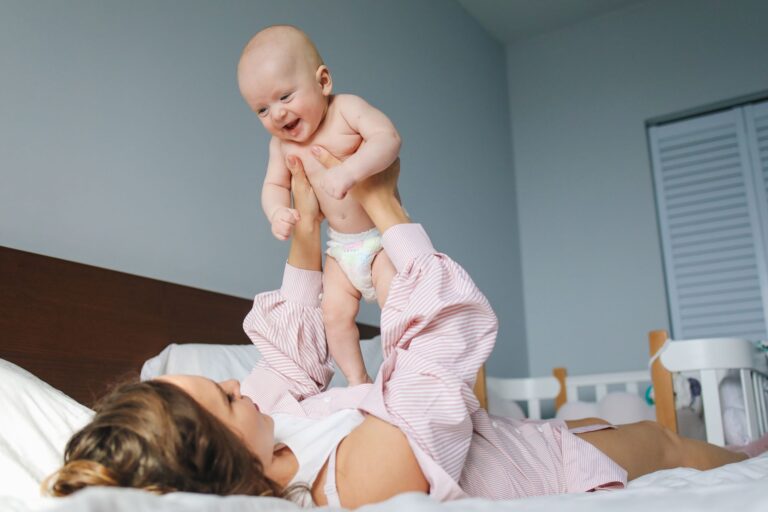
newborns and very young infants don't laugh yet, though they may smile in response to hunger satisfaction or contentment. These early grins are reflexive, not social. Around 3 to 4 months, babies typically begin to laugh aloud—usually a quiet chuckle or chortle—in response to stimulation like tickling, being lifted suddenly, or exaggerated facial expressions.
A 4-month-old who laughs at peek-a-boo is responding to the surprise and the familiar face reappearing, not understanding the game conceptually. The laughter comes from the physical sensation and the repeated pattern. By 6 months, babies laugh more readily and louder, and they may anticipate the funny moment when a parent is setting up a familiar game.
Some babies laugh easily and frequently by 5 or 6 months; others are quieter and respond more to calm activities. Both are typical. A baby who does not laugh by 6 months does not automatically indicate a problem, but if your baby shows no social smiling, eye contact, or response to your voice by 4 to 6 months, mention it to your pediatrician.
Laughter at this stage is contagious—when a parent laughs, a baby often laughs in return, even if they were not amused by what happened. This back-and-forth builds connection and teaches the baby that laughter is social and joyful. Babies also laugh at unexpected things more than predictable ones, suggesting they notice when something breaks the pattern they expect.
Toddler Humor and Physical Comedy
Between 1 and 2 years old, toddlers find humor primarily in physical mishaps and unexpected actions. A parent pretending to fall, making exaggerated silly sounds, or putting on a hat backward generates delighted laughter. Toddlers may also laugh at their own physical humor—falling on purpose, making raspberry sounds, or throwing food (though the second can be less funny when it lands on you).
Repetition becomes funny at this age. Toddlers enjoy repeated games and routines, and the anticipation of what happens next is part of the humor. A toddler who laughs every time you say "pop!" after counting to three is enjoying the predictability, not because the word is inherently funny. Around 18 to 24 months, toddlers begin to notice incongruities—things that do not fit.
A parent putting on a baby's sock is ordinary; a parent putting on a huge adult shoe is funny because it breaks the expected pattern. This emerging ability to notice "that's not right" is an early step toward humor that relies on understanding context and expectations. Toddlers are also learning that they can cause laughter in others.
A toddler who repeats a silly action to get you to laugh again is beginning to understand humor as social. They are learning that certain behaviors produce a specific response, and they seek that response. This is very different from a newborn's automatic smile.
The Cognitive Skills Humor Requires
Humor development is linked to growing cognitive abilities—specifically, understanding cause and effect, remembering patterns, and noticing when reality differs from expectations. A 2-year-old's humor is mostly about physical surprises. A 4-year-old can laugh at a joke that plays with words. A 6-year-old can understand a joke that requires knowing a rule and then breaking it.
To find something funny, a child must first understand what "normal" is in a given situation. If a child does not know that cats usually meow, they cannot find it funny when a cat says "hello." This is why young children sometimes laugh at jokes they do not actually understand—they are responding to an adult's laughter or tone, not the humor itself.
Around 2 to 3 years old, children begin to understand pretend play. They can enjoy humor rooted in pretend situations—a stuffed animal "talking" is funny partly because they know the animal is not actually speaking. This requires holding two truths at once: the animal is not real, but let's pretend it is. By age 3, many children understand simple cause and effect well enough to anticipate humor.
They know that certain actions lead to certain outcomes, and they can be surprised or delighted when something unexpected happens instead. This is why knock-knock jokes work for preschoolers: the pattern is established, and then it breaks in a predictable but still-surprising way.
Preschool Humor and Growing Understanding
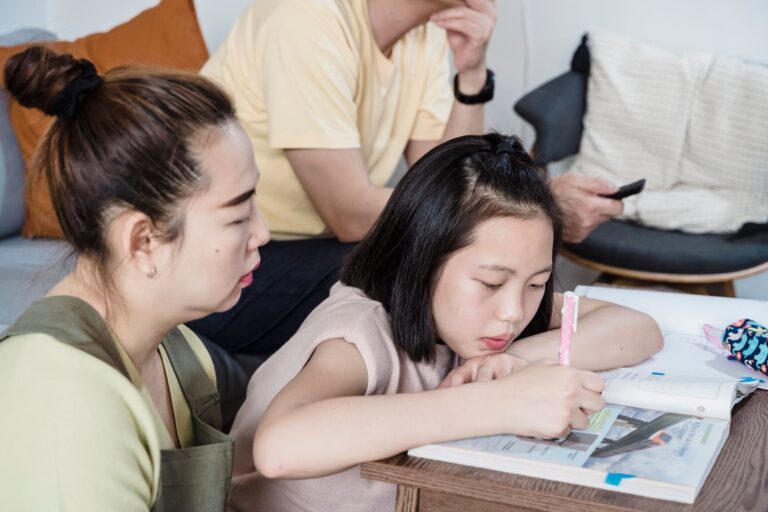
Preschoolers (ages 3 to 5) laugh at a wider range of humor, including silly words, funny voices, and exaggeration. They enjoy animal sounds, characters doing unexpected things, and bodily functions—bathroom humor emerges around age 3 and persists for years. This is developmentally normal and does not mean your child is obsessed with potty matters; it means they are noticing real things about bodies and finding the topic delightfully rude.
Around age 4, many children start to enjoy very simple jokes and riddles, though they often do not understand the actual punch line. A 4-year-old might laugh at "Why did the chicken cross the road?" without grasping the joke's logic. They may be laughing because everyone else is, or because the setup and rhythm feel funny.
Physical humor remains popular through preschool years. Slapstick, funny walks, silly hats, and exaggerated movements still generate genuine laughter. The addition of language-based humor does not replace physical comedy—it adds to the repertoire. Preschoolers also enjoy humor based on animals or characters. A funny picture of a dog in clothing, or a character behaving in an unexpected way, will often provoke laughter. This reflects growing ability to understand categories and notice when something does not fit its category.
School-Age Humor and Wordplay
Around age 5 to 6, children begin to understand that words can mean multiple things. This is when simple puns and jokes based on word meanings become funny. "Why did the cookie go to the doctor? Because it felt crumbly!" works because a school-age child can now understand that "crumb" is related to cookies and also sounds like a medical complaint.
Riddles and knock-knock jokes become genuinely funny around age 6 to 7, not just ritualistic. Children are now holding both the literal meaning and the implied meaning at the same time. The humor requires understanding language in a more sophisticated way. Between ages 7 and 9, children increasingly enjoy jokes based on homophones (words that sound the same but mean different things), double meanings, and simple absurdism.
They may also laugh at jokes that are slightly mean-spirited but not cruel—teasing starts to overlap with humor, though children at this age still struggle with the line between funny and hurtful. By age 9 or 10, many children understand irony and sarcasm in simple forms. A parent who says "Oh, great, you tracked mud all over the floor" with a flat tone might get understanding laughter instead of confusion. However, sarcasm is still hit-or-miss at this age, and some children do not reliably understand it until later.
Humor and Language Development
The words a child knows directly affect what they can find funny. A child who does not yet know what "doctor" means cannot understand a joke about a doctor. A child who does not understand that words can have multiple meanings cannot enjoy puns. Language development and humor development are intertwined. Between 18 and 24 months, as toddlers acquire more words, they begin to enjoy silly language—making up sounds, rhyming (though not always accurately), and repeating funny words.
This reflects growing confidence with language and growing ability to play with sounds. Around age 3, when children's grammar and vocabulary are expanding rapidly, they enjoy language that plays with the rules they are learning. Backwards words, gibberish, and songs with made-up lyrics are funny. This is also when bathroom language becomes funny—children are becoming aware of words and testing boundaries.
For school-age children, jokes and riddles become a primary way they practice and show off language skills. A child who learns a joke and repeats it to everyone is practicing language, building confidence in communication, and learning social skills. This is why children often repeat jokes even after everyone has heard them many times.
When Humor Development Might Raise Concerns
Most children develop a sense of humor gradually and at their own pace. However, some patterns warrant a conversation with your pediatrician. A child who shows no laughter or smiling by 6 months, does not enjoy interactive games by 12 months, or shows no response to funny faces or silly sounds by 18 months may benefit from evaluation.
Some children, including those with autism or language delays, may laugh less frequently or find humor in things that seem repetitive or unusual to adults. A child might laugh only at specific sounds, or laugh at times that seem unrelated to anything funny happening. This does not automatically indicate a problem, but it is worth mentioning to your doctor.
Children who are very serious and rarely find things funny are sometimes just temperamentally more serious, which is fine. However, if a child shows no sense of playfulness or joy by age 2 or 3, that merits discussion with your pediatrician. Some behavioral and developmental conditions can affect humor development. For example, a child with severe anxiety might be too worried to relax and laugh.
A child with significant language delay might not understand jokes or find wordplay funny because the language skills are not yet present. These are not problems with humor itself but reflect other developmental needs.
Encouraging Laughter and Humor
The single most powerful tool for encouraging humor development is your own laughter and playfulness. Children learn to find things funny partly by watching adults find things funny. When you genuinely laugh at a silly moment or gently laugh at yourself, you model that laughter is safe and enjoyable. With infants and young toddlers, simple physical play works best.
Tickling, peek-a-boo, exaggerated facial expressions, funny sounds, and gentle physical surprises all build a foundation for humor. Repetition is your friend—the same game played the same way every time becomes funnier because children anticipate and enjoy the pattern. Reading funny books together builds humor appreciation. Even young children can enjoy picture books with silly illustrations or unexpected twists.
As children get older, books with more complex humor become possible. Sharing books creates a moment to laugh together, which is as valuable as the humor in the book itself. Let children make their own jokes and silly comments without judgment. A toddler who invents a nonsense word, a preschooler who tells a joke that makes no sense, or a school-age child who tries to be funny are all practicing humor. Laughing with them (not at them) encourages the behavior.
Humor in Different Situations and Moods
Not every child finds the same things funny. One child roars with laughter at slapstick; another prefers clever wordplay. One child finds bodily function jokes hilarious; another thinks they are gross. These preferences are individual and change over time as children grow. Context matters greatly. A child might laugh at a silly comment at home but be too self-conscious to laugh at the same thing at school.
A tired or overstimulated child might not find anything funny, even things that usually generate giggles. Stress, illness, or major changes can temporarily reduce a child's laughter. Temperament plays a role too. Some children are naturally more boisterous and laugh easily; others are more reserved and respond with quiet smiles. Neither is better or worse.
A quiet child who giggles softly is still enjoying humor. As children enter school, peer influence becomes stronger. A child might suddenly find different things funny based on what their friends laugh at. This is a normal part of social development. Humor becomes a way to belong and connect with peers.
When Humor Is a Sign of Growing Development
Laughter and humor are signs of healthy social and cognitive development. A child who laughs with others is building relationships and learning social skills. A child who understands jokes is demonstrating language skills and cognitive flexibility. A child who makes others laugh is learning that they can affect the emotions of the people around them.
Over time, humor becomes a coping skill and a way to connect. A school-age child who can laugh at a small mistake instead of becoming upset is developing resilience. A child who uses humor to comfort a friend is showing empathy and social awareness. The developmental progression of humor—from physical surprise to wordplay to irony—mirrors the development of thinking itself.
Humor does not sit apart from other development; it is deeply connected to language, social skills, cognitive ability, and emotional understanding. If your child shows enthusiasm for laughter and humor in whatever form works for them, that is a sign of healthy development. Children who find joy in funny moments, who seek out laughter, and who learn to make others laugh are building important life skills alongside their sense of humor.
- —
Frequently Asked Questions
Is it normal for my baby not to laugh until 5 or 6 months?
Yes. While most babies laugh between 3 and 4 months, some begin a bit later. If your baby shows social smiling, eye contact, and responds to your voice by 4-6 months, slightly delayed laughter is not concerning. If your baby shows no smiling or social response by 6 months, mention it to your pediatrician.
Why does my toddler laugh at the same joke every single time?
Toddlers enjoy repetition and predictability. They laugh because they anticipate what happens next, and the familiarity is part of what makes it funny. This is developmentally normal and reflects their growing ability to recognize patterns.
When can kids actually understand jokes, not just laugh along?
Simple cause-and-effect jokes work around age 4-5, but genuine understanding of wordplay and puns typically begins around age 6-7. Before that, children often laugh because they sense it is funny time or because adults are laughing, not because they grasp the joke's logic.
Is bathroom humor a sign something is wrong?
No. Bathroom humor becomes funny around age 3 and remains popular through elementary school. This is completely normal development—children are noticing bodies and testing boundaries, and they find the topic delightfully rude and rule-breaking.
How can I encourage my child to laugh more?
Model playfulness and genuine laughter yourself. Engage in physical play, make silly sounds, play peek-a-boo, read funny books together, and let your child make their own jokes without judgment. Children learn humor partly by watching adults find things funny.
When should I worry that my child does not laugh enough?
Most children develop laughter gradually and at their own pace. Serious concern would involve no laughter or smiling by 6 months, no response to silly faces by 18 months, or complete absence of playfulness by age 2-3. If something feels off, discuss it with your pediatrician.