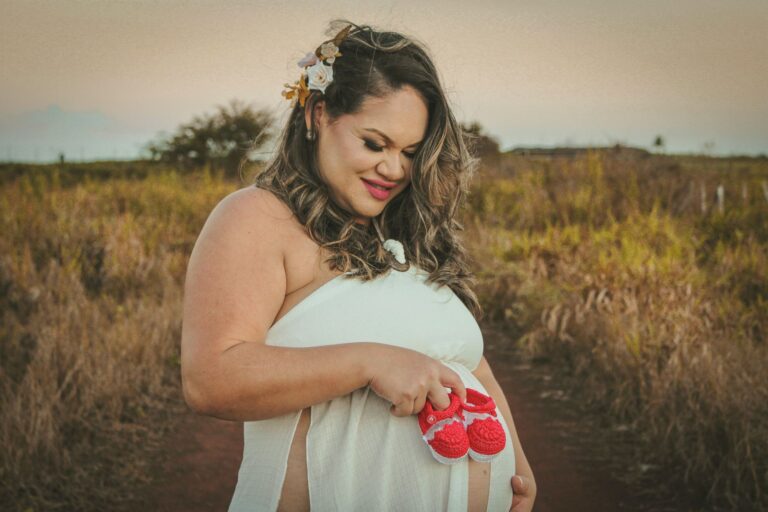
Twin pregnancies show earlier because your uterus expands to hold two babies, often beginning at 6 weeks gestation compared to 12–16 weeks in singleton pregnancies. This accelerated growth is a normal response to accommodating additional fetal tissue and is confirmed by healthcare providers at routine ultrasounds and physical exams. Your earlier showing does not mean your pregnancy is shorter—twin pregnancies typically deliver 2–3 weeks earlier than singleton pregnancies, around 36–37 weeks of gestation. What you see as early abdominal prominence is the most visible sign of the specific physical demands twins place on your body from the first trimester forward.
Table of Contents
- Why Your Uterus Expands Faster With Twins
- When to Expect Your Twin Belly
- Weight Gain With Twins: Targets and Timing
- Maternity Clothes and Wardrobe Planning
- Back Pain and Physical Discomfort in Twin Pregnancy
- Managing Stretch Marks in Twin Pregnancy
- Fundal Height: How Doctors Measure Twin Growth
- How Doctors Confirm Twins Based on Early Showing
- Twin Pregnancies End Earlier Than You Might Expect
- Warning Signs and When to Contact Your Healthcare Provider
- Frequently Asked Questions
Why Your Uterus Expands Faster With Twins
The accelerated uterine expansion required to hold two fetuses is the primary reason you'll show earlier than mothers carrying a single baby. Your uterus reaches approximately twice the intrauterine volume of a singleton pregnancy by 18 weeks of gestation and continues growing throughout your pregnancy.
This larger space is not optional—it is a physiological necessity to safely accommodate two developing babies and their support systems. The expansion creates visible abdominal protrusion much sooner because the uterus has nowhere to hide when it doubles in size. A singleton uterus can stay tucked behind your pelvic bones longer; a twin uterus grows too large to remain concealed.
This means you may notice your belly protruding at 6 weeks, when a mother carrying one baby would still appear unchanged. The rate of expansion also differs. Your uterus is not just larger; it is growing faster than a singleton uterus grows. This accelerated pace compounds the showing effect—your body is stretching skin, expanding muscle, and shifting organs more rapidly than typical pregnancies.
The pace matters because it affects not only how early you show, but how pronounced the change appears to others. Your genetic factors and body type still play a role, as they do in all pregnancies. A second pregnancy typically shows earlier than a first, and a taller frame may distribute the growth differently. But twins override these variables—even first-time mothers carrying twins show earlier, and even taller women develop the pronounced belly sooner than mothers of singletons their same height.
When to Expect Your Twin Belly
Mothers of twins often begin showing as early as 6 weeks of gestation, while singleton mothers typically don't show until weeks 12–16. This means you may have visibly more abdominal prominence in your first trimester than many mothers have in their entire second trimester.
The difference is striking enough that experienced mothers may notice and ask. First trimester showing can feel isolating because many early pregnancy resources still assume 12–16 weeks as the showing timeline. You may find yourself explaining your earlier bump to people unfamiliar with twin pregnancy norms. Some mothers also experience the opposite problem: people dismiss an early belly as bloating or early pregnancy symptoms, not realizing it signals twins.
The exact timing varies based on your body composition, whether this is your first or a subsequent pregnancy, and factors like your starting weight. A first-time mother carrying twins may show slightly later than a mother in her second or third pregnancy, but the difference is weeks, not months. Your healthcare provider can confirm whether the early showing matches twin pregnancy norms at your ultrasound.
By the end of your first trimester (week 13), a twin pregnancy belly is typically noticeably prominent. You may have already outgrown some clothing, begun wearing elastic waistbands, or bought your first maternity pieces. This transition happens months earlier than in singleton pregnancies, and it is entirely expected.
Weight Gain With Twins: Targets and Timing
Twin pregnancies result in approximately 50 pounds of total weight gain compared to 30 pounds for singleton pregnancies. The distribution of this weight is front-loaded—you typically gain 4–6 pounds in your first trimester and 1½ pounds per week thereafter. This faster weight gain directly contributes to your earlier and more pronounced showing.
The first trimester gain is significant enough that you will need larger clothing immediately. By week 12, many mothers of twins have already gained enough weight to move beyond normal sizing. This is why maternity clothes become necessary so early, even though you are not showing a "traditional" second-trimester belly. Weight gained by week 24 (the end of your second trimester) significantly reduces your risk of preterm labor, the most common complication in twin pregnancies.
Adequate weight gain in early pregnancy supports fetal development and reduces stress on your body. Your healthcare provider will monitor your weight gain at each visit to ensure you're on track. The gain continues through the third trimester, but at the 1½ pound-per-week pace established earlier. This means the last trimester, months 7–9, accounts for approximately 18 pounds of your total gain.
Unlike singleton pregnancies where weight gain sometimes plateaus near term, twin pregnancies often maintain consistent weekly gains through delivery. The weight you gain is distributed across two babies, two placentas, amniotic fluid, blood volume increases, and maternal tissue. Your blood volume increases more than in singleton pregnancy to support two fetuses. This additional volume, combined with the weight of the babies themselves, contributes to both your showing and your overall physical load.
Maternity Clothes and Wardrobe Planning
Mothers of twins typically need maternity clothes one to two months earlier than singleton mothers. This means you may be shopping for maternity wear at 8–10 weeks of pregnancy while other mothers your gestational age are still fitting in regular jeans. Plan your wardrobe budget accordingly. Start looking at maternity options early in your first trimester if you are carrying twins.
Some mothers in their first trimester with singletons can still wear regular clothes; mothers of twins typically cannot. Elastic waistbands, stretchy fabrics, and intentional growth-friendly sizing become necessary immediately rather than later in pregnancy. Consider investing in basics that stretch generously: maternity jeans, leggings, and tops designed to accommodate ongoing growth. You will wear these pieces for an extended time because you are showing earlier but delivering earlier, creating a compressed timeline for maternity wear.
A maternity piece that fit well at 12 weeks needs to still work at 36 weeks (your likely delivery date). Layering works well for first trimester dressing with twins because your body is changing rapidly and your comfort is unpredictable. A fitted maternity tank under a loose button-up allows flexibility as you grow. Many mothers find that maternity basics worn under regular cardigans or blazers extend their professional wardrobe during early pregnancy.
Plan for a second wardrobe refresh around week 20–24 if needed. Some mothers of twins find that the initial maternity pieces fit well through delivery; others need roomier options as the pregnancy progresses and the bump becomes more pronounced. Thrift stores, consignment shops, and online rental services can stretch a maternity wardrobe budget.
Back Pain and Physical Discomfort in Twin Pregnancy
Back pain and abdominal discomfort occur more frequently in twin pregnancies due to additional uterine weight and strain. While approximately 40% of all pregnant women experience back pain, the rate is higher in mothers carrying multiples. The combination of rapid uterine growth and hormonal changes creates specific vulnerabilities. Pregnancy hormones soften your spinal ligaments and the connective tissues supporting your lower back, a change that occurs in all pregnancies but is amplified by twin pregnancy.
The larger, heavier uterus pulls forward more dramatically, forcing your back muscles to work harder to maintain posture. Many mothers of twins report discomfort by the end of their first trimester. The pain typically starts in the lower back and sometimes radiates into the hips or pelvis. You may notice it worsens with standing or walking for extended periods and improves with rest.
Some mothers describe a pulling sensation in the lower abdomen as the uterus expands, distinct from back pain but equally uncomfortable. Support strategies include wearing a maternity support belt designed to distribute the extra weight, maintaining good posture despite the changing center of gravity, and engaging in low-impact exercise like walking or prenatal yoga. Heat (applied carefully) can soothe muscles, as can prenatal massage. Mention the discomfort to your healthcare provider so they can rule out complications and offer additional strategies.
Managing Stretch Marks in Twin Pregnancy
Almost 90% of pregnant women develop stretch marks, and the faster and larger belly growth in twin pregnancies increases both likelihood and severity. Stretch marks typically appear in the second and third trimesters as pinkish or reddish streaks across the abdomen, breasts, hips, and thighs. In twin pregnancy, the earlier onset of rapid stretching means marks may appear sooner.
Stretch marks are not preventable, but their appearance and severity can be managed with specific care. Skin hydration and nutritional support with vitamins C and E, zinc, and silica help manage the effects of rapid stretching. Drinking approximately 2 liters of water daily throughout your pregnancy supports skin elasticity from the inside. Topical moisturizers and oils applied twice daily from the first trimester may help skin accommodate faster uterine growth.
Products containing cocoa butter, shea butter, or bio-oil applied to areas prone to stretching offer some protection, though they cannot prevent marks entirely. Start application early rather than waiting until marks appear—prevention-focused application is more effective than treatment after marks form. Genetics play a significant role in your susceptibility to stretch marks. If your mother or grandmother had prominent marks during pregnancy, you are more likely to develop them.
This does not mean you cannot minimize their appearance, but it may mean you manage expectations about prevention differently. Post-pregnancy, stretch marks typically fade from reddish to silver or white over several months to years. Various treatments exist for after pregnancy if marks remain visible, including topical retinoids, laser therapy, and other dermatological options. Discuss post-pregnancy options with a dermatologist if appearance concerns you.
Fundal Height: How Doctors Measure Twin Growth
Fundal height measurement—the distance from your pubic bone to the top of your uterus—shows significantly larger values in twin pregnancies. Starting at 18–20 weeks of gestation, your healthcare provider measures fundal height in centimeters at each prenatal visit. Twin pregnancies typically measure several centimeters ahead of singleton gestational age. This measurement is one tool your provider uses to track growth and confirm that twins are developing appropriately.
A tape measure is placed from your pubic bone to the top of your uterus, and the measurement in centimeters roughly corresponds to weeks of gestation (a 24-week pregnancy typically measures about 24 centimeters). Twin pregnancies measure ahead because they require more space. The measurement is not painful or invasive—it is a quick assessment during your regular prenatal exam.
You may notice your healthcare provider marks where they measured, sometimes asking you to observe the measurement yourself. This external measurement helps screen for concerns and tracks overall growth without requiring additional ultrasounds. Fundal height alone cannot diagnose twins—ultrasound is required for confirmation. However, fundal height that is consistently ahead of predicted gestational age is one sign your provider may recommend ultrasound to confirm multiple pregnancy. This is why early showing sometimes prompts additional imaging.
How Doctors Confirm Twins Based on Early Showing
Early, pronounced showing in twin pregnancies is a clinical sign recognized by healthcare providers at ultrasound and routine exams. A belly measuring larger than expected for gestational age is one established indicator of multiple pregnancy. If you show earlier than typical, your provider may recommend ultrasound confirmation even before your scheduled dating scan.
Ultrasound confirmation of twins occurs between 7–9 weeks of gestation. At this point, a skilled ultrasound technician can identify two gestational sacs and separate heartbeats. Your early showing may prompt this earlier ultrasound, allowing you to confirm twins sooner than mothers who show at typical timelines. Some mothers learn they are carrying twins specifically because their early showing prompted additional imaging.
Other mothers already know they are expecting twins and find that their early showing simply confirms what ultrasound already revealed. Either way, your early prominent belly and your healthcare provider's assessment work together to ensure appropriate monitoring. Your healthcare provider will also consider your history and any risk factors for multiple pregnancy. A family history of multiples, fertility treatment, or previous multiple pregnancies increase the likelihood of twins. Combined with early showing, these factors may prompt earlier or additional ultrasound imaging.
Twin Pregnancies End Earlier Than You Might Expect
Twin pregnancies last 36–37 weeks on average, approximately 2–3 weeks shorter than singleton pregnancies. Despite showing earlier, your pregnancy will conclude sooner, which affects timing of final preparations and delivery planning. You may feel you just finished your first trimester when you are approaching delivery. This shortened gestation does not mean your babies are premature if born at 36–37 weeks.
For twins, this is considered full term, and babies born at this gestational age have similar health outcomes to full-term singletons. Your healthcare provider will discuss what to expect as your pregnancy progresses and your likely delivery date approaches. The earlier delivery timing means you should prepare for labor and delivery earlier than singleton pregnancy timelines might suggest.
Car seats, nursery setup, and final preparations should ideally be completed by week 30–32 for a twin pregnancy. Many mothers preparing for singleton delivery wait until week 36 or later; twin pregnancy does not allow this extended timeline. Delivery plans also differ for twins. Your healthcare provider will discuss delivery options specific to your situation, including vaginal delivery versus planned cesarean section. The position of your babies in the weeks before delivery will help determine the safest delivery method for your family.
Warning Signs and When to Contact Your Healthcare Provider
Your earlier showing is normal, but certain symptoms warrant immediate contact with your healthcare provider. Vaginal bleeding, fluid leaking, severe abdominal pain, contractions before 37 weeks, dizziness, vision changes, or severe headaches require urgent evaluation. Do not assume these symptoms are typical pregnancy discomfort—in a twin pregnancy, early assessment can prevent serious complications. Preterm labor is the most common complication in twin pregnancies.
Signs include regular contractions, pelvic pressure, lower back pain that worsens and becomes rhythmic, or changes in vaginal discharge. Many of these symptoms can feel like normal pregnancy discomfort, so know your baseline and report changes to your provider. Gestational diabetes and preeclampsia both occur more frequently in twin pregnancies than singleton pregnancies. Routine screening includes glucose testing and blood pressure monitoring at each visit.
Report any unusual swelling, persistent headaches, or vision changes immediately rather than waiting for your next scheduled appointment. Your mental health is equally important. Carrying twins creates additional stress, and anxiety or depression is common. If you experience persistent sadness, anxiety, difficulty sleeping beyond typical pregnancy insomnia, or feelings of being overwhelmed, discuss these with your healthcare provider.
Support is available and addressing mental health early improves outcomes. Develop a clear communication plan with your healthcare provider about what symptoms warrant a call versus a clinic visit versus emergency care. Ask for guidance during your first trimester so you know exactly when and how to reach your provider with concerns. Most maternal healthcare teams are experienced with twin pregnancy and want to hear from you.
Frequently Asked Questions
How early do twins typically show compared to singleton pregnancies?
Twin pregnancies often show at 6 weeks of gestation, compared to 12–16 weeks for singleton pregnancies. This earlier appearance is due to your uterus expanding to accommodate two fetuses, creating visible abdominal prominence in the first trimester.
Will I need maternity clothes earlier if I'm carrying twins?
Yes. Most mothers carrying twins need maternity clothes one to two months earlier than singleton mothers, often by 8–10 weeks of pregnancy. Your weight gain in the first trimester (4–6 pounds) is typically enough to outgrow regular clothing.
How much weight should I gain in a twin pregnancy?
You should gain approximately 50 pounds total over a twin pregnancy, compared to 30 pounds in singleton pregnancy. This includes 4–6 pounds in your first trimester and roughly 1½ pounds per week after that. Weight gained by week 24 significantly reduces your risk of preterm labor.
Can I prevent stretch marks in a twin pregnancy?
Stretch marks cannot be prevented, but their severity can be managed. Drink 2 liters of water daily and apply moisturizers or bio-oil twice daily from the first trimester. Vitamins C and E, zinc, and silica support skin elasticity. Almost 90% of pregnant women develop marks, but yours will fade over time.
What is fundal height and why is it important in twin pregnancy?
Fundal height is the distance from your pubic bone to the top of your uterus, measured in centimeters at each prenatal visit starting around 18 weeks. Twin pregnancies measure several centimeters ahead of singleton pregnancy, confirming accelerated growth and appropriate development of both babies.
When do doctors confirm a twin pregnancy based on early showing?
Ultrasound confirmation occurs between 7–9 weeks of gestation. Early, pronounced showing may prompt your healthcare provider to recommend an ultrasound sooner than your routine dating scan, allowing earlier confirmation of twins.