You can detect ovulation using several observable signs: cervical mucus changes, basal body temperature shifts, luteinizing hormone (LH) surges, and ovulation pain. Each method has strengths and limits—some predict ovulation before it happens, while others confirm it only after.
The most observable sign is cervical mucus, which becomes clear, thin, and slippery days before ovulation and then thickens afterward, while LH urine tests can detect the hormone surge that triggers ovulation within 12–36 hours. Knowing when you ovulate matters for fertility planning, whether you're trying to conceive or avoid pregnancy, and for understanding your own cycle. Not all women feel ovulation or track it the same way, so this guide covers what actually works and what the research says about accuracy.
Table of Contents
- Cervical Mucus—The Most Reliable Observable Sign
- Basal Body Temperature (BBT)—Confirmation, Not Prediction
- LH Surge Testing—Most Predictive Method
- Ovulation Pain—A Secondary Confirmation Sign
- Other Physical Signs—Breast Changes, Bloating, and Mood
- When Your Ovulation Date Is Not When You Expect
- Combining Methods for Greater Accuracy
- Using Ovulation Awareness for Fertility
- When Ovulation Does Not Happen
- How Accurate Are These Methods Really?
- Frequently Asked Questions
Cervical Mucus—The Most Reliable Observable Sign
Cervical mucus changes are the single most observable ovulation indicator and happen naturally without special equipment. In the days before ovulation, your cervical mucus becomes clear, thin, stretchy, and slippery—often compared to raw egg whites—because rising estrogen softens the cervix and increases mucus production. This peak mucus happens within one day of the LH surge 78% of the time and within two days 91% of the time, according to Cleveland Clinic's research summary.
After ovulation, progesterone causes the mucus to thicken, become white or yellow, and feel sticky or tacky. This shift from clear to thick typically happens within a day or two. The transition marks ovulation has already occurred, making cervical mucus an excellent retrospective tool for confirming ovulation and identifying your fertile window when used with other signs.
To observe cervical mucus, check the consistency using toilet paper after wiping, or insert a clean finger into your vagina and pull it out to observe the mucus between your thumb and forefinger. Some women notice it without actively checking. You do not need special skills—just awareness of the texture difference between "stretchy and clear" versus "thick and creamy." The advantage of cervical mucus tracking is that it costs nothing, provides daily information, and requires no blood tests or special supplies.
You can start observing immediately without waiting for a kit to arrive. Most women find it easier after tracking two or three cycles when they recognize their personal pattern. Mucus-only tracking has one limit: not all women produce observable mucus changes, and hormonal contraceptive use, infections, antihistamines, or certain lubricants can mask the pattern. Cervical mucus also cannot tell you exactly when ovulation will occur—only that it is coming soon or has recently passed.
Basal Body Temperature (BBT)—Confirmation, Not Prediction
Basal body temperature is your body's resting temperature, measured first thing after waking before getting out of bed, eating, or drinking. Before ovulation, BBT stays stable. After ovulation, progesterone raises your metabolic rate, causing a slight rise—typically 0.5 to 1 degree Fahrenheit—that stays elevated until your period starts.
The catch: BBT only confirms ovulation has already happened; it cannot predict when ovulation will occur. You will see the temperature shift one to three days after ovulation. This delayed confirmation makes BBT useful for identifying your fertile window in retrospect and learning your cycle pattern, but not for timing intercourse if conception is your goal.
Accurate BBT tracking requires consistency. You measure your temperature using a basal thermometer (different from regular thermometers because it shows smaller increments) at the same time each morning, before any activity. Even a few hours' difference in wake time or a restless night can affect the reading. sleep loss, illness, and stress can also raise your temperature independently, creating false signals.
BBT reflects ovulation in only about 70% of cycles, meaning 30% of cycles may not show a clear temperature shift even though ovulation occurred. Some women have such small temperature variations that the pattern never becomes obvious. Others find their baseline too erratic to read the shift clearly. The advantage of BBT is low cost and the pattern becomes clear when tracked over months. The disadvantage is that it requires daily measurement at the same time, works best in stable sleep schedules (difficult for new parents), and offers no predictive power for timing.
LH Surge Testing—Most Predictive Method
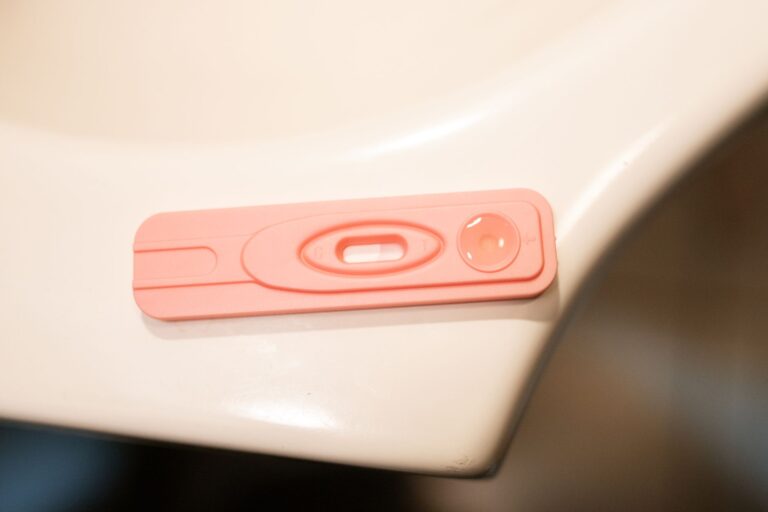
The luteinizing hormone (LH) surge is the hormone shift that triggers ovulation. Home urine LH test kits detect this surge, which typically causes ovulation within 12–36 hours (usually around 24–36 hours). These kits are the most predictive ovulation detection method available without blood work. LH test strips work like pregnancy tests: you urinate on a strip or into a cup, and a colored line appears if LH is rising.
Most kits come with multiple tests so you can check daily during your fertile window. When the test turns positive, ovulation should follow within the next 24–36 hours. In clinical studies, home urine monitors correctly indicated ovulation 91% of the time during the two peak fertility days. The advantage is clear timing information. If you see a positive LH test, you know ovulation is imminent and can plan accordingly.
For couples trying to conceive, this precision is valuable. LH testing also works for women whose cervical mucus or temperature patterns are hard to read. Limitations include cost—kits range from $20 to $60+ per cycle—and the need to test at the same time each day, ideally in the afternoon or evening when LH is typically highest.
The tests cannot work if you are taking hormonal birth control, and some medications or supplements can affect LH levels. Testing requires starting several days before your expected ovulation, so you need to predict your cycle length first.
Ovulation Pain—A Secondary Confirmation Sign
Mittelschmerz is one-sided lower abdominal or pelvic cramping that occurs midway through your cycle, about 14 days before your next period. The term means "middle pain" in German and describes pain from ovulation. The cramping results from your ovary's follicle growing, stretching the ovary surface, and fluid or blood from the ruptured follicle irritating the abdominal lining.
Ovulation pain typically feels like a sharp, stabbing, or dull ache on one side of your lower belly, usually the side where the ovary is releasing an egg that cycle. The pain may last from a few minutes to a couple of hours, though some women report mild discomfort for a day or two. It usually occurs just before or around the time of ovulation, making it a useful secondary sign to pair with cervical mucus or LH testing.
Mittelschmerz usually requires no medical attention and responds to over-the-counter pain relief if it is bothersome. Gentle heat, light stretching, or a heating pad can help. If the pain is severe, comes with vomiting or fever, or happens at an unexpected time in your cycle, contact your doctor to rule out other causes like appendicitis, ovarian cysts, or infection.
Not all women experience mittelschmerz, and some only notice it during certain cycles. For those who do feel it consistently, it becomes a reliable monthly marker. The pain is one-sided because only one ovary releases an egg each cycle, so you typically feel it on that side.
Other Physical Signs—Breast Changes, Bloating, and Mood
Beyond cervical mucus and ovulation pain, common ovulation symptoms include breast tenderness, bloating, increased sex drive, mood changes, heightened senses, and light spotting. These secondary signs vary widely between individuals and even between cycles in the same person, so they work best as supporting evidence rather than standalone indicators. Breast tenderness often begins a few days before ovulation and may last through ovulation or into the luteal phase.
Some women describe it as soreness, sensitivity, or heaviness. The symptom results from rising estrogen and progesterone. Bloating and water retention peak around ovulation as hormone levels shift, making clothes feel tight or your belly feel fuller. Mood changes, heightened sense of smell or taste, and increased sexual desire are real but subtle signs reported by some women during the follicular phase and ovulation.
These fluctuations correlate with hormone levels, but they are so individual and so influenced by stress, sleep, and other factors that they should not be your primary tracking method. Light spotting (spotting that is noticeably lighter than a period) can occur at ovulation due to the hormone shift. This is not common—most women do not experience mid-cycle spotting—but when it happens, it can mark ovulation timing.
If spotting is heavy, accompanies severe pain, or lasts more than a couple of days, it warrants a call to your doctor to rule out other issues. Not all women experience these signs. Some feel nothing at all, while others notice one or two consistently. Tracking your own pattern over a few cycles helps you learn which signs are meaningful for you personally.
When Your Ovulation Date Is Not When You Expect
Many women believe ovulation happens on day 14 of a 28-day cycle, but this is a generalization, not a rule. Only about 10% of women with 28-day cycles actually ovulate on day 14; normal ovulation occurs on days 13–15 in 28-day cycles. Even in women with very regular cycles, ovulation can shift by a day or two from month to month.
Regular menstrual cycles vary between 24–38 days, and ovulation timing shifts accordingly. A 24-day cycle ovulates earlier than a 28-day one, and a 35-day cycle ovulates much later. Cycle tracking apps should account for the earliest and latest possible ovulation dates in your personal cycle pattern, not assume day 14. If your cycles vary—say, sometimes 26 days and sometimes 32 days—your ovulation date varies too.
For this reason, counting backward from your next period (subtracting 14 days from when your period is due) is more accurate than counting forward from the first day of your last period. Start observing cervical mucus and testing with LH kits a few days earlier than expected if your cycles are irregular. Stress, illness, travel, sleep disruption, and intense exercise can shift ovulation a few days in either direction, even in women with normally regular cycles.
This is why rigid day-14 predictions often fail. Instead of aiming for a fixed date, look for the actual signs of approaching ovulation: cervical mucus changes and positive LH tests tell you it is happening now, not based on a calendar.
Combining Methods for Greater Accuracy
No single ovulation detection method is foolproof, but combining two or more dramatically increases accuracy. Basal body temperature works best alongside cervical mucus observation and LH testing rather than as a standalone method. For example, cervical mucus tells you ovulation is approaching, LH testing confirms the surge is underway, and BBT confirms ovulation has occurred.
The most reliable combination for predicting your fertile window pairs cervical mucus observation with LH testing. When you notice the peak mucus (clear, stretchy, egg-white consistency), start testing with LH strips daily. When the LH test turns positive, you know ovulation will follow within 24–36 hours, giving you the highest-probability window for timing intercourse or avoiding it.
Adding symptom awareness—awareness of ovulation pain, breast tenderness, or mood changes—provides additional confirmation. If cervical mucus, LH surge, ovulation pain, and BBT shift all align within a day or two, you can be confident ovulation is happening. If only one or two signs appear, the other methods help clarify whether it is reliable. The downside of combining methods is that it takes more effort and attention.
You are checking mucus daily, measuring temperature first thing each morning, and testing with LH kits. For women who are highly motivated—those trying to conceive or avoiding pregnancy without hormonal contraception—this effort is worthwhile. For others, a single reliable method may be enough. Tracking for at least three cycles establishes your personal patterns before relying on them for fertility planning. Everyone's cycle looks a little different, so your data beats any generalization.
Using Ovulation Awareness for Fertility
Pregnancy is most likely if intercourse occurs within 24 hours after detecting the LH surge. However, sperm can survive 3–5 days before ovulation, and the egg survives 1–2 days after, creating a 5–7 day fertile window around ovulation. This window means conception can occur from intercourse that happens a few days before you ovulate, not just during ovulation itself.
For couples trying to conceive, the strategy is not to wait for ovulation to confirm it has happened—that is too late—but to time intercourse during the fertile window before and around ovulation. Most experts recommend intercourse every other day starting a few days after your period ends and continuing until after ovulation is confirmed. This approach reduces the pressure of pinpoint timing and accounts for variation in sperm quality and egg health.
For those using ovulation awareness for contraception, understand that it is less reliable than hormonal birth control or barrier methods. Even with perfect tracking and perfect adherence to avoiding intercourse during the fertile window, about 24 in 100 women using this method will become pregnant over a year of use. It works best when combined with another method—for example, using condoms during the fertile window.
If you are tracking ovulation for any reason, record your observations in a physical calendar or an app to build your data over time. Apps can predict your next ovulation window based on past cycles, making planning easier. Just remember that predictions are based on patterns, not certainties—actual ovulation may shift slightly.
When Ovulation Does Not Happen
Anovulation (not ovulating) is relatively uncommon in women with regular periods, but when it occurs, it is usually marked by irregular vaginal bleeding. When ovulation does not occur, irregular vaginal bleeding is typically the main symptom. If you have a period, ovulation likely happened (though not always—some hormonal disorders cause bleeding without ovulation).
If your periods become irregular, infrequent, or stop altogether, anovulation is a possibility. Causes of anovulation include polycystic ovary syndrome (PCOS), thyroid disorders, elevated prolactin levels, premature ovarian insufficiency, extreme stress, sudden weight loss or gain, overtraining, hormonal contraceptives, and eating disorders. Some of these are easily treated; others require ongoing management. If you suspect you are not ovulating, your doctor can order blood tests to check hormone levels and ultrasound to confirm whether ovulation is occurring.
Anovulation can occur even in women with regular cycles, though it is less common. If you notice your cervical mucus never becomes clearly stretchy, your LH tests never go positive, or your BBT never rises despite careful tracking, mention this to your doctor. You may have anovulatory cycles mixed in with normal cycles, which still warrants investigation if you are trying to conceive.
Treatment depends on the cause but might include lifestyle changes (reducing stress, normalizing weight, moderating exercise), addressing thyroid disease or other hormone imbalances, or switching from certain medications. Many women with PCOS or thyroid issues conceive successfully after appropriate treatment.
How Accurate Are These Methods Really?
The accuracy of ovulation detection methods varies, and it is important to understand what "accuracy" means. LH testing is most accurate at identifying when ovulation will happen—it detects the hormone surge within 24–36 hours before ovulation. Cervical mucus observation is accurate at identifying the fertile window but does not pin down the exact moment. BBT is accurate only at confirming ovulation has already occurred, not predicting it.
For contraception, ovulation awareness methods (when used perfectly with strict abstinence during the fertile window) have a typical-use failure rate of about 24 pregnancies per 100 women per year—far higher than hormonal contraceptives or IUDs. This high rate reflects real-world inconsistency: missed observations, unpredicted ovulation shifts, and disagreement among tracking methods about when the fertile window actually is.
For conception, ovulation awareness combined with timed intercourse has higher success rates—roughly 60–80% of women using these methods will conceive within a year of trying, depending on age and overall fertility. This is lower than younger women's baseline conception rates, suggesting the methods work but are not perfect at identifying the optimal timing window. The limitations include individual variation (no two cycles are identical), environmental factors (stress, illness, travel, sleep), and the inherent difficulty of predicting a biological event that each person experiences slightly differently.
Even with LH testing, you cannot know the exact moment the egg is released or how many fertile hours remain. Combining multiple methods and tracking for several cycles before acting on the data greatly improves reliability. If you are using ovulation awareness for important decisions—whether conception or contraception—discuss your strategy with your doctor and be clear about what accuracy level the method provides.
Frequently Asked Questions
What does cervical mucus look like when you are ovulating?
Before ovulation, cervical mucus becomes clear, thin, and stretchy (resembling raw egg whites). After ovulation, it thickens, becomes white or cream-colored, and feels sticky or tacky. The peak stretchy mucus occurs within one to two days of the LH surge about 78–91% of the time.
Can you use basal body temperature to predict ovulation?
No, basal body temperature cannot predict ovulation. It only confirms ovulation has already happened, showing a temperature rise of 0.5–1°F one to three days after ovulation. It works best as a retrospective confirmation tool paired with other methods, not for timing intercourse before ovulation occurs.
How many hours after an LH surge does ovulation happen?
Ovulation typically occurs 12–36 hours after the LH surge is detected, most commonly within 24–36 hours. This is why a positive LH test can help time intercourse when trying to conceive, as it gives advance notice that ovulation is imminent.
Is ovulation pain normal and dangerous?
Ovulation pain (mittelschmerz) is normal and harmless, occurring in some women as one-sided lower abdominal cramping around the time of ovulation. It usually requires no treatment, responds to over-the-counter pain relievers, and passes within hours. Severe pain with vomiting or fever warrants a doctor's evaluation.
Can you detect ovulation without LH tests or a thermometer?
Yes, cervical mucus observation is a free, equipment-free method that works well for many women. Pairing it with awareness of ovulation pain and other symptoms provides useful confirmation. However, cervical mucus tracking works best when combined with at least one other method for greater reliability.
Why do people say ovulation happens on day 14?
Day 14 is an average for a 28-day cycle, but only 10% of women with regular cycles actually ovulate on exactly day 14. Normal ovulation occurs days 13–15 in 28-day cycles, and cycles themselves vary from 24–38 days, shifting ovulation timing up or down accordingly. Tracking your actual cycle is more reliable than assuming day 14.