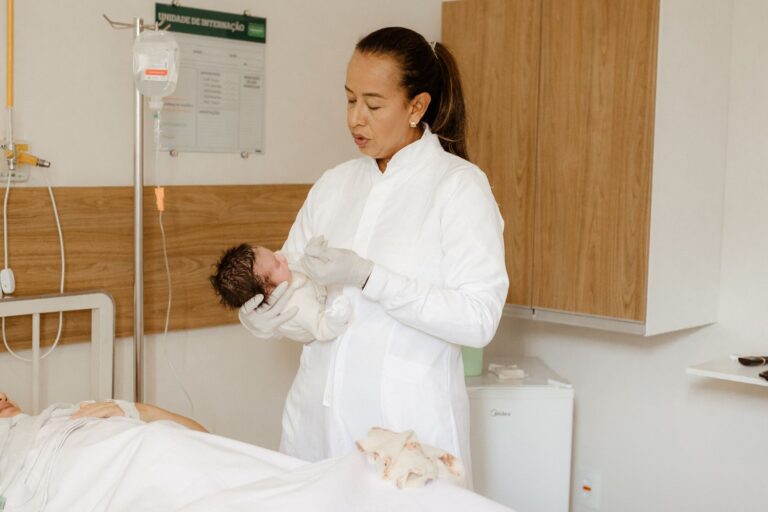
Postpartum screening checks how your body is healing and identifies health problems early—when they're easiest to treat. Every visit screens for conditions ranging from blood clots and infection to depression and thyroid dysfunction, all of which are common after birth and treatable if caught.
The weeks and months after birth bring rapid physical changes and new vulnerabilities. Screening appointments aren't bureaucratic checkmarks; they're your clinician's chance to catch complications before they worsen, adjust medications if you're nursing, assess your mental state when you're often too exhausted to report problems, and answer questions you didn't know to ask. Knowing what screening involves helps you prepare for visits, recognize what's normal, and report changes between appointments.
Table of Contents
- What Happens During a Postpartum Screening Visit
- When Screening Happens and What Timeline Looks Like
- Physical Recovery Screening—What Clinicians Are Checking
- Blood Pressure and Cardiovascular Screening
- Infection and Fever Screening
- Mental Health Screening at Postpartum Visits
- Thyroid Screening and Postpartum Thyroiditis
- Sexual Health, Contraception, and Screening for STIs
- Activity Restrictions and Return-to-Normal Screening
- Red Flags: What Needs Immediate Care Between Visits
- Frequently Asked Questions
What Happens During a Postpartum Screening Visit
A postpartum screening visit is a structured check of your physical recovery and emotional health. Your clinician reviews your obstetric history, your birth (vaginal or cesarean), any complications during labor or delivery, and your current symptoms. They'll ask about bleeding, pain, fever, sleep, mood, and any concerns since your last visit.
Write down questions beforehand—you'll have limited time and a tired brain. Physical exams begin with vital signs: blood pressure, heart rate, temperature, and sometimes weight. High blood pressure can signal preeclampsia or other cardiac issues and needs treatment. A fever may indicate infection. Your clinician examines your abdomen to check that your uterus is shrinking (involution) at the expected rate and that any surgical scar is healing without fluid buildup or separation.
If you delivered vaginally, your clinician assesses perineal healing—the area between your vagina and anus where tearing often occurs. They look for signs of infection, unhealed lacerations, or scar tissue that may cause pain during sex. Cesarean incisions are checked for proper closure, drainage, and any separation of the skin layers (dehiscence). Infection at an incision site requires antibiotics and sometimes additional care.
Breast exams are routine and screen for infection (mastitis), abscesses, or structural problems. If you're nursing, your clinician observes a feeding or asks detailed questions about latch, milk supply, nipple pain, and how often the baby feeds. Breastfeeding problems—engorgement, blocked ducts, insufficient milk—are common and usually fixable with the right guidance. Pelvic exams may include a cervical check and screening for sexually transmitted infections if you have risk factors.
Your clinician may perform a manual exam to feel the ovaries and uterus for lumps, pain, or other abnormalities. Some visits include a pap smear, though this is often postponed until you're further postpartum or can safely take a break from certain medications. Mental health screening typically includes direct questions about mood, anxiety, sleep problems, intrusive thoughts, and sense of connection to the baby.
You may complete a screening questionnaire like the Edinburgh Postnatal Depression Scale. This is not a judgment; it's how clinicians identify depression and anxiety that need treatment. Many mothers don't volunteer these problems because they're ashamed or don't recognize them as medical conditions. The visit ends with a review of activity restrictions, when sex is safe, return-to-work timelines, contraception options, and any medications you're taking or considering. You'll discuss when to schedule your next appointment and what symptoms warrant a phone call or emergency visit before then.
When Screening Happens and What Timeline Looks Like
Screening begins at your hospital discharge or birth center exit, with a brief clinical check before you leave. A nurse reviews your incision or perineum, checks your bleeding and vital signs, and gives you discharge paperwork listing red flags. This is not a full postpartum visit but an essential safety gate. Your first full postpartum visit typically occurs 1 to 2 weeks after vaginal delivery and 2 to 3 weeks after cesarean birth.
Timing matters because it catches complications early—infection often appears within the first two weeks, and postpartum bleeding patterns stabilize by week two. Your clinician needs to see you while changes are still obvious and while you can still benefit from treatment. A second visit usually happens 4 to 6 weeks postpartum. By this point, your uterus should be nearly back to pre-pregnancy size, most incisions or tears should be healed, and your bleeding should have slowed significantly.
This visit screens for slower-developing problems like thyroid dysfunction and assesses whether depression or anxiety has emerged or worsened. Bleeding that is still heavy or has restarted can indicate retained placental tissue or other problems needing imaging or treatment. Some clinicians see patients again at 8 to 12 weeks postpartum, particularly if there were complications during pregnancy or delivery, or if mental health or physical recovery is not progressing.
This "three-month check" catches postpartum thyroiditis, which often peaks weeks 4 to 8 and can be missed if you don't have a follow-up visit. It also reviews contraception choices, sexual function, and whether you're ready to resume exercise or return to work. High-risk pregnancies or births trigger more frequent screening. If you had gestational diabetes, you'll be screened for type 2 diabetes weeks or months after birth.
If you had preeclampsia, blood pressure checks continue at every visit and sometimes beyond. If you had a blood transfusion, infection, or severe bleeding, you may see a specialist in addition to your primary clinician. After the clinical phase ends (roughly 3 months postpartum), ongoing screening shifts to your annual wellness visit with your primary care doctor or gynecologist.
You may not see your obstetric clinician again unless you become pregnant. Mental health screening should continue at every visit with any clinician for the first year, since depression and anxiety can emerge or persist months after birth.
Physical Recovery Screening—What Clinicians Are Checking
Your clinician screens for complications of labor and delivery that range from minor (slow healing) to life-threatening (blood clots, severe infection). They're looking for patterns: is your uterus shrinking on schedule, your bleeding following an expected path, your incision or tears healing without infection. Uterine involution—the return of your uterus to pre-pregnancy size—is measured by hand during your first visit.
Your uterus should be halfway down your abdomen one week after birth, barely palpable two weeks after, and fully inside your pelvis by six weeks. A uterus that isn't shrinking may indicate retained placental tissue, uterine infection, or fibroids and needs imaging (usually ultrasound) to confirm. Retained tissue can cause heavy bleeding and requires removal.
Postpartum bleeding (lochia) changes predictably. For the first 3 to 5 days, bleeding is heavy and may contain clots the size of a grape or plum; this is normal. By week two, it's lighter and more watery. By week three, it's usually just light spotting. Bleeding that stays heavy after two weeks, reappears after slowing, has a foul smell, or contains large clots can signal infection, retained tissue, or a bleeding disorder and needs investigation.
Perineal tears after vaginal delivery are common: first-degree tears (skin only) heal without treatment in days; second-degree tears (skin and muscle) need stitches and heal in weeks; third- and fourth-degree tears extend into the anal sphincter and require careful repair and monitoring because they carry a higher risk of long-term pain or incontinence. Your clinician checks that stitches are dissolving on schedule, that the area isn't swollen or oozing, and that you're not having new pain or bleeding from the site.
Cesarean incisions are screened for proper closure, infection, and complications like seroma (fluid buildup under the skin) or hematoma (bleeding under the incision). The incision is typically closed with absorbable stitches or skin staples removed at 7 to 10 days postpartum. A small separation of the incision edges (usually at one end) is common and often heals on its own; larger separations or those with drainage or redness need attention to prevent deeper infection.
Breast complications—mastitis (infection), abscess (pus collection), engorgement, or blocked ducts—are screened by exam and by asking detailed questions about pain, redness, fever, and milk supply. Mastitis is treatable with antibiotics if caught early and can become severe if untreated. An abscess requires drainage. Engorgement and blockages are often managed with heat, massage, frequent feeding, or lactation consultation.
Blood clots (deep vein thrombosis or pulmonary embolism) are rare but serious and can develop weeks after birth. Your clinician asks about calf pain, swelling, warmth, or chest pain, and watches for these signs during the exam. Risk factors include prolonged bed rest, cesarean birth, infection, or a family history of clotting. If you have symptoms, imaging (usually ultrasound or CT) is needed urgently.
Blood Pressure and Cardiovascular Screening
Your blood pressure is checked at every postpartum visit because high blood pressure after birth can signal preeclampsia or another cardiovascular problem that needs treatment to prevent stroke or organ damage. Preeclampsia can develop during pregnancy or after delivery (postpartum preeclampsia), and some women don't develop symptoms—only their blood pressure reveals it. Normal blood pressure is generally below 120/80 mm Hg.
Elevated readings (130-139 systolic or 80-89 diastolic) warrant another check, because a single high reading can reflect stress, pain, a full bladder, or poor cuff fit. If your blood pressure is persistently elevated across multiple visits or if you have symptoms (headache, vision changes, abdominal pain, shortness of breath), you need further evaluation and possibly medication to prevent complications.
Women who had preeclampsia during pregnancy are screened more carefully because they have a higher risk of cardiovascular disease later. Your clinician may order blood work to check kidney and liver function, and may recheck your blood pressure at 6 weeks, 3 months, and your annual visit. Blood pressure that remains high beyond 3 months postpartum needs evaluation by a cardiologist or internist, not just your obstetric clinician.
Eclampsia—seizures triggered by preeclampsia—is rare but can happen postpartum. Your clinician asks about any headaches (especially severe or new), vision changes (blurred, floaters, loss of vision in part of your visual field), confusion, or sudden swelling of face or hands. These are warning signs that require immediate evaluation, usually in an emergency department. Don't wait for a scheduled appointment if you have these symptoms.
Heart palpitations (feeling your heart racing or skipping) are common after birth due to hormonal changes, anemia, caffeine, or sleep deprivation, but they should be reported at your visit. Your clinician listens to your heart and may order an EKG if palpitations are accompanied by shortness of breath, chest pain, dizziness, or fainting. Postpartum cardiomyopathy—weakening of the heart muscle—is rare but serious and is caught by screening for these symptoms.
Infection and Fever Screening
Postpartum infection (puerperal fever) is rare in developed healthcare settings but remains a leading cause of postpartum morbidity. Your clinician screens by taking your temperature at every visit, asking about fever, chills, or unusual sweating, and examining your incision, perineum, and uterus for signs of infection. A fever at any point after birth warrants immediate evaluation—don't wait for a scheduled appointment.
Fever can signal endometritis (infection of the uterine lining), wound infection, urinary tract infection, or mastitis, all of which are treatable with antibiotics if started quickly. Untreated infection can progress to sepsis, a life-threatening systemic response to infection. Foul-smelling discharge, pus from an incision or perineal tear, increasing pain or redness, and chills are all signs of infection.
Your clinician also screens by asking about unusual vaginal discharge (watery, purulent, or bloody beyond the normal lochia pattern), pelvic pain that's worsening rather than improving, or abdominal tenderness. These findings prompt blood work, sometimes pelvic imaging, and treatment. Some infections are subtle. A low-grade fever with fatigue but no other obvious symptoms can still signal endometritis.
A mother who attributes her fever to stress, sleep deprivation, or cluster feeding may not realize she's developing an infection. This is why direct clinician inquiry—not self-reporting—is so important: a clinician asks "Any fevers?" directly and checks temperature routinely rather than assuming you'd volunteer it.
Mental Health Screening at Postpartum Visits
Postpartum depression and anxiety are screened at every postpartum visit because they're common, treatable, and often underreported. Your clinician asks directly about mood, anxiety, sleep, and intrusive thoughts rather than waiting for you to volunteer this information. Many mothers minimize or hide these feelings because they're ashamed, blame themselves, or don't recognize them as medical conditions.
Depression after birth looks different from other depressions. You might feel numb rather than sad, unable to enjoy activities you normally love, overwhelmed by ordinary tasks, or disconnected from your baby. You might have intrusive thoughts about harm coming to your baby—not because you want to harm them, but because anxiety produces unwanted, distressing thoughts.
You might feel irritable or angry rather than sad. None of these exclude depression; they're all recognized presentations. Anxiety is often missed because mothers assume postpartum worry is normal parenting. It is normal to check on your sleeping baby or worry about their safety. It is not normal to be unable to sleep even when the baby is sleeping, to check the baby dozens of times per night, to have racing thoughts you can't slow down, or to have panic attacks.
If anxiety is interfering with your daily function or quality of life, it needs treatment. Your clinician may use a screening questionnaire like the Edinburgh Postnatal Depression Scale (a 10-question form asking about mood, anxiety, guilt, and thoughts of self-harm) or ask open-ended questions in conversation. Some clinicians ask: "How have you been feeling emotionally?" "Do you feel sad or depressed?" "Are you having trouble sleeping beyond what the baby requires?" "Have you had thoughts of harming yourself?" These questions feel personal and may trigger shame, but they're the only way your clinician knows to offer help.
Treatment options include therapy, medication, or both. Medications used for postpartum depression and anxiety are safe while breastfeeding—the benefits of treating a serious mood disorder outweigh the minimal risk to the baby from most antidepressants and anti-anxiety medications. If you don't receive screening or if you screen positive but are not offered treatment, you have the right to ask for a referral to a mental health specialist.
Screening continues beyond the traditional postpartum period because depression and anxiety can emerge or worsen at any point in the first year. Your primary care doctor or other clinician you see should continue to ask about mood at every visit, not just your obstetric provider.
Thyroid Screening and Postpartum Thyroiditis
Thyroid dysfunction is screened at postpartum visits because the thyroid often becomes inflamed after birth (postpartum thyroiditis), affecting how you feel physically and mentally. Your clinician may ask about fatigue, weight changes, hair loss, temperature sensitivity, mood changes, or difficulty concentrating. These symptoms can be attributed to sleep deprivation or depression, but they can also signal thyroid disease.
Postpartum thyroiditis follows a pattern: an initial hyperthyroid phase (weeks 4 to 8) where your thyroid releases stored hormone, causing anxiety, palpitations, heat intolerance, and tremor; followed by a hypothyroid phase (weeks 8 to 12) where thyroid hormone is depleted, causing fatigue, depression, weight gain, and cold intolerance. Some mothers experience only one phase; others go through both.
Most recover on their own, but some develop permanent hypothyroidism. Your clinician may order blood tests to measure thyroid hormones (TSH and free T4) if you report symptoms or if you have risk factors like prior thyroid disease, a family history of thyroid disease, or an autoimmune condition. Testing is usually done at 6 to 8 weeks postpartum, when thyroiditis is most likely to be apparent.
If you have symptoms earlier, testing can be done sooner. If your thyroid tests are abnormal, your clinician discusses treatment options. Mild hypothyroidism in the postpartum phase is often watched without medication because it may resolve. Symptomatic hypothyroidism is usually treated with thyroid hormone replacement (levothyroxine). Hyperthyroidism may be managed with beta-blockers to control symptoms while you wait for the thyroid to deplete and recover, or with antithyroid medications if symptoms are severe.
Breastfeeding is safe with thyroid medications: levothyroxine passes minimally into breast milk and is compatible with nursing. Your clinician can discuss medication options if you're nursing and need thyroid treatment.
Sexual Health, Contraception, and Screening for STIs
Postpartum screening includes a discussion of when sex is safe, contraception options, and whether you're at risk for sexually transmitted infections. Sex is generally safe once vaginal bleeding has slowed and perineal or cesarean wounds are healed—typically 4 to 6 weeks postpartum—but your clinician gives you specific guidance based on your healing. If you delivered vaginally with tearing or an episiotomy, your clinician assesses whether scar tissue is tender, whether the area feels tight or numb, and whether you're having pain during sex.
Some tenderness is normal and improves with time; persistent pain (dyspareunia) sometimes requires physical therapy or specialist evaluation. If you're nursing, your clinician discusses how hormones affect vaginal moisture and lubrication—breastfeeding suppresses estrogen, and many nursing mothers have vaginal dryness that makes sex uncomfortable without lubricant. Contraception is discussed at your postpartum visit because the postpartum period is a critical window for pregnancy planning.
Pregnancy can occur as soon as 3 to 4 weeks after birth if you're not breastfeeding, or as early as 5 to 6 weeks even if you are nursing. Your clinician reviews your options: intrauterine devices (IUDs), hormonal birth control, barrier methods, sterilization, or breastfeeding as lactational amenorrhea if you meet specific criteria. IUDs can be inserted immediately after birth or at your postpartum visit.
Hormonal birth control can usually start at 3 weeks postpartum if you're not nursing, or at 6 weeks if you are (to avoid reducing milk supply). If you had blood clots, stroke, or certain cancers during or before pregnancy, some hormonal methods are not safe for you, and your clinician will discuss alternatives. Your clinician screens for STIs if you have risk factors or if it's part of routine screening at your clinic.
This includes testing for chlamydia, gonorrhea, and syphilis, and sometimes HIV and hepatitis, depending on your history and your region's screening guidelines. Results are usually available within days and treatment is straightforward if positive.
Activity Restrictions and Return-to-Normal Screening
Your clinician screens for readiness to resume normal activities—exercise, lifting, work, driving, and pelvic floor function—by asking about your symptoms and examining your recovery. Too-rapid progression can delay healing or trigger complications like incision separation or bleeding. Too-conservative restrictions can cause deconditioning and worsen depression and anxiety. After vaginal delivery without complications, most activities can resume gradually once bleeding has slowed and you're not having pain.
Walking is usually safe within days. Running, jumping, and heavy lifting should wait until 6 weeks or until your clinician clears you. Core exercises and pelvic floor physical therapy are often recommended to restore strength and address incontinence or pelvic pain. After cesarean birth, restrictions are more conservative because your uterus, abdominal muscles, and incision need time to heal.
Lifting anything heavier than your baby, vigorous exercise, and full-contact sports should wait 6 to 8 weeks. Some clinicians wait 8 to 10 weeks before clearing you for impact exercise or heavy lifting. Your incision strength improves gradually, and returning to strenuous activity too soon can cause pain or complications. Pelvic floor dysfunction is screened by asking about leaking urine when you laugh, cough, or exercise (stress incontinence), or inability to hold urine when you have the urge to go (urge incontinence).
Pelvic pain during sex, heaviness in your pelvic area, or difficulty with bowel function are also screened. These are common after birth but are treatable—your clinician may refer you to a pelvic floor physical therapist. Diastasis recti—separation of your abdominal muscles—is sometimes checked with a simple test (lying on your back, lifting your head slightly, and feeling for a gap between your rectus abdominis muscles). This is extremely common after pregnancy and is not dangerous, but it can affect your core strength and is something a physical therapist can help you address.
Red Flags: What Needs Immediate Care Between Visits
Even though screening happens at regular visits, you need to know which symptoms warrant calling your clinician or going to an emergency department before your next scheduled visit. These are emergencies that can't wait. Seek immediate care for fever above 100.4°F (38°C) with chills, severe pelvic or incision pain, foul-smelling discharge, or pus from a wound.
These suggest infection. Heavy bleeding (soaking more than one pad per hour for more than 2 hours, or clots larger than a grape) also needs urgent evaluation because it can signal hemorrhage or retained tissue. Chest pain, severe shortness of breath, fainting, confusion, severe headache with vision changes, or calf pain and swelling with warmth are all warning signs of blood clots, heart problems, or stroke and require emergency evaluation.
Don't try to wait these out or assume they'll improve—go to an emergency department. Thoughts of harming yourself or your baby, feeling unable to care for your baby, or severe anxiety or depression that you can't manage are mental health emergencies. Call a crisis line, your mental health provider, or go to an emergency department.
Many hospitals have postpartum mental health specialists who can help immediately. Severe abdominal pain, especially if localized to one area and accompanied by vaginal bleeding, can signal ruptured cysts, appendicitis, or other surgical emergencies. Sudden severe pain after seeming fine should be evaluated promptly, not waited out. Gaps in screening—a lost appointment, a cancellation you didn't reschedule, or life circumstances that kept you from showing up—should be remedied as soon as possible.
If you're past your expected postpartum visit window and haven't been seen, call your clinician to book an appointment. If you can't reach your obstetric provider, your primary care doctor can screen you or refer you to someone who can.
Frequently Asked Questions
What should I bring to a postpartum visit?
Bring a list of any symptoms or changes since your last visit, any medications you're taking or considering, questions about contraception or activity restrictions, and your insurance card. Wear clothing that allows quick access to your abdomen and breast if your clinician may examine these areas.
Can I have a postpartum visit if I delivered at home?
Yes. Homebirth midwives typically perform a postpartum visit at your home within 24 hours and then at 3 to 5 days and 2 weeks. If your midwife didn't arrange these visits, or if you didn't use a midwife, schedule an urgent visit with your primary care doctor or a gynecologist to have your recovery assessed.
What does "normal" postpartum bleeding look like?
Heavy, bright red bleeding with clots for the first week; lighter and more watery by week two; light spotting or brown discharge by week three. If you're still soaking pads after week two, passing clots the size of a golf ball, or the bleeding restarts after slowing, contact your clinician.
Will I be screened for postpartum depression if I don't mention it?
Your clinician should ask directly about mood, anxiety, and sleep as part of routine screening. However, not all clinicians ask thoroughly. If you're asked only "How are you?" and you don't volunteer emotional struggles, mention it yourself. Say, "I've been having difficulty sleeping" or "I feel overwhelmed" so your clinician knows to explore further.
Is it normal to have pain during sex after birth?
Some tenderness is normal, especially if you had tearing or an episiotomy. Pain that's severe, worsening, or happening months after birth is not normal and warrants evaluation. Your clinician checks how well your perineum healed and can refer you to pelvic floor physical therapy if needed.
When can I resume exercise after a cesarean birth?
Walking is usually safe within days. Gentle movement like stretching and light yoga can begin around week two if you're not in pain. Higher-impact exercise—running, jumping, gym workouts—should wait 6 to 8 weeks and only after your clinician clears you. Individual recovery varies, so ask your clinician for specific guidance.