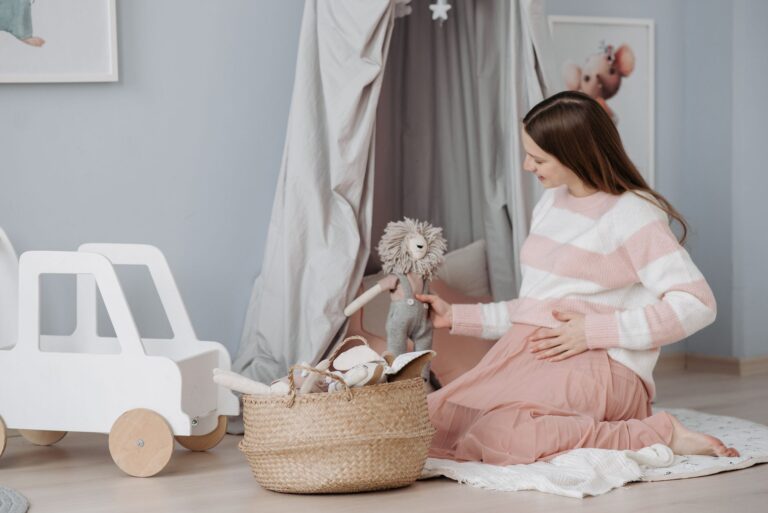
Play is how children build the architecture of their brains, learning to manage emotions, connect with others, and solve problems without instruction or pressure. It is the primary way young minds develop the cognitive and social capacities they need to think, regulate themselves, and interact with the world—a natural process that happens through exploration and imagination rather than through formal teaching. Understanding why play matters helps you see it as education, not downtime, and gives you permission to protect it as a core part of your child's day. This article explains what develops through play, how it changes as children grow, and how parents can support it without overdirecting it.
Table of Contents
- How Play Builds the Brain
- Play and Social-Emotional Learning
- Physical Development Through Play
- Creativity and Problem-Solving
- Play as Natural Language and Conceptual Learning
- What Happens When Play Is Limited
- Different Types of Play and What They Build
- How Play Changes as Children Grow
- How to Support Play at Home
- When Play Seems Limited or Withdrawn
- Frequently Asked Questions
How Play Builds the Brain
Play literally shapes the structure of a child's developing brain. When a child engages in play—stacking blocks, pretending, moving their body—they are forming neural connections, particularly in areas that govern executive function (planning, impulse control, working memory) and emotional regulation (recognizing and managing feelings). These connections strengthen with repeated use and become the foundation for learning, attention, and self-control.
In infancy and toddlerhood, sensory play—reaching, grasping, mouthing objects—develops the motor cortex and strengthens the pathways between sensory and motor regions. A baby's repetitive play (dropping a spoon again and again) looks monotonous to an adult but is essential work; the baby is testing cause-and-effect and refining hand-eye coordination.
Preschoolers' pretend play (playing house, doctor, animals) activates the prefrontal cortex, the brain region responsible for abstract thinking, impulse control, and planning. When a child says "You be the baby and I'll be the mommy," they are mentally representing a role that is not real in the moment—a crucial cognitive leap that supports later academic skills like reading and math.
School-age children's games with rules (tag, board games, sports) develop the anterior cingulate cortex, which handles conflict resolution and working within constraints. Losing a game, negotiating rules with peers, and adjusting strategy on the fly are all exercises in cognitive flexibility. The timing of brain development is not uniform.
The prefrontal cortex continues developing into the mid-20s, so opportunities for self-directed play during early and middle childhood are critical; adult-directed structured activities cannot fully replace them. Stress hormone levels rise when play is squeezed out or when children have insufficient downtime. Chronic stress during the years when the brain is most plastic can alter development in the hippocampus (memory and learning) and amygdala (emotion processing), making it harder for a child to regulate emotions and concentrate later.
Play and Social-Emotional Learning
Through play with other children, a child learns to read social cues, manage conflict, and understand that other people have thoughts and feelings different from their own. This capacity, called theory of mind, does not develop through instruction; it develops through repeated interactions where the child has to negotiate, compromise, and repair relationships.
Parallel play—two toddlers playing near each other but not yet collaborating—is a normal bridge between solitary play and true social play. Around age three, children begin cooperative play, where they work toward a shared goal (building a fort together). This shift requires taking turns, listening to another person's ideas, and managing the frustration when your idea is not chosen.
When children play freely, they encounter conflicts naturally: someone takes the toy they wanted, a playmate disagrees about the game's rules, an idea does not work out. The child must respond—and the stakes are low enough that they can experiment with different approaches. Apologizing, suggesting a compromise, or walking away are skills learned through play, not lectures.
Pretend play offers a safe space to explore emotions and situations. A child playing "sick child" or "scared animal" is experimenting with feelings and working through fears in a manageable way. This emotional rehearsal can help a child process anxiety, loss, or confusing experiences they are encountering in their real life.
Imaginative play also builds empathy. When a child takes on the role of someone else, they practice stepping into that person's perspective. Over time and with many play experiences, this translates into genuine concern for others' feelings and the ability to see a situation from multiple viewpoints. Play with peers (as opposed to siblings or adults) carries special weight because children cannot rely on someone who knows them well to fill in the gaps.
They must communicate more clearly, manage equality rather than being guided by an adult, and work through friction without parental mediation. This is where social problem-solving skills crystallize.
Physical Development Through Play
Unstructured play—running, climbing, jumping, spinning—develops gross motor skills (large muscle coordination) while building bone density, cardiovascular fitness, and proprioceptive awareness (knowing where the body is in space). Children who engage in vigorous outdoor play show better balance, strength, and coordination than children whose movement is limited to structured classes or screen time. Fine motor skills—pinching, grasping, manipulating small objects—develop through play with blocks, drawing materials, beads, sand, and water.
These skills are foundational for later writing, self-care (buttoning, zipping), and eating with utensils. A three-year-old scribbling at an easel is building the wrist strength and hand-eye coordination needed for writing later. Risk-taking play—climbing higher, running faster, testing balance—helps children develop a realistic sense of their own capabilities and boundaries. A child who is prevented from experiencing minor bumps and scrapes never learns to calibrate risk; as a teenager, they may either be overly fearful or dangerously reckless because they lack embodied experience of consequence.
Vestibular play (swinging, spinning, rolling) develops the inner ear and balance system, which is connected to attention and emotional regulation. Children who have limited access to spinning, swinging, and movement-based play sometimes show difficulty with focus and heightened anxiety. Sensory play—playing with water, mud, sand, painting, playdough—builds sensory integration and can be especially important for children with sensory sensitivities.
Repeated exposure to varied textures and tactile experiences in a low-pressure, play-based setting can help desensitize and integrate challenging input. Movement play is also a natural outlet for the high energy levels of young children. A child who has not had adequate time to move vigorously throughout the day will struggle to sit still and concentrate, making classroom attention harder and leading to mislabeling of children as "restless" when the problem is simply insufficient physical outlet.
Creativity and Problem-Solving
Open-ended play—where the outcome is not predetermined and the child's imagination drives the direction—develops creative thinking and the ability to generate multiple solutions to a problem. When a child builds with blocks without instructions, they are testing ideas, adjusting when something falls, and coming up with new designs based on what they discover. This is distinct from structured, goal-oriented activities (following a recipe, completing a puzzle with a predetermined answer, playing a game with set rules).
Both are valuable, but open-ended play is where genuine invention happens. A child who has spent most of their time in structured activities may struggle with the flexibility and risk-taking required for creative thought. Pretend play is a form of mental flexibility. A child decides that a cup is a telephone, a cushion is a boat, a stick is a magic wand.
This ability to mentally represent something as something else is a precursor to symbolic thinking and abstract reasoning, both essential for later learning in mathematics and science. Problem-solving through play is often slow and messy. A child trying to build a tower that will not fall over may spend twenty minutes experimenting with different configurations.
An adult might show them the solution in two minutes, but the child who discovers it themselves has learned something about structure, balance, and persistence that will transfer to other situations. Frustration tolerance develops through play. When a block tower falls or a game is lost, the child experiences disappointment in a relatively low-stakes setting.
Over time, with support, they learn that setbacks are not catastrophic and that trying a different approach is possible. Children who are heavily protected from frustration during play may collapse under manageable stress later. Imaginative play also normalizes divergent thinking—the ability to come up with multiple answers to an open-ended question. In real play, there is no single "right" way to play house, dinosaurs, or superheroes. A child learns that variation is acceptable and that their unique ideas have value.
Play as Natural Language and Conceptual Learning
Language develops faster in children who have rich play experiences with peers and adults because play provides meaningful, repetitive contexts where new words and concepts matter. A child playing "grocery store" with a peer will naturally use words for foods, money, payment, and gratitude—vocabulary that has direct relevance to the imagined situation. Mathematical thinking begins with play long before worksheets.
A toddler playing with water and containers discovers volume and measurement. A child building with blocks encounters geometry, balance, and estimation. A child playing "store" with toy money learns about exchange and basic arithmetic. These are durable conceptual foundations that later make formal math instruction clearer and less abstract. Scientific thinking—observation, prediction, testing—happens naturally in exploratory play.
A child wondering why one toy floats and another sinks is engaging in hypothesis formation and testing, even though they do not use those words. A child carefully observing an insect is building attention and observation skills. Narrative thinking—the ability to organize experience into a story with a beginning, middle, and end—develops through pretend play.
When a child creates a story with toys or acts out a scenario, they are organizing their thoughts into a coherent sequence, a skill that later supports reading comprehension and writing. Sustained attention and focus develop through play because play is intrinsically motivating. A child will spend extended time on a task that is self-chosen in a way they will not with a task imposed by an adult. This voluntary, sustained focus is the foundation for later school-based learning.
What Happens When Play Is Limited
When children have insufficient unstructured play, they often show difficulty with emotional regulation—more tantrums, more anxiety, less ability to self-soothe. A child who spends most of their time in adult-directed or screen-based activities has fewer opportunities to practice managing their own emotions and problem-solving independently. Attention problems increase when play time decreases. This is not the same as diagnosable attention-deficit conditions, but rather the natural consequence of a developing brain that has not had enough practice with sustained, self-directed focus.
A young child whose schedule is tightly structured and screen-filled may appear unfocused when given an open task. Children with limited play experience often show fewer creative ideas and more difficulty generating solutions to novel problems. They may look to adults to tell them what to do rather than experimenting or trying new approaches themselves.
This learned dependence on external direction can persist into school and beyond. Social skills develop later or unevenly in children with limited peer play. They may struggle to read social cues, join group play, or negotiate conflict because they have not had the practice. This is not a personality trait; it is a skill gap that practice can close.
Physical skills lag in children with limited outdoor or unstructured movement time. Fine motor development may be delayed, and gross motor coordination may be noticeably behind peers. A child who has not had access to climbing, running, and balance-based play at ages three to seven will be measurably less coordinated than a child with typical play access.
Anxiety and behavioral difficulties can emerge or intensify when the pressure for achievement is high and the space for play is small. Young children need time to process the world at their own pace, and when every hour is accounted for with lessons, academics, or screens, stress builds.
Different Types of Play and What They Build
Solitary play (a child playing alone with toys, drawing, or building) is essential and normal, not a sign of social difficulty. Through solitary play, a child explores their own interests, practices skills without an audience, and develops comfort with their own thoughts. Parents often worry about a child playing alone, but solitary play builds autonomy and allows the child to follow their own curiosity.
Parallel play (playing near other children without direct interaction) is the normal stage before cooperative play and continues throughout childhood. Two children at adjacent easels, each making their own art, are not failing to interact; they are in a valid play state. Parallel play allows observation of peers and gradual comfort in proximity without the demands of coordination.
Associative play (two children playing with the same materials or activity but not toward a shared goal) bridges parallel and cooperative play. Two children building with the same blocks at the same table, each with their own creation, are in associative play—more connected than parallel but without the complexity of shared purpose. Cooperative play (two or more children working toward a shared goal or following shared rules) develops negotiation, compromise, and perspective-taking.
This is where many social skills crystallize and where conflict resolution happens in real time. Cooperative play usually begins around age four and becomes more sophisticated as children age. Rough-and-tumble play (wrestling, chasing, play fighting in a playful mood) is normal, especially for boys, and is not aggressive behavior. This type of play builds confidence, tests physical capabilities, and teaches boundaries (knowing when play is too rough and needs to stop).
It should be supervised but not discouraged. Imaginative or pretend play (creating scenarios, taking on roles, using objects symbolically) activates different neural networks than active physical play and is developmentally distinct. A child might move between physical and imaginative play within a single hour, and both are necessary. Rule-based games (tag, board games, sports) develop different skills than free play.
The structure teaches children to work within constraints, understand fairness, and manage competition. These skills are important but cannot replace the flexibility and invention that free play offers.
How Play Changes as Children Grow
Infants engage in sensorimotor play—mouthing objects, reaching, grasping, repeating actions to see what happens. This appears repetitive but is essential exploration. A baby dropping a rattle repeatedly is not bored; they are conducting an experiment in cause and effect. Toddlers (ages one to three) combine sensorimotor play with early pretend play. A toddler might push a toy car and make "vroom" sounds, or feed a doll.
Parallel play dominates, but interest in other children grows. Physical play becomes more coordinated—running, climbing, jumping, though still without complex balance. Preschoolers (ages three to five) spend much of their time in imaginative play, often with a peer or small group. Their pretend scenarios become more elaborate and coherent. Language explodes because play provides meaningful contexts for new words.
Gross motor skills refine, and fine motor skills develop rapidly. Cooperative play begins and conflict is frequent (because skills for managing it are still new). Early school-age children (ages five to seven) begin to value games with rules, though they are still flexible about rule interpretation. Imaginative play continues but often incorporates narrative structure and more complex scenarios.
Physical play becomes more skilled and more competitive. Friendships begin to matter more, and peer acceptance becomes a concern. Middle school-age children (ages seven to twelve) spend more time on rule-based games and sports. Imaginative play becomes less visible but may continue in quieter forms (strategic games, creative projects). Physical play becomes more complex and coordinated.
Social play becomes central to identity and happiness. Independent projects and hobbies emerge as extensions of play. At each stage, the type of play shifts because the developing brain is ready for new challenges. A preschooler may not be ready for complex rule-based games because the prefrontal cortex is not yet capable of holding multiple rules and applying them flexibly. This is not a deficit; it is normal development.
How to Support Play at Home
Create unstructured time. A child needs extended blocks of free time (not twenty-minute intervals between scheduled activities) to become absorbed in play. One to two hours of unstructured time daily, if possible, allows a child to settle into play deeply enough for real learning to happen. Provide loose, open-ended materials. Blocks, playdough, art supplies, water and sand, toy animals, and props for pretend play invite imagination more than toys with a single predetermined purpose.
Rotating materials keeps them novel without requiring constant purchases. Limit screens and structured lessons during early childhood. The evidence is clear that hours of screen time correlate with delays in language, attention, and social development, especially in children under five. In childhood, more unstructured time and less structured instruction tends to produce better long-term learning outcomes and higher motivation.
Join play sometimes, but not always. A parent occasionally playing alongside a child models engagement and can extend thinking ("I wonder what would happen if…"). However, children also need time to play without an adult, to make their own decisions, and to solve their own problems. Adult-directed play is not the same as child-directed play.
Do not rush to solve problems during play. When a block tower falls or a game feels unfair, your instinct might be to fix it or offer the solution. Resist this. The frustration and the problem-solving process are essential. Ask, "What could you try?" rather than, "Here's how to do it." Normalize boredom. A child who says "I'm bored" has been given a chance to discover what they actually want to do, not a cue for an adult to entertain them.
"You can figure out something to do" followed by a redirect to available materials teaches resourcefulness. Ensure outdoor play access. Outdoor play offers movement, sensory variety, and the mild stress of unpredictability (weather, uneven ground, insects) that builds resilience and coordination. Even a small outside space (yard, playground, nearby park) should be part of the regular routine.
Do not interrupt play to teach a lesson or correct behavior unless safety is at stake. Play interruption is attention-fragmenting and breaks the child's concentration. Wait until play has naturally ended to address behavioral issues.
When Play Seems Limited or Withdrawn
A child who does not initiate play, prefers adult direction, or struggles to engage in imaginative play may be signaling a need for evaluation, though this is not automatic. Some children are naturally quieter and more structured in their thinking, and this is a temperament difference, not a problem. Autism spectrum differences can show up as repetitive or solitary play (spinning objects, lining things up, scripts from media rather than open-ended imagination).
A speech or developmental delay can affect play because language and social skills affect social play. If you notice significant differences from age expectations, a developmental screening by a pediatrician is a reasonable next step. Anxiety can appear as play avoidance or only very controlled, predictable play. A child who has experienced trauma or significant stress may show fear of novelty or difficulty with spontaneous engagement.
In these cases, gradual, non-pressured exposure to play and spaces where the child feels safe is helpful. Sensory sensitivities can make certain play experiences intolerable (bright playground, loud groups, sticky materials, grass, sand). Starting with quieter, smaller play contexts and gradually introducing sensory variation, without pressure, can help expand tolerance. If your child is not playing because they are ill, in pain, or on a medication with side effects affecting attention or mood, address the underlying issue first.
Once the child feels better, play often returns naturally. When a child is withdrawn or disengaged from play, remember that forcing play is counterproductive. Creating a calmer, less pressured environment, ensuring adequate sleep, and maintaining consistent routines often allows spontaneous play to re-emerge. If the pattern persists, a conversation with a pediatrician or child psychologist can help identify whether there is an underlying concern that needs support.
Frequently Asked Questions
Does my toddler really learn from play, or is it just entertainment?
Play is the primary way young children's brains develop. When toddlers stack blocks, pretend, explore textures, or run around, they are forming neural connections, learning about cause-and-effect, building language, and developing coordination. Play looks effortless because it is intrinsically motivating, but it is genuine learning happening in real time. No formal lesson teaches what a toddler learns by dumping water in and out of containers for thirty minutes.
Is it okay for my child to play alone, or are they missing out socially?
Solitary play is normal and necessary at all ages. A child playing alone is developing independence, following their own interests, and practicing skills without an audience. This is healthy, not a warning sign. Children need both solitary and peer play, and the balance changes with age. Toddlers do a lot of solitary and parallel play before moving toward more cooperative play with peers.
How much unstructured play does a child actually need?
Ideally, one to two hours daily, in extended blocks rather than scattered intervals. A child needs time to become absorbed in play—settling in typically takes ten to fifteen minutes. Frequent interruptions for structured activities break that focus and reduce the learning that happens in deep play. This does not mean play must be every waking moment; children also need meals, routines, downtime, and time with family.
Does my child need sports and classes, or is unstructured play enough?
Unstructured play is the foundation and is non-negotiable for healthy development. Structured lessons and classes can add variety and teach specific skills (swimming, tennis, music) but should not replace open-ended play. Many children are overscheduled with lessons while receiving insufficient free play. If your child is in multiple weekly classes with little unstructured time, reducing the schedule to protect play time is often beneficial.
What if my child prefers screen time to actual play?
Screens are designed to be compelling, and a child offered both screens and open play will often choose screens initially. This is not a sign the child prefers screens in a developmental sense; it reflects how powerfully they capture attention. Limiting screen access (especially in younger children, under five) and increasing access to play materials, peers, and outdoor time will shift the balance. The preference is often reversible when play is more available.
If my child is not meeting play milestones, when should I worry?
At ages three to four, if a child is not engaging in any pretend play, not showing interest in peers, or showing primarily repetitive or rigid play patterns, mention it to your pediatrician. Around age five to six, if a child cannot participate in cooperative games or remains mostly parallel with peers, a developmental screening is reasonable. Delays can be early signs of speech, hearing, autism spectrum differences, or other developmental concerns that early support can address. Some variation is normal, but significant gaps from age expectations warrant a conversation with a professional.