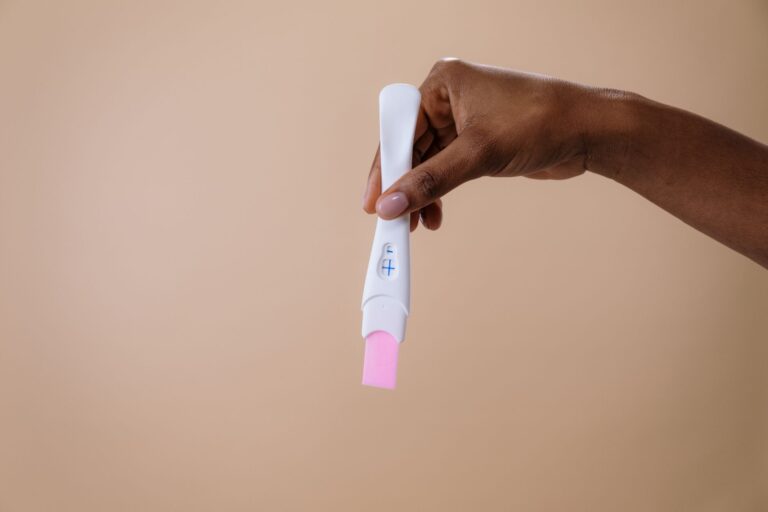
Yes, you can be pregnant with a negative test. Home pregnancy tests detect human chorionic gonadotropin (hCG), a hormone your body produces after fertilization, but the test can miss a pregnancy if hCG levels are still too low or if you're testing incorrectly. Most false negatives happen because women test too early—before the hormone has accumulated enough to show up on a test—but other reasons include dilute urine, certain medications, and rare health conditions.
This does not mean your negative test is useless. A negative test at the right time, done correctly, is usually reassuring. But if you have pregnancy symptoms or are convinced something is different, you have options to verify, and a clinician can help you sort through them.
Table of Contents
- Why Pregnancy Tests Show Negative When You're Pregnant
- Testing Too Early Is the Biggest Culprit
- Different Tests Catch Pregnancy at Different Points
- The Timeline From Conception to Positive Test
- What Pregnancy Symptoms Are Real Without a Positive Test
- Medical Reasons a Test Might Be Falsely Negative
- When and How Often to Retest After a Negative Result
- Blood Tests Catch Early Pregnancy Home Tests Miss
- What to Do When You Believe You're Pregnant Despite a Negative Test
- How Common Are False Negatives, and What Should Worry You
- Frequently Asked Questions
Why Pregnancy Tests Show Negative When You're Pregnant
A home pregnancy test works by detecting hCG in your urine. When a sperm fertilizes an egg, the embryo begins producing this hormone immediately, but it takes time to accumulate to levels your pee-on-a-stick test can find. The hormone doubles roughly every two to three days in early pregnancy, so the difference between "too early" and "positive" can be just a few days.
Every test brand sets a detection threshold—the minimum hCG level the test will recognize. Most home tests detect hCG at 20 to 25 mIU/mL (millimeters of international units per milliliter), though some sensitive brands claim to detect 10 mIU/mL or lower. If your hCG is below that threshold, the test shows negative even though you are pregnant.
Not all the hCG your body makes appears in your urine equally. The hormone is absorbed and processed by your kidneys, so urine concentration varies wildly based on hydration, time of day, and individual metabolism. First-morning urine is most concentrated and gives the best chance of detection. Test quality matters too. Cheap drugstore tests and expensive pharmacy tests are regulated similarly, but real-world accuracy varies slightly by brand and by how carefully you follow the instructions.
Expired tests, tests exposed to heat, and tests left in the bathroom for months are less reliable. The bottom line: a negative test when hCG is still climbing is the most common reason for a "false negative." You are not missing something obvious or failing at testing—you are simply testing before your body has produced enough hormone for the test to catch.
Testing Too Early Is the Biggest Culprit
The clock does not start at sex. It starts at ovulation, the moment an egg is released from the ovary, usually about 14 days before your next period (though this varies). Sperm can survive up to five days, so "days since sex" is not the same as "days since conception." Fertilization happens within 12 to 24 hours after ovulation, but implantation—when the embryo burrows into the uterine lining and starts producing hCG—takes 6 to 12 days more.
You cannot have a positive test until implantation occurs. In a textbook cycle, this means you are 7 to 21 days past ovulation before any test would turn positive, but "your cycle" is not textbook. Most home tests reliably detect pregnancy around the day of a missed period or a few days after.
Testing five days before a missed period will catch many pregnancies but will miss others. Testing three days early has a real false negative rate. If you do not track ovulation precisely, the math is harder. Period-tracking apps estimate ovulation, but estimates can be off by several days. A woman whose ovulation was late might test on what she thinks is 10 days post-ovulation but is actually only 7 days—too early for a positive.
The solution is straightforward: wait until at least the day of a missed period if possible, or test no earlier than 12 to 14 days after unprotected sex. If you test early and get a negative, plan to retest a few days later.
Different Tests Catch Pregnancy at Different Points
Home urine tests and blood tests detect the same hormone but with different sensitivity. Most drugstore tests detect hCG at 20 to 25 mIU/mL; the most sensitive home tests claim 10 mIU/mL. A blood test can detect hCG as low as 1 to 2 mIU/mL, making it far more sensitive and useful very early in pregnancy.
There are two kinds of blood pregnancy tests. A qualitative test simply says "yes" or "no"—you are pregnant or you are not. A quantitative test (also called a beta hCG test) gives a number showing exactly how much hCG is in your bloodstream. This number is useful for tracking whether pregnancy is progressing normally and for confirming very early pregnancy.
A home urine test is quick and cheap, which is why millions of women use them. They are also usually accurate when done correctly at the right time. The catch is that they need a certain hCG threshold before they react, and early pregnancy falls below that threshold for several days. If you test negative at home but have strong symptoms or other signs you believe point to pregnancy, a blood test from a clinician is your next step.
A clinician can order a quantitative test to see your exact hCG level and can repeat it in 48 hours to confirm the pregnancy is progressing and hCG is rising as expected. Blood tests are available at doctors' offices, urgent care clinics, and many labs. You do not need to wait for an appointment for urgent pregnancy testing; many will fit you in the same day or next day.
The Timeline From Conception to Positive Test
Understanding when hCG appears helps explain why your negative test might not mean you are not pregnant. At ovulation, hCG is zero. At fertilization (within one day), it is still zero. During the six to twelve days of implantation, the embryo is producing hCG, but levels are still below 1 mIU/mL. Around day 10 to 12 after ovulation (four to six days before a missed period), hCG typically reaches 5 mIU/mL.
Some sensitive tests might catch this. By day 12 to 14 after ovulation (two to four days before a missed period), hCG is usually 20 to 25 mIU/mL, the level most home tests detect. By the day of a missed period, hCH often reaches 50 to 100 mIU/mL in a healthy pregnancy. The timeline is not fixed.
Implantation can happen on day 6 or day 12, meaning one woman's hCH at "10 days post-ovulation" might be 30 mIU/mL while another woman's is 5 mIU/mL. Metabolic differences, age, and health affect how quickly hCG rises. A test that is negative at day 8 past ovulation is not proof you are not pregnant. The same test at day 14 past ovulation is much more reliable. If you cannot wait and tested very early, plan to test again in a few days.
What Pregnancy Symptoms Are Real Without a Positive Test
You can feel pregnant before a test is positive because pregnancy hormones begin affecting your body before hCG reaches testable levels. Progesterone rises after ovulation regardless of whether an egg was fertilized, so breast tenderness, fatigue, and mood changes in the luteal phase of your cycle might be early pregnancy or might be PMS. Distinguishing between the two is hard because they feel identical: sore breasts, fatigue, food aversions, nausea, and mood changes happen in both conditions.
The only clear difference is pregnancy-specific nausea (which starts after implantation, typically six to twelve days after ovulation) and missing a period. Some women report implantation cramps around six to twelve days after ovulation, a mild pulling or pinching sensation in the lower abdomen. Others report implantation bleeding, light spotting when the embryo burrows in.
Neither of these is common or clear-cut enough to trust over a test, but they are real early signs in some pregnancies. If you feel strongly that something is different—stronger symptoms than your usual PMS, nausea, or sensitivity to smells—and a negative home test did not reassure you, do not ignore it. Call your clinician or go get a blood test. A quantitative hCG test will either confirm your suspicion or rule it out.
Medical Reasons a Test Might Be Falsely Negative
Certain health conditions and medications can interfere with the accuracy of a pregnancy test or with hCG production itself, though this is uncommon. Polycystic ovary syndrome (PCOS) can affect hCG levels and the timing of ovulation, making it harder to predict when a test will be positive. Thyroid disorders can also affect hCG. Some fertility medications interfere with hCG in ways that confuse testing.
If you are using fertility drugs, your clinician should guide your testing, because trigger shots (which contain synthetic hCG to prompt ovulation) can show up as a positive test for days after injection, then disappear, then become truly positive as your natural hCG rises. Excessive water intake before testing dilutes your urine and can make hCG undetectable even if it is present at adequate levels in your blood.
This is why first-morning urine—the most concentrated—gives the best result. If you are very thirsty or have been drinking tons of water, results from that test are unreliable. Certain medications and supplements might theoretically affect hCG detection, though this is rare. If you are on medications for any condition, mention it to your clinician if you get a negative test but think you are pregnant.
Ectopic pregnancy (when the embryo implants outside the uterus, usually in a fallopian tube) produces hCG but at a slower, sometimes irregular rate. An ectopic pregnancy can test negative early even when conception occurred, then become positive later, then show confusing results on repeat tests.
When and How Often to Retest After a Negative Result
If you test negative but suspect pregnancy, a retest in two to three days is reasonable. Do not retest the same day or the next day; hCG needs time to double. Testing every day wastes money and creates anxiety without useful information. Use first-morning urine for the best sensitivity. If retesting, use the same time of day for consistency.
Some women find it helpful to test once a day for three to five days if the first test was early, stopping when they get a clear answer (either positive or negative with confidence). Multiple negatives spaced several days apart are reassuring. If you get two or three negative tests at appropriate timing—days 12, 14, and 16 after you believe ovulation occurred—the pregnancy rate is very low.
A negative test at 16 days post-ovulation is highly reliable. However, multiple negatives do not prove absence of pregnancy with 100 percent certainty. If you have missed a period, have strong pregnancy symptoms, or have any other compelling reason to suspect pregnancy, see a clinician for a blood test. That is the definitive answer a home test cannot give.
Negative tests can be emotionally hard if you are hoping to be pregnant. Positive tests when you are not hoping for pregnancy are also stressful. Either way, a follow-up conversation with a clinician—rather than endless home testing—is the sensible next step.
Blood Tests Catch Early Pregnancy Home Tests Miss
A blood pregnancy test from your clinician or a lab is far more sensitive than a home urine test and can detect pregnancy days before a home test would. While a home test typically needs 20 to 25 mIU/mL of hCG to turn positive, a blood test is positive at 1 to 2 mIU/mL. Qualitative blood tests give a simple yes-or-no answer, similar to a home test but more sensitive.
Quantitative tests provide a number, the exact hCG level in your bloodstream. A quantitative result is useful for confirming very early pregnancy and for tracking whether hCG is rising appropriately. In a normal pregnancy, hCG should roughly double every 48 to 72 hours in the early weeks. If a clinician suspects miscarriage, ectopic pregnancy, or any other complication, serial quantitative tests (drawn 48 hours apart) clarify what is happening better than any home test could.
A blood test can be ordered by your primary care doctor, an OB-GYN, an urgent care clinic, or sometimes a pregnancy center. Many labs will draw and run a test same-day or next-day. Some results come back within hours. If you test negative at home but believe you are pregnant—especially if you have missed a period or have strong symptoms—ask your clinician for a blood test. This is not overkill; it is the right tool for a definitive answer when home testing has not settled the question.
What to Do When You Believe You're Pregnant Despite a Negative Test
Start by tracking your cycle carefully. Note the first day of your last period, the length of your typical cycle, and when you expect your next period. This information helps your clinician determine if you are early in pregnancy or if something else is happening. If you know when you ovulated (from tracking, from an ovulation predictor, or from a fertility app), write that down too.
Your clinician can calculate expected hCG levels based on days since ovulation and judge whether a test timing makes sense. Call your doctor or OB-GYN and describe what is happening: when you had unprotected sex, when your last period was, what symptoms you are experiencing, and what your home test showed. You do not need to wait for an appointment to ask for a blood test; most clinicians will order one if you have a missed period or convincing symptoms.
If you do not have a regular doctor, visit an urgent care clinic or a pregnancy testing center that offers blood tests. Many clinics offer free or low-cost blood pregnancy tests. This is not a step to delay if you are worried; getting a definitive answer resolves the anxiety quickly. Keep your negative home test if you have it. It might be useful context for your clinician—it shows timing and which brand you used—but do not let it talk you out of seeking a blood test if you are not reassured.
How Common Are False Negatives, and What Should Worry You
False negatives happen most often when women test before hCG has risen enough—usually testing four or more days before a missed period. Sensitivity varies by test brand and by individual hCG levels, but testing at the right time with a reasonable test gives you a high confidence answer. A negative test at the time of a missed period is very reliable.
By that point, hCG in a healthy pregnancy is usually over 50 mIU/mL, well above the detection threshold of most tests. Negative at that point usually means not pregnant, though very rare exceptions exist. If you get a negative test at an appropriate time and your period arrives normally a few days later, you are almost certainly not pregnant.
Trust that result. Your body did not betray the test. If you get a negative test but your period does not arrive, something is going on that needs investigation. It might be pregnancy that is not yet showing enough hCG. It might be a hormonal irregularity unrelated to pregnancy. Either way, this is a conversation for a clinician, not a third home test.
One concerning scenario: a test that is positive, then you get negative results on repeat tests. This could signal miscarriage, ectopic pregnancy, or testing error. This situation requires blood tests and potentially an ultrasound to find out what is happening. Do not assume it is a false positive; get medical evaluation instead. A negative test should not stop you from seeking care if you have severe symptoms: heavy bleeding, severe abdominal pain, fainting, or signs of serious infection. These need urgent evaluation regardless of what the test says.
Frequently Asked Questions
How many days after conception can you test positive?
Implantation takes 6 to 12 days after ovulation. hCG must reach testable levels (usually 20+ mIU/mL) before a home test turns positive, which is typically 10 to 14 days after ovulation. Most home tests reliably detect pregnancy around the day of a missed period.
Can you have a missed period and still have a negative pregnancy test?
Yes. A missed period does not always mean pregnancy; stress, hormonal changes, thyroid problems, or other health conditions can delay or skip a period. If you have a missed period and a negative test, call your clinician. They may order blood tests or other evaluation to find the cause.
How accurate are pregnancy tests if you test negative?
A negative test at the time of a missed period is about 99% accurate—you are almost certainly not pregnant. A negative test before a missed period is less reliable; testing 4 days early has a false negative rate around 50%. Accuracy improves each day closer to or past your missed period.
Should you take a pregnancy test in the morning?
First-morning urine is best because it is most concentrated, making hCG easier to detect. You can test at other times of day if necessary, but morning urine gives the most reliable result, especially very early in pregnancy.
Can you be pregnant with a negative test and never know?
Very rarely. Most miscarriages happen early and go undetected. Some women report not knowing they were pregnant until after a miscarriage because tests were always negative. If you are concerned about a possible very early miscarriage, a clinician can order blood tests.
What does a faint positive line on a pregnancy test mean?
A faint line is still a positive line, meaning hCG is present. hCG levels rise in early pregnancy, so a very faint line often means testing early—hCG is present but low. Take another test in a few days to see if the line darkens. A blood test can measure exact hCG levels.