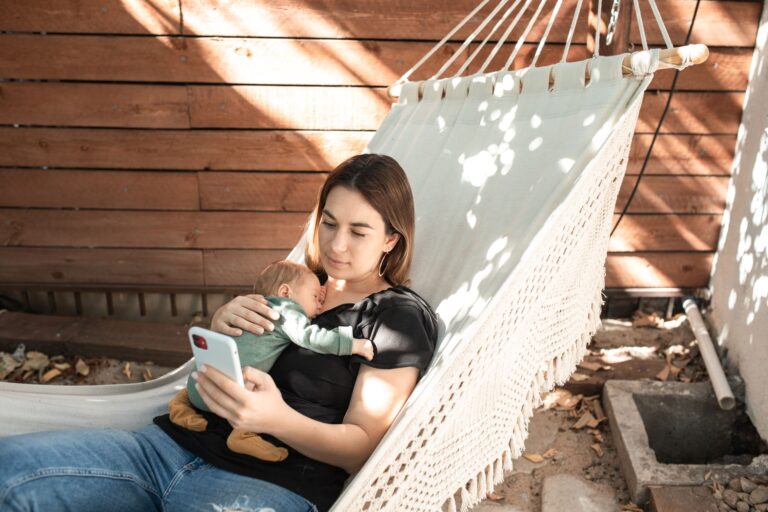
Yes, you can get pregnant while breastfeeding. But the actual risk depends on what kind of breastfeeding you’re doing, how old your baby is, and whether you’re using contraception. The oversimplified “breastfeeding prevents pregnancy” advice has left countless women surprised by a second baby they didn’t expect to arrive so soon.
The real story is more nuanced. Exclusive breastfeeding does create a temporary window where pregnancy becomes less likely—but “less likely” is not the same as impossible. Understanding how this mechanism actually works helps you make decisions that match your family planning goals.
How Breastfeeding Suppresses Fertility (But Not Completely)
When you breastfeed, your body releases prolactin, a hormone that stimulates milk production. Prolactin does something else too: it suppresses gonadotropin-releasing hormone (GnRH), which is the chemical messenger that tells your pituitary gland to start the reproductive cycle.
Without GnRH signaling, your ovaries don’t receive the “wake up” message. Follicle-stimulating hormone (FSH) and luteinizing hormone (LH) remain suppressed. Without these hormones, eggs don’t mature, ovulation doesn’t occur, and pregnancy becomes biologically impossible.
This mechanism is called lactational infertility, and it’s real. But here’s where the practical reality diverges from the theory: this hormonal suppression only works under specific conditions.
The Three Conditions That Actually Matter
1. Exclusive Breastfeeding Is the Critical Variable
Exclusive breastfeeding means your baby receives only breast milk—no formula, no solid foods, no water, no pacifiers, no bottles of expressed milk. This matters because your body responds to the act of breastfeeding itself, not just the fact that milk exists.
Every time your baby nurses, the suckling stimulates nerve endings in your nipple and breast tissue. This neural signal travels to your brain and triggers prolactin release. The frequency and intensity of this signal determines whether prolactin levels stay high enough to suppress ovulation.
When you introduce formula or bottles, your baby nurses less frequently. When you add solids, nursing episodes decrease further. Each reduction in breastfeeding frequency lowers your prolactin levels. Once prolactin drops below a critical threshold—different for every woman, typically around 50 ng/mL—GnRH resumes pulsing, and ovulation can return.
This is why the same “breastfeeding” claim means completely different things depending on what percentage of feeds are breast milk. A mother exclusively breastfeeding 8+ times per day has vastly different fertility than a mother nursing twice daily and supplementing with formula.
2. Timing: The First Six Months of Full Breastfeeding
The contraceptive effect of exclusive breastfeeding is strongest in the first 6 months postpartum. This window exists because of hormonal convergence: your prolactin levels are at their highest during this period, and your ovaries need time to recover from pregnancy and birth.
After 6 months, even with continued exclusive breastfeeding, your prolactin levels naturally decline. Your body is recalibrating. Simultaneously, your ovarian function is returning. The combination of these two factors means that by month 6-7, the contraceptive reliability of exclusive breastfeeding drops significantly.
If you introduce any supplementation before 6 months, this protective window shrinks. Introduce solids at 6 months while breastfeeding? Your fertility is already on its way back regardless.
The World Health Organization’s recommendation of exclusive breastfeeding for 6 months is based partly on infant nutrition, but the fertility data also supports this timeframe as the realistic window for breastfeeding-based fertility suppression.
3. Amenorrhea Doesn’t Always Mean Anovulation
Here’s a critical distinction that surprises many women: the absence of your period doesn’t guarantee the absence of ovulation.
Lactational amenorrhea—the medical term for not menstruating while breastfeeding—occurs in roughly 60% of exclusively breastfeeding women in the first 6 months. But amenorrhea is a symptom, not a mechanism of contraception. Your period can be absent while ovulation resumes.
In fact, research shows that ovulation sometimes returns before your first postpartum period. You ovulate, your body produces progesterone, and you remain amenorrheic. Meanwhile, you’ve just become fertile without any warning sign.
This is why relying on “the lactational amenorrhea method” (LAM) requires meeting all three conditions above, not just being amenorrheic. Many women assume that no period equals no pregnancy risk—and this assumption fails regularly.
What Breaks the Fertility Suppression (And It Happens Faster Than You’d Think)
Introducing Formula or Combination Feeding
The moment you introduce formula, the calculus changes. Your baby’s suckling frequency drops because they’re getting calories from another source. Within days to weeks, your prolactin levels begin declining.
Studies show that women using combination feeding (breast and formula) have fertility return rates closer to non-breastfeeding women than to exclusively breastfeeding women. By 3-4 months of combination feeding, pregnancy rates approach those of formula-feeding mothers.
This doesn’t mean combination feeding is “bad”—many mothers choose it for valid reasons. But the contraceptive benefit you might expect from the breastfeeding portion evaporates once you’ve added formula.
Introducing Solids (Even a Little)
Starting solid foods at around 6 months is developmentally appropriate and recommended. But from a fertility perspective, it’s the beginning of the end for breastfeeding-based fertility suppression.
Every spoonful of solid food your baby eats replaces a few minutes of nursing. Cumulatively, your breastfeeding frequency drops. Prolactin follows. Ovulation resumes.
Some women notice their period returns within weeks of introducing solids. Others take longer. The variability depends on how quickly your baby transitions to foods and how much you reduce breastfeeding.
Using Pacifiers or Pumping Instead of Direct Nursing
Pacifier use doesn’t provide the same nerve stimulation as breastfeeding. Pumped breast milk fed via bottle also bypasses the direct suckling stimulus. If you’re primarily pumping and bottle-feeding expressed milk, your prolactin suppression effect is weaker than with direct nursing.
Some mothers pump exclusively and maintain exclusively breast milk feeding. They still have reduced breastfeeding stimulation compared to direct nursing 8+ times daily, so fertility returns faster.
Maternal Stress, Sleep Deprivation, and Illness
Cortisol, the stress hormone, interferes with the delicate hormonal balance that suppresses ovulation. Severe sleep deprivation, chronic stress, or acute illness can trigger prolactin to drop even if breastfeeding frequency hasn’t changed.
This is why some women get their period back suddenly during especially stressful periods or when they’ve been sick. Their breastfeeding pattern didn’t change, but their hormonal environment shifted.
When Does Your Period Actually Come Back?
The timeline varies wildly, but patterns emerge based on feeding type:
Exclusively breastfeeding: 60% of women remain amenorrheic for at least 6 months. The other 40% menstruate before 6 months despite exclusive breastfeeding. By 12 months, nearly all exclusively breastfeeding women have resumed menstruation.
Combination feeding: Average return is 3-4 months postpartum, though it can range from 6 weeks to 12+ months. The more supplementation, the faster the return.
Formula feeding: Average return is 6-8 weeks postpartum, though some women ovulate even before that.
The critical fact: Your period can return before you notice. Ovulation precedes menstruation. A woman could be fertile again without any indication.
The Real Pregnancy Rates While Breastfeeding
Research provides actual numbers that contradict the “breastfeeding is contraception” narrative:
Exclusive breastfeeding in the first 6 months: Pregnancy rate is approximately 0.5-2% per year with perfect use (meeting all three conditions). This is comparable to condoms, not to hormonal contraception.
Exclusive breastfeeding after 6 months: Pregnancy rates rise to 5-10% per year as prolactin suppression wanes and ovulation returns.
Combination feeding: Pregnancy rates are 10-15% per year, approaching the rates of non-breastfeeding women.
Real-world use (accounting for imperfect adherence to exclusive breastfeeding): Actual pregnancy rates are significantly higher than theoretical rates—often doubling or tripling.
In plain language: if 100 exclusively breastfeeding women avoid other contraception for one year in the first 6 months postpartum, 1-2 of them will likely become pregnant. After 6 months, that number climbs to 5-10 per 100. With combination feeding, 10-15 will become pregnant.
These aren’t high rates, but they’re not negligible either. For women who absolutely cannot become pregnant again (due to health risks, for example), these rates are unacceptable without backup contraception.
The Factors That Speed Up Your Fertility Return
Certain maternal characteristics predict faster fertility return:
Maternal age: Older mothers (35+) tend to have ovulation return slightly faster while breastfeeding. Their ovaries are primed to restart.
Previous pregnancy: Women with multiple prior pregnancies sometimes resume fertility faster than first-time mothers.
Genetic factors: Some women’s bodies are simply wired to resume ovulation quickly. This isn’t something you can control, and you won’t know until it happens.
Metabolism and weight: Women who lose pregnancy weight quickly sometimes have faster ovulation return. Leptin, a hormone produced by fat tissue, influences reproductive hormones.
Breastfeeding challenges: If you struggle with milk supply, oversupply, thrombosis, or other complications that reduce breastfeeding comfort or frequency, fertility returns faster.
Supplemental feeding introduction timing: Every day you delay introducing formula or solids extends the fertility suppression window. Conversely, early introduction shortens it.
Contraception While Breastfeeding: What Actually Works
If you want to use another method of contraception while breastfeeding, you have several safe options:
Progestin-Only Methods (Safe with Breastfeeding)
Progestin-only pill (mini-pill): Contains no estrogen, so it doesn’t affect milk supply. Requires consistent timing for effectiveness. Effectiveness: ~91% with typical use.
Progestin implant (Nexplanon): A small rod inserted under your arm. Can be placed at 6 weeks postpartum. Highly effective (>99%) and doesn’t affect milk supply.
Medroxyprogesterone acetate injection (Depo-Provera): Injectable progestin given every 3 months. Safe with breastfeeding. Effectiveness: >99% with typical use.
Levonorgestrel-releasing intrauterine device (IUD): Releases a small amount of progestin directly into your uterus. Can be placed as early as 6 weeks postpartum. Doesn’t significantly enter breast milk. Effectiveness: >99%.
Barrier Methods (Always Safe)
Condoms: No hormonal impact on milk supply. Must be used consistently. Effectiveness: ~85% with typical use, 98% with perfect use.
Diaphragm or cervical cap: Requires fitting after your uterus has involuted (around 6 weeks postpartum). No hormonal effects. Effectiveness: ~88% with typical use.
Long-Acting Methods (Most Effective)
Copper IUD: Non-hormonal, can be placed at any time postpartum. Unaffected by breastfeeding. Effectiveness: >99%.
Sterilization: Tubal ligation or vasectomy if you’re certain about family planning. Permanent but highly effective (>99%).
Methods to Avoid While Breastfeeding
Combined estrogen-progestin contraceptives: The estrogen component can reduce milk supply. While small amounts don’t completely stop breastfeeding, they can decrease milk production enough to force early weaning.
Estrogen-containing patch or ring: Same concern as combined pills.
Lactational amenorrhea method alone (if you can’t accept pregnancy risk): As discussed, it’s not reliable enough for women who cannot become pregnant for medical reasons.
Exclusive Breastfeeding Failure Scenarios
Understanding how women become pregnant while breastfeeding helps you avoid these situations:
The gradual introduction approach: A mother plans to introduce formula at 6 months but starts supplementing at 5 months because she’s returning to work. Ovulation begins. She doesn’t notice because amenorrhea continues temporarily. She has unprotected intercourse. She becomes pregnant at 5.5 months postpartum.
The pacifier replacement scenario: A mother uses pacifiers to soothe her baby at night instead of nursing. Nighttime breastfeeding frequency drops from 3 times to 0. Prolactin levels decline. She remains amenorrheic but is now ovulating. Pregnancy follows.
The assumption error: A mother assumes her lack of period means she can’t get pregnant. She doesn’t use contraception. At 4 months postpartum, she ovulates without menstruating. She becomes pregnant.
The pumping miscalculation: A mother exclusively pumps breast milk because direct nursing is painful. She maintains milk supply but the nerve stimulation from direct nursing is absent. Prolactin suppression is weaker. She becomes pregnant at 3 months postpartum.
The combination feeding surprise: A mother introduces one bottle of formula daily at 2 months for convenience. Breastfeeding frequency drops from 10 times to 8 times daily. Over weeks, prolactin declines. At 4 months, she ovulates. She didn’t think one bottle of formula daily would matter.
Spacing Pregnancies: What the Data Shows
If you want to space pregnancies but aren’t using hormonal contraception, exclusively breastfeeding does provide some protection. But how much?
Women who exclusively breastfeed for 6 months and then resume other contraception typically space pregnancies 18-24 months apart. Women using only breastfeeding for spacing often end up with 12-18 month intervals, with significant variability.
If you want to guarantee specific spacing—say, 24+ months between babies for health reasons—relying on breastfeeding fertility suppression is risky. Adding a reliable backup method (progestin IUD, copper IUD, implant) provides the reassurance most mothers seek.
The Postpartum Contraception Decision
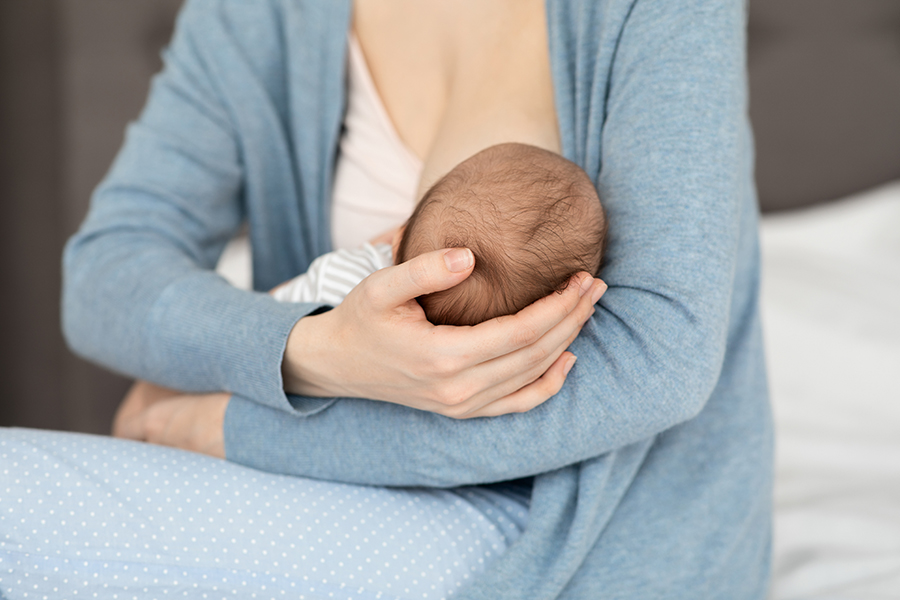
Before discharge from the hospital, you should have a conversation with your provider about contraception. Your choice depends on several factors:
Your family planning intentions: Do you want more children? If yes, when? If no, are you open to temporary or permanent methods?
Your breastfeeding plan: Are you exclusively breastfeeding? Combination feeding? Exclusively pumping?
Your health history: Do you have contraindications to certain methods? For example, history of blood clots contraindicates estrogen-containing methods.
Your partner’s involvement: Does your partner have input? Are they considering vasectomy?
Your ability to use methods correctly: Some methods require more user discipline. Progestin-only pills require consistent timing. Barrier methods require use at every encounter.
The earlier you make this decision, the earlier you can implement it. Waiting until breastfeeding has already decreased fertility and your period hasn’t returned means you might unknowingly be at higher risk than you realized.
One More Critical Point: You Can Become Pregnant Immediately After Birth
Rare but documented: women can become pregnant again while still bleeding from childbirth. This requires ovulation to occur and fertilization to happen within weeks of delivery—possible but unusual.
More common: women become pregnant within 2-3 months postpartum while exclusively breastfeeding. By the time they realize they’re pregnant, they’re already 8-12 weeks along.
This isn’t a failure of breastfeeding to suppress fertility. It’s a failure of assumptions about fertility suppression. The point is: if you cannot become pregnant again without serious health consequences, don’t assume any protection without implementation. Use contraception from the first postpartum intercourse if there’s any pregnancy risk.
The Real Takeaway
Exclusive breastfeeding does suppress ovulation through a real biological mechanism. For the first 6 months in women who maintain exclusive breastfeeding, pregnancy risk is reduced—not eliminated. The moment you introduce formula, solids, or reduced breastfeeding frequency, this protection diminishes rapidly.
“Can you get pregnant while breastfeeding?” The answer is yes. The better questions are: “How likely am I based on my specific feeding method?” and “What’s my backup plan if breastfeeding-based fertility suppression fails?”
For those questions, the answers depend entirely on your circumstances, and they’re worth discussing with your provider before you need them.