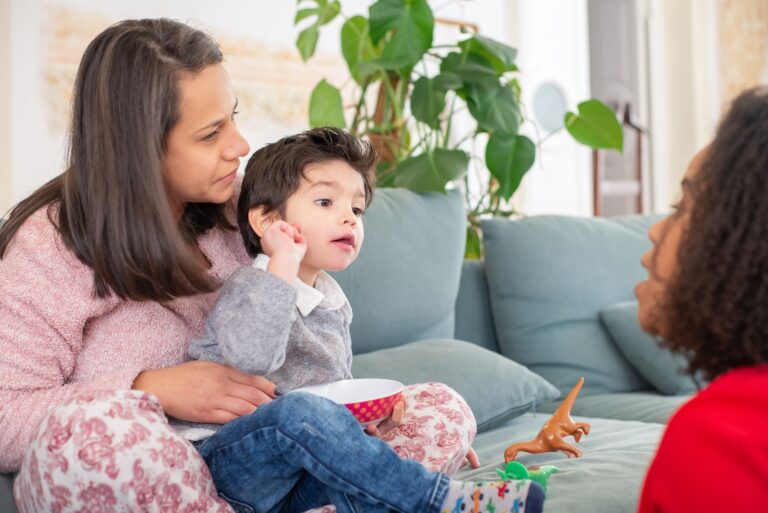
Learning styles describe how your child prefers to take in and process information—whether through seeing, hearing, doing, or reading. Most children show a stronger preference for one or two styles, and spotting your child's preference helps you support how they naturally learn best. Learning style preferences are about your child's engagement and comfort, not about intelligence or ability; identifying them is a practical tool for parents, not a label that limits your child's potential.
The most common framework describes four styles: visual learners who respond to images and spatial information; auditory learners who learn best through listening and sound; kinesthetic learners who need hands-on experience and movement; and reading/writing learners who connect with text. Your child may show a clear preference, or may blend two or three. Recognizing the pattern helps you choose activities, explain ideas, and talk with teachers about what your child responds to best.
Table of Contents
- What Learning Styles Actually Mean
- How to Spot Your Child's Learning Style at Home
- Visual Learners—What They Need to Thrive
- Auditory Learners—What Works for Them
- Kinesthetic Learners—Supporting the Child Who Needs to Move
- Supporting Multiple Styles at Home
- When Learning Style Isn't the Whole Story
- How Learning Styles Shift as Your Child Grows
- Talking to Your Child's Teacher About Learning Styles
- Using Learning Styles as One Tool, Not the Whole Toolkit
- Frequently Asked Questions
What Learning Styles Actually Mean
Learning styles are preferences for how information enters your child's brain, not limits on what they can learn. A child who is primarily a visual learner can absolutely become a strong reader or musician—they simply may need visual support while they do it, like written lyrics or a diagram of how to hold an instrument.
The preference makes the learning path smoother, not the destination narrower. Your child's learning style can shift slightly with age and with the subject. A kindergartener may seem strongly kinesthetic because they need to move and touch everything, but part of that is age—their brain is still developing the ability to sit still for long periods.
A child who is visual in math class may become auditory in music because that's how music is transmitted. These patterns are tendencies, not rigid boxes. Learning style preferences are separate from learning differences like dyslexia, attention-deficit/hyperactivity disorder (ADHD), or auditory processing disorder. A child with auditory processing trouble is not an auditory learner; they actually struggle with auditory input and may need visual support instead.
If your child shows difficulty learning despite a good match between their style and the instruction, a learning difference may be present and is worth exploring with a school assessment or your pediatrician. Identifying your child's style takes weeks of observation, not a quiz. Your child's behavior in real learning moments—how they approach homework, what questions they ask, what gets them excited, what frustrates them—tells you more than any checklist. A child who says "Show me how" is probably visual or kinesthetic; one who says "Tell me about it" is likely auditory.
How to Spot Your Child's Learning Style at Home
Watch what your child does naturally when they encounter something new or confusing. A visual learner typically asks to see it, may move closer to look, or may draw or diagram what they're trying to understand. They often say things like "I see," "Show me," or "I don't get the picture." They may enjoy reading, watching videos, arranging things by color or pattern, or asking you to write something down.
An auditory learner talks through problems aloud, asks questions repeatedly, and benefits from hearing an explanation multiple times. They often hum, sing, or talk to themselves while working. They prefer listening to a story over reading it, enjoy conversation, and may repeat back what you say to remember it. They often learn song lyrics, rhyming, and jokes easily and may use sound effects to illustrate ideas.
A kinesthetic learner is the one who wants to touch, build, take apart, or move. They get fidgety sitting still and may struggle with long explanations but light up when they can physically try something. They often use hand gestures while talking, prefer acting out a story over hearing it, and learn best by doing.
They may excel at sports, building with blocks or Lego, cooking, or crafts while younger and experiment-based learning as they grow. A reading/writing learner—more common in older children—gravitates toward books, written lists, and note-taking. They like to read instructions, keep journals, and make lists. They often ask for the information in writing and feel more confident when they have text to refer back to.
This style typically becomes clearer around age 7 or 8, as reading fluency develops. Pay attention to how your child reacts when something goes wrong. Do they ask to see it again? Ask you to explain it again? Want to try it again with their hands? Or ask you to write down what to do? That reaction often matches their primary style.
Over two or three weeks, patterns usually emerge. One style usually stands out, though most children blend at least two.
Visual Learners—What They Need to Thrive
Visual learners think in pictures and prefer information presented in images, diagrams, maps, charts, or color-coded systems. They often remember faces and places better than names, and they respond well to visual organizing systems. At school, they may take detailed notes with doodles or color-highlighting, or they may struggle if the teacher only lectures without showing pictures or writing on the board.
To support a visual learner at home, use diagrams, charts, and written lists. When explaining a concept, draw it. When giving instructions, write them down or show a picture. Let them create visual reminders—a chart for chores, a picture schedule for their day, or a color-coded calendar. Encourage them to draw or diagram their ideas before writing about them.
Visual learners often organize by location and color. If your visual learner loses their homework, a specific folder in a specific place helps more than a generic "put it here." Color-coding—red for math, blue for reading—makes systems memorable. Labeled containers, picture labels for toys and drawers, and a visual family calendar help them track their world.
Some visual learners are also slow processors or have trouble with auditory input; for them, watching a video about a topic before a lesson helps enormously. Many visual learners also struggle with step-by-step verbal directions but understand immediately with a written or drawn checklist. If your child asks "Can you show me?" repeatedly, visual support is probably worth building into your routine.
A visual learner may read fluently and love books with illustrations, or may prefer shorter text with lots of graphics. Both are fine. When reading together, talk about the pictures. When telling a story, ask them to draw it. When learning something new, find a video or image first, then add explanation.
Auditory Learners—What Works for Them
Auditory learners process information best through sound, conversation, and listening. They often talk more than they write, enjoy music and singing, and remember verbal directions better than written ones. In a classroom, they may thrive during discussion and struggle during silent independent work. They often learn rhymes, songs, and jokes quickly and can repeat back conversations they've heard.
Support an auditory learner by explaining things aloud, repeating ideas in different ways, and inviting questions. When they ask the same question five times, they're not being difficult—they're still processing and need another angle. Read aloud often; many auditory learners connect more deeply with a story when they hear it than when they read it.
Audiobooks, podcasts for kids, and music are all tools that match their strength. Auditory learners benefit from rhythm and rhyme. Singing the alphabet, chanting multiplication facts, or making up a rhyme for a spelling word works far better than flashcards for many kids with this style. When you need them to remember something, say it in a rhythm or set it to a tune.
Ask them to repeat back what you said so they hear themselves saying it. These children often struggle with written instructions or silent reading time in school. If your auditory learner is frustrated with homework, read the instructions aloud first or ask their teacher if they can listen to instructions rather than read them independently.
Some teachers will let auditory learners wear earbuds while working to reduce auditory distraction and help them focus. Auditory learners may talk constantly, interrupt, or seem distracted because they're listening to everything around them. This is often how their brain works, not misbehavior. Giving them appropriate outlets—a talking buddy, a chance to read aloud, permission to hum while working—can reduce conflict. Clear, calm tone of voice matters enormously; yelling loses them faster than it affects other children because they hear the emotion, not the content.
Kinesthetic Learners—Supporting the Child Who Needs to Move
Kinesthetic learners think through movement and touch. They need to physically interact with ideas, often learning best through hands-on experience, games, and movement. They're often called "active" or "wiggly," and they may be the child who takes things apart to understand how they work or who acts out stories rather than sitting still to hear them.
Many become skilled at sports, building, and practical tasks. Support a kinesthetic learner by doing. Cook together to teach fractions, build a structure to understand balance, plant seeds to learn about growth. Give them manipulatives—blocks, beads, counters—when they're learning to count or add. Play games that involve movement. Let them stand or pace while you explain something.
Hands-on science experiments, gardening, building projects, and sports are not extras for a kinesthetic learner; they're essential learning tools. Kinesthetic learners often struggle with worksheets, long explanations, and sitting still. They're not being defiant; their brain needs movement input to focus. Allowing them to fidget—a fidget toy, a standing desk, a chance to bounce on a yoga ball while doing homework—can actually improve focus rather than distract.
If a kinesthetic learner's teacher views movement as disruptive rather than a learning tool, ask whether quiet fidgeting tools are acceptable. These children often excel at physical problem-solving but may struggle when they're forced to explain something verbally or in writing. Ask them to show you, or let them build a model of what they mean.
When a kinesthetic learner says "I don't know" about an abstract concept, ask them to act it out or build it. Understanding often follows action, not the other way around. A kinesthetic learner may seem to have attention problems, but they may simply need more movement breaks and physical learning. If movement helps them focus, that's their learning style, not ADHD. That said, if a kinesthetic learner still struggles to focus even with plenty of movement breaks, or if movement is the only thing that helps, it may be worth exploring with your pediatrician.
Supporting Multiple Styles at Home
Most children blend learning styles, especially as they grow. A child might be primarily visual but also need auditory input, or kinesthetic but also drawn to reading. When you notice your child using multiple styles, weave them together. A math lesson can include a diagram (visual), your explanation (auditory), and manipulatives or coins to count (kinesthetic).
A story can be read aloud (auditory), illustrated with pictures (visual), and acted out (kinesthetic). Different subjects often call for different styles too. Your kinesthetic learner might need to move while learning math but prefer to read silently during independent reading time. Your visual learner might come alive during a science experiment but struggle during music class without written lyrics.
Match the style to the moment rather than locking your child into one box for everything. When teaching a new idea, start with your child's strongest style and add the others. If your child is visual, show it first, then explain it, then let them try it. If they're auditory, explain it, show it, then try it.
If they're kinesthetic, have them try it, show it, then explain it. This approach reaches more of their brain and makes the idea stick. At school, learning happens in mixed styles. Your job at home is not to replicate school but to give your child tools for success there. If your child's teacher uses methods that don't match your child's style, send your child to school with strategies for both: a visual learner at a verbal teacher can take color-coded notes; an auditory learner in a silent-reading classroom can use quiet self-talk or hum internally.
Create a physical environment that supports learning. A visual learner needs good lighting, organized spaces, and visual cues. An auditory learner needs to hear you and a place to talk things through. A kinesthetic learner needs space to move and access to materials to build and try. These aren't separate rooms—they're overlapping needs that matter most during homework and project time.
When Learning Style Isn't the Whole Story
Learning style is one lens, not the only explanation. If your child struggles to learn despite instruction that matches their style, something else may be at play. A child who is visual and still struggles with reading, or kinesthetic and still struggles with math, may have a learning difference worth exploring. These are separate from style preference.
Watch for patterns that suggest a learning difference rather than a style mismatch. Does your child struggle across all subjects or just one? Do they struggle even with instruction tailored to their style, or just in certain contexts? Can they learn the idea but not retain it, or do they not grasp it at all? A child who understands immediately when you explain math verbally but still can't do it alone might have working memory difficulty, not an auditory-learning preference.
Processing speed, memory, attention, and language are separate from learning style. A child who seems "slow" might actually have slowed processing speed. A child who can't remember three-step directions might have working memory challenges. A child who fidgets constantly might have ADHD. These can coexist with a learning style preference, but they're different things and may need different support.
Ask your pediatrician or your child's school about evaluation if you see persistent struggle despite good instruction. Early assessment—around age 5 to 7—catches problems that respond well to support. The goal is not to label your child but to understand what they need to learn well. A learning difference and a learning style can both be true, and identifying both helps you support your child best.
Some children show a very strong preference for one style and struggle when forced into another, while others adapt flexibly. Neither is better; they're just different. If your child becomes frustrated or shuts down during instruction that doesn't match their style, that's useful information. If your child can switch between styles without much complaint, they're probably more flexible learners and will adapt as school demands change.
How Learning Styles Shift as Your Child Grows
Learning style preferences tend to become more defined around age 6 or 7, when children start school and face more structured learning. Before that, most young children learn through movement and play because that's developmentally appropriate, not because they're all kinesthetic learners. Preschoolers need hands-on, movement-based learning; observing style preferences before age 5 is harder because development, not preference, usually drives behavior.
Around age 5 to 7, you start seeing clearer patterns. A kindergartner who already loves to read, draws constantly, or talks through every problem is probably showing their emerging learning style. By age 8 or 9, preferences are usually stable, though not completely rigid. A child who was entirely kinesthetic in first grade might use some visual or auditory strategies in third grade because they've learned to; they're still kinesthetic at heart but more flexible.
In middle school and high school, abstract thinking and literacy demands increase. A child who was strongly visual or kinesthetic may need to develop stronger auditory and reading/writing skills because more instruction happens through lecture and text. This doesn't mean their learning style changed; it means they've added strategies. Supporting your teen might mean helping them translate auditory input into visual notes or find ways to make abstract concepts concrete.
Interests also shift learning style expression. A child who was musical and auditory at age 6 might become deeply visual if they discover graphic novels or coding. They may still process sound easily, but reading and visual thinking become more central to their identity. Your job is to notice what your child gravitates toward and support it, rather than assuming their style is fixed.
Some children become more flexible with age and strategy instruction. Teaching your child to recognize their own style and adapt helps them become self-directed learners. A teen who knows "I need to take notes even when the teacher gives a slide deck" or "I learn better if I talk it through with someone" has developed metacognitive awareness—knowledge about their own learning—that serves them far better than staying locked into one style.
Talking to Your Child's Teacher About Learning Styles
If you've identified your child's learning style preference, sharing that observation with teachers helps them support your child. Frame it as information, not a demand: "I've noticed our daughter asks to see things explained visually; she often asks me to draw it. I wonder if that's something you've noticed too?" Most teachers appreciate specific observations and will likely recognize the pattern.
Avoid framing it as "My child is a visual learner and MUST have visual instruction." Teachers use many methods by necessity; your child will encounter different styles throughout their education and needs to learn to adapt. Instead, focus on what helps your child understand: "He tends to understand math better when he can work through it step-by-step on paper rather than hear an explanation.
I'm wondering if that's something you see too?" If your child is struggling and you suspect a learning style mismatch, ask your teacher what strategies they're already using. Many teachers already differentiate—they teach the same concept multiple ways to reach different learners. Your observation can add to what they know. If your teacher is open, you might suggest a small accommodation: a visual learner might keep written instructions for assignments; a kinesthetic learner might benefit from a standing desk or fidget tool.
Some teachers are very familiar with learning styles; others less so. Either way, focus on your child's actual needs, not the theory. Instead of "She's visual, so use more pictures," try "She learns best when she can see the steps. Would it help if she had a visual checklist for morning routine?" This is concrete and actionable.
Not every mismatch between your child's style and a teacher's method requires intervention. Part of growing up is learning to adapt to different teaching styles. However, if your child is genuinely struggling and a simple accommodation (like providing written instructions for an auditory learner) could help, it's worth mentioning.
Using Learning Styles as One Tool, Not the Whole Toolkit
Learning style preferences are real and useful, but they're not destiny and they're not an excuse for avoidance. A visual learner still needs to develop listening skills. An auditory learner still needs to read fluently. A kinesthetic learner still needs to sit through important instruction. Your role is to use your child's preferences as a starting point for engagement, not a permanent label.
The goal of knowing your child's learning style is to make learning easier and more joyful, not to trap them into one mode forever. You're building confidence by showing them they can learn, meeting them where they are, and gradually expanding their toolkit. A child who is confident as a visual learner is then better equipped to develop auditory or reading skills too.
Different subjects, different teachers, different seasons of life will call for different styles. Your child in music class, math class, and recess will show different preferences. Your job is not to enforce one style but to notice what works, what they're drawn to, and how to support both strength and growth. By age 10 or 11, most children are becoming aware of their own learning preferences.
Naming it for them is powerful: "I've noticed you understand things better when you can see them written down. That's a real strength—it means you're good at paying attention to detail." This builds self-awareness and confidence rather than shame or limitation. A child who understands their own learning can advocate for what they need. Watch for shifts in what your child needs as they grow, as interests change, and as demands evolve.
The visual learner who needed pictures at age 7 might ask to read about it at age 12. The auditory learner who talked constantly might become quieter as they find writing. Supporting your child means staying curious about what works now, not repeating what worked last year.
Frequently Asked Questions
What are the main learning styles?
The four most common learning styles are visual (learn best through images, diagrams, and seeing), auditory (learn best through listening and sound), kinesthetic (learn best through hands-on experience and movement), and reading/writing (learn best through text and written information). Most children blend at least two styles.
How do I know my child's learning style?
Watch how your child naturally responds when encountering something new or confusing. Do they ask to see it, ask you to explain it again, want to try it with their hands, or ask for written instructions? Observe over a few weeks—patterns usually emerge. Your child's questions ("Show me," "Tell me," "Let me try," "Write it down") reveal their preference.
Does identifying my child's learning style limit what they can learn?
No. Learning style is about preference and comfort, not ability or potential. A kinesthetic learner can become an excellent reader; they may just need to move while doing it. Knowing your child's style helps you reach them more easily, but they'll need to develop skills across all styles as they grow.
What's the difference between a learning style and a learning disability?
A learning style is how your child prefers to take in information—it's a strength. A learning disability is difficulty processing information in one area despite good instruction and effort. A child with dyslexia struggles with reading regardless of teaching method; a visual learner simply prefers visual information but can still learn other ways. If your child struggles despite instruction matched to their style, talk to your pediatrician or school.
How can I support all three styles at home when my child blends them?
Start with your child's strongest style and add the others. If your child is visual, show it first (diagram, picture), then explain it (words), then let them try it (hands-on). Vary your approach by subject—your kinesthetic learner might need to move while learning math but prefer quiet reading time during independent reading.
Should I tell my child's teacher about their learning style?
Yes, if you've noticed a clear pattern. Frame it as observation, not demand: "I've noticed he understands better when he can see it written down. Have you noticed that too?" Most teachers already differentiate; your insight adds to what they know. Focus on what helps your child, not learning style theory.