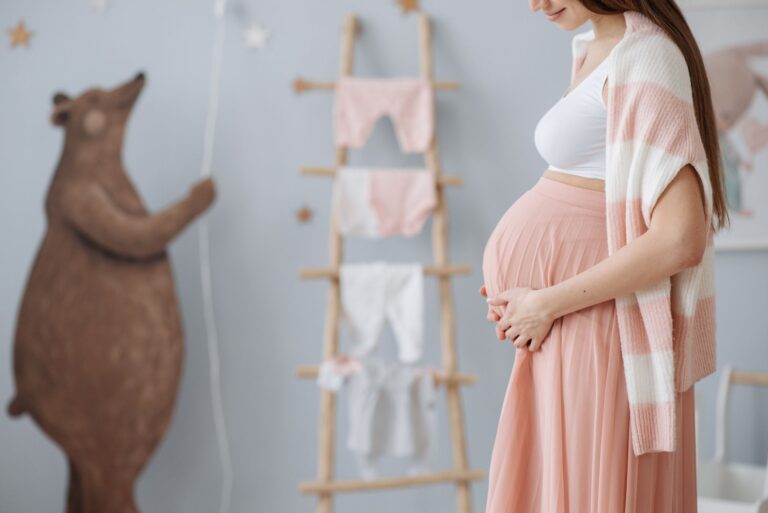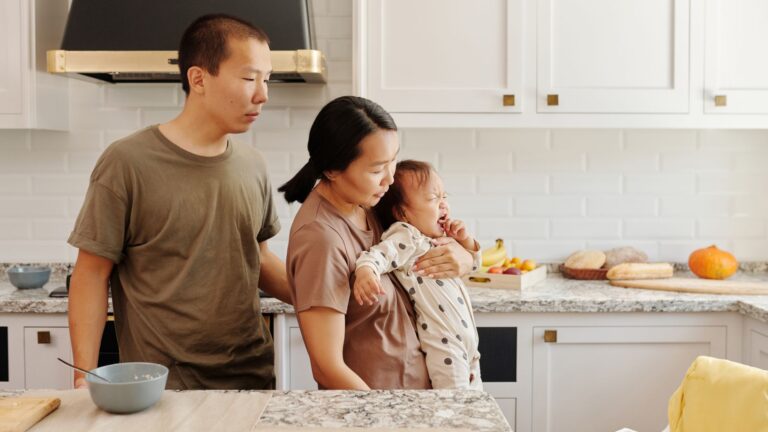
Babies don’t recognize their parents instantly at birth the way adults recognize a familiar face. Instead, recognition develops gradually over weeks and months through exposure and repeated sensory experiences. Most babies begin to show clear, consistent recognition of their primary caregivers somewhere between 8 and 12 weeks of age, though the process actually starts much earlier than that—often within the first few days of life, when newborns begin learning the sound of their mother’s voice and the particular way a parent holds them.
What makes recognition tricky to pinpoint is that “recognition” in babies looks different than recognition in older children or adults. A newborn can’t turn to their mother in a crowd and say her name, but they can calm more quickly in her arms than in a stranger’s, and by 2 to 3 months they often turn their heads toward a parent’s voice or smile more readily at a familiar face than an unfamiliar one. These small, gradual shifts are the building blocks of recognition.
Table of Contents
- How Does Facial Recognition Develop in Babies?
- What Recognition Actually Means at Different Stages
- How Sound, Touch, and Smell Build Recognition Before Sight
- Building Stronger Recognition Through Consistent Contact
- Why Your Baby Might Be Slower to Recognize You Than Expected
- Recognition Versus Attachment: They’re Not the Same Thing
- How Recognition Evolves as Babies Grow
- Frequently Asked Questions
How Does Facial Recognition Develop in Babies?
Newborns have blurry vision—they see best at a distance of about 8 to 12 inches, which is roughly the distance between a baby’s face and a parent’s face during feeding or close contact. This built-in distance is not accidental; it’s one of nature’s early tools for bonding. At birth, babies can distinguish between light and dark and see high-contrast patterns, but they cannot focus sharply on faces the way a 6-month-old can. Their eyes are still developing the muscles and neural connections needed for detailed vision. By 4 to 6 weeks, babies begin to prefer looking at faces over other objects, and they show a particular preference for the face of someone who has spent time with them.
A study comparing babies’ gaze patterns found that infants as young as 3 weeks old would look slightly longer at a photograph of their mother than at a photograph of an unfamiliar woman, though the difference was subtle. By 3 to 4 months, most babies show unmistakable recognition—they smile sooner, look more intently, and vocalize more frequently when they see a familiar caregiver compared to a stranger. The visual recognition process accelerates after 4 months because the parts of the baby’s brain responsible for face processing are maturing. A baby who is 5 to 6 months old can recognize family members across different contexts—at home, in a car, wearing different clothes—because their brain is now sophisticated enough to extract the core features of a face and match them to memory. This is very different from early preference, which is more fragile and context-dependent.
What Recognition Actually Means at Different Stages
One critical limitation to understand is that early recognition in babies does not equal preference or attachment in the way adults think about those concepts. A 3-month-old may recognize their mother’s face, but this doesn’t mean they prefer her to all other caregivers or that they’re emotionally attached in a deep sense. Recognition is purely cognitive—the brain’s ability to identify a familiar person—while attachment is an emotional bond that develops over time through consistent, responsive care. Another limitation is that recognition is highly dependent on consistency. If a baby’s primary caregiver is inconsistent—sometimes present, sometimes absent for long stretches—the baby’s recognition of that person may be delayed or fragmented.
Conversely, a baby can develop strong recognition of multiple people (parents, grandparents, regular childcare providers) if those people are consistently present. A baby raised by two parents who share caregiving equally, or a baby in group childcare from an early age, often shows equally strong recognition of multiple caregivers. Babies also show something called “stranger anxiety” or “stranger wariness” starting around 6 to 9 months, which is actually a sign that recognition is deepening. A baby who cries or clings to a parent when approached by an unfamiliar person is demonstrating that they recognize the difference between familiar and unfamiliar people. This is developmentally normal and important, not a sign of insecurity. It can be unsettling for parents who assumed their baby was simply “shy,” but it’s actually a marker of cognitive progress.
How Sound, Touch, and Smell Build Recognition Before Sight
Facial recognition gets most of the attention, but babies actually begin recognizing their parents through other senses first, often before their vision is clear enough to identify a face. A newborn can recognize their mother’s voice within hours or days of birth; studies using heart-rate monitoring have shown that newborns respond differently (their hearts beat a bit faster) when they hear their mother’s voice compared to another woman’s voice, even when the words are identical. Touch and proximity create another powerful channel for recognition. A baby learns to recognize the particular way their primary caregiver holds them, the texture of their skin, the temperature of their body, and the rhythm of their breathing.
This is why many babies calm down almost immediately when placed in the arms of a specific person, even before they can see clearly. A parent’s scent is equally important—babies have a functioning sense of smell from birth, and research shows that babies can identify their mother by smell alone at just a few days old. Some studies have found that a baby only a few days old will turn toward a piece of cloth worn by their mother rather than cloth worn by another woman. The combination of these non-visual recognitions explains why a baby can feel secure and recognized long before they can smile back at a face. A newborn in their father’s arms, hearing his voice and feeling his heartbeat, is already in the process of recognizing him—even if the father’s facial features remain too blurry for the baby to see clearly.
Building Stronger Recognition Through Consistent Contact
Parents often ask whether specific actions can speed up recognition, and the answer is that consistency matters far more than intensity. A parent who spends 20 minutes of focused, responsive time with a baby every day (talking, making eye contact, responding to cues) will likely see clearer recognition faster than a parent who has occasional long stretches of time but with less engagement. The baby’s brain is built to learn from repeated patterns, not from the total amount of time spent. Skin-to-skin contact, especially in the first few weeks, strengthens recognition through multiple sensory channels at once.
When a baby is held skin-to-skin against a parent’s chest, they experience the parent’s heartbeat, body temperature, scent, and voice simultaneously—multiple recognition pathways firing at the same time. This is one reason that practices like kangaroo care (skin-to-skin contact) in the early weeks have been shown to benefit bonding and responsiveness. However, there’s a tradeoff here: a parent who exclusively provides skin-to-skin contact while another caregiver does bottle-feeding, diaper changes, and other routine care may find that the baby shows stronger recognition of the other caregiver. This happens because recognition is built on all kinds of caregiving interactions, not just the intimate ones. A parent who wants to be recognized and bonded with their baby needs to be involved in the everyday routines of care—feeding, diaper changes, bathing, soothing—not just the special moments.
Why Your Baby Might Be Slower to Recognize You Than Expected
Babies develop at different rates, and recognition timelines vary widely. Some babies show unmistakable facial recognition by 6 weeks; others don’t show clear signs until 4 or 5 months. This variation is normal and usually not a cause for concern, but it’s worth understanding the factors that can delay recognition. Premature babies should be tracked from their corrected age (the age they would be if born on the due date), not their chronological age, so a baby born 8 weeks early might not show the expected recognition behaviors until 4 months old chronologically, which is actually 2 months from their corrected age. There’s an important warning here: some parents worry that if their baby doesn’t smile back at them or show clear recognition by 3 months, something is wrong.
In most cases, this worry is unfounded—babies simply develop at different speeds, and some babies are naturally less expressive than others. However, if a baby shows no interest in faces at all by 4 to 5 months, or if a baby’s recognition seems to be going backward (a baby who once smiled at you suddenly seems indifferent), it’s worth discussing with a pediatrician. These could be signs of vision problems, hearing loss, developmental delays, or other issues that benefit from early attention. Babies who spend time in hospitals due to illness or prematurity, or who have been in foster care or institutional settings before adoption, may show delayed recognition of their new caregivers. This is not a reflection on the parent’s capability but rather a sign that the baby needs time and consistency to learn a new caregiver’s patterns and presence. In these cases, recognition often develops on a slower timeline but still develops fully with consistent, responsive care.
Recognition Versus Attachment: They’re Not the Same Thing
A baby can recognize a parent without being securely attached to them, and this distinction matters for understanding what recognition actually tells you about your relationship with your baby. A baby in the care of a neglectful parent might still recognize that parent’s face (that’s cognitive recognition), but the baby won’t show the security and trust that comes with attachment. Conversely, a baby can be securely attached to a caregiver who isn’t the biological parent—a grandmother, a nanny, an adoptive parent—and show the deepest kind of recognition: not just knowing who someone is, but trusting that person to meet their needs. Secure attachment develops when a caregiver responds consistently to a baby’s signals.
A baby cries, and the parent responds. A baby smiles, and the parent smiles back. A baby reaches, and the parent picks them up. Over weeks and months of this responsive interaction, the baby learns that this person is reliable, and recognition deepens into trust. This is why the quality of interaction matters more than the quantity, and why a baby who spends less total time with a parent but receives consistent, responsive care from that parent may show stronger attachment than a baby who spends more time with an inconsistent caregiver.
How Recognition Evolves as Babies Grow
The recognition of parents that begins at a few months old is only the start of a much longer process of knowing and being known. By 9 to 12 months, a baby’s recognition has evolved to include expectations about how a particular parent behaves, sounds, and responds. A baby might turn to their mother when they’re hurt but go to their father when they want to play, because they recognize and remember the different ways each parent typically responds. This is a sign that recognition has deepened into something more complex—a child’s understanding of who their parents are as distinct individuals.
By 18 to 24 months, toddlers can recognize their parents in photographs and will often identify a picture of their mother or father by name. They can also recognize that their mother has a routine (she leaves in the morning, comes home in the afternoon) and may show distress when that routine is disrupted. This emerging understanding is part of what enables a toddler to develop a working model of their world—the recognition that people exist even when they’re not present, and that reliable people come back. The way a baby recognizes their parents at 4 months—that moment when their whole face brightens at the sight of you—is the foundation for years of recognition ahead: the 3-year-old who runs to you after preschool, the 10-year-old who wants to tell you about their day, the teenager who still, in moments of real vulnerability, turns to you for support. Recognition, in its simplest form, is the beginning of relationship.
Frequently Asked Questions
When exactly do babies start recognizing their mothers?
Babies begin recognizing their mothers’ voices within hours or days of birth, and show preference for their mother’s face by 3 to 4 weeks. Clear, consistent facial recognition typically develops between 8 and 12 weeks of age.
Can newborns see their parents’ faces?
Newborns can see faces but with blurry vision—they see best at 8 to 12 inches away, which is roughly the distance between a baby and a parent during feeding. Clear facial recognition requires several weeks of development as the baby’s vision and brain systems mature.
What if my baby doesn’t seem to recognize me yet at 3 months?
Some babies develop recognition more slowly than others, and variation is normal. Premature babies should be tracked from their corrected age. If your baby shows no interest in faces by 4 to 5 months, discuss this with your pediatrician.
Is facial recognition the same as attachment?
No. Facial recognition is the baby’s ability to identify a familiar face. Attachment is the emotional bond that develops through consistent, responsive caregiving. A baby can recognize a parent without being securely attached, and can be securely attached to a caregiver who isn’t the biological parent.
Does my baby recognize me differently than other caregivers?
Babies often show different recognition patterns and behavioral preferences with different caregivers based on how much time they spend together and the type of interactions they have. A baby might recognize and behave differently with each parent or regular caregiver.
What senses do babies use to recognize parents before they can see clearly?
Babies recognize parents through voice, touch, scent, and the feel of being held. Newborns can identify their mother by smell alone and respond to her voice within days of birth, long before their vision is clear enough for facial recognition.