Most babies begin sitting independently between 4 and 8 months of age, though the exact timing varies widely from child to child. Sitting is a developmental milestone that emerges gradually—babies don't go from lying flat to sitting upright overnight. They move through predictable stages of gaining trunk control and balance before they can stay seated without support.
Every baby develops at their own pace, influenced by genetics, muscle strength, opportunities to practice, and individual personality. Some babies sit confidently at 5 months; others take 9 months, and both patterns fall within normal development. Understanding the progression toward sitting helps you recognize what your baby is working toward and support them safely along the way.
Table of Contents
- How babies progress toward sitting
- Signs your baby is ready to sit
- Safe ways to support your sitting baby
- Why practice matters and how much is normal
- When variation is normal and when to check with your pediatrician
- Frequently Asked Questions
How babies progress toward sitting
Sitting doesn't appear suddenly—it builds on skills your baby develops over several months. Around 2 to 3 months, babies begin lifting their head when lying on their stomach, strengthening the neck muscles needed for all upright positions. By 3 to 4 months, many babies start rolling and pushing their chest off the ground, developing the core strength sitting requires.
Around 4 to 5 months, babies often sit with significant support—propped up by your hands, a pillow, or a seat. They may lean heavily forward or to one side because their back and core muscles aren't yet strong enough to hold them upright alone. By 5 to 6 months, many babies sit with less support needed, though they still benefit from a hand nearby to steady them if they lose balance. Between 6 and 8 months, babies typically achieve independent sitting, though they may still topple over occasionally when reaching for a toy or if startled.
Signs your baby is ready to sit
Before your baby can sit independently, they usually show you several readiness signs. A baby ready to progress toward sitting typically holds their head steady when you pull them upright, rather than letting it flop back. They show improved trunk control—they may arch their back, twist side to side, and seem less like a floppy bundle and more like they have a backbone.
Many babies who are approaching independent sitting start to sit up on their own for a few seconds before toppling sideways or backward. They may rock back and forth or pivot their weight from one side to the other. Some babies reach and play while seated with minimal support, or they push themselves up on their hands when lying on their stomach. These signs suggest their muscles are becoming ready, even if they can't yet sit alone reliably.
Safe ways to support your sitting baby
Once your baby begins to sit with support, you can create safe spaces for practice. Sit on the floor with your baby and let them lean against your legs or body while you hold their hands lightly for balance. This gives them a stable base while their core muscles do the work of staying upright. You can gradually reduce how much you hold on as they grow steadier.
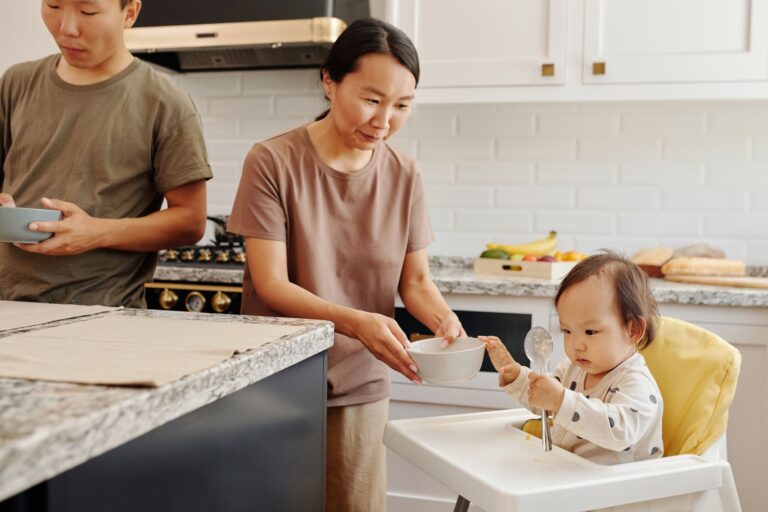
A cushion, pillow, or rolled towel placed around your baby while they sit on the floor provides a soft landing spot if they tip over—which they will while learning. Many parents use a high chair or bouncer for short periods as a place for the baby to sit while the parent is nearby, though these shouldn't replace floor time and supervised practice. Floor sitting is ideal because babies can fall safely in a padded space and learn to catch themselves. Avoid using seats designed to keep babies sitting for long periods if they can't yet sit independently, as this can discourage them from building the strength they need.
Why practice matters and how much is normal
Babies who spend more supervised time on the floor practicing different positions—lying on their belly, rolling, reaching—typically develop sitting skills sooner than babies who spend most time in seats or containers. This is because sitting requires active muscle work; the muscles only develop when they're used. Babies are naturally motivated to practice these skills when given the opportunity and space.
That said, tummy time and floor time don't need to be forced or scheduled rigidly. Most babies naturally want to move and explore when they're placed in a safe space on the floor. Some babies enjoy being held upright, which also builds core strength. The key is balancing seated or contained time (in a car seat, stroller, or bouncer) with opportunities for your baby to move freely and practice developing skills.
When variation is normal and when to check with your pediatrician
A baby who isn't sitting by 9 or 10 months may benefit from an evaluation, though even this wide timeline still falls within what many pediatricians consider normal variation. Some babies simply develop more slowly, and others may have factors affecting their development—like low muscle tone, vision differences, or limited opportunities to practice—that benefit from early support.
If you notice that your baby isn't making progress toward sitting over several months, seems weaker on one side of their body than the other, or has difficulty holding their head steady well into the second half of the first year, mention this to your pediatrician. Early intervention services exist in most areas to support babies with developmental delays, and catching potential issues early is valuable even if your baby simply develops more slowly. You know your baby best; if something feels off compared to how they were progressing, trust that instinct and ask for guidance.
Frequently Asked Questions
Is it bad to use a baby seat or bouncer?
Short-term use is fine for safety and convenience, but babies need regular floor time for muscle development. Spending most of the day in containers can slow the development of sitting and other movement skills.
Should I worry if my baby prefers lying down and resists sitting?
Some babies show interest in sitting later than others. If your baby seems strong and active when lying down, rolling, and moving, delayed sitting interest alone isn't usually a concern. If you notice weakness or lack of progress over months, talk to your pediatrician.
Can tummy time help my baby sit sooner?
Regular tummy time builds the back and neck strength that supports sitting. Babies who spend time on their bellies practicing head control and pushing movements often progress toward sitting at the typical age, though individual variation is always present.