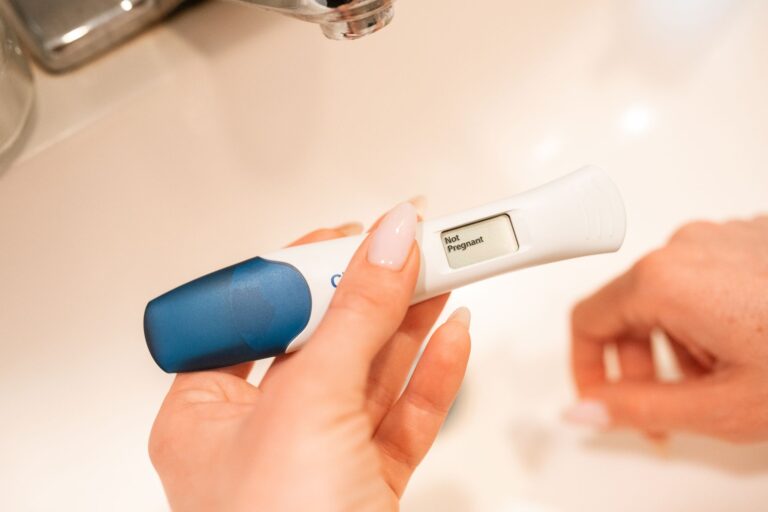
You’re most fertile during the five days leading up to ovulation and the day ovulation occurs—a window often called your fertile window. For many women, this occurs roughly in the middle of the menstrual cycle, around day 14 of a 28-day cycle, though the timing varies significantly from person to person. If you’re trying to conceive, understanding when this window opens and closes is one of the most practical tools available to you, because pregnancy can only occur when sperm meets an egg during this narrow timeframe. The fertile window is driven by hormonal shifts that prepare your body to release an egg.
During the days leading up to ovulation, your body produces increasing amounts of estrogen, which triggers a surge in luteinizing hormone (LH)—the hormone that signals your ovary to release the egg. This biological process is remarkably consistent in its basic mechanics, yet highly individual in its timing. A woman with a 35-day cycle will ovulate much later than one with a 21-day cycle, and even the same woman’s cycle can shift from month to month based on stress, illness, or other factors. Understanding your fertile window is equally important whether you’re actively trying to get pregnant or trying to avoid pregnancy. The timing is not negotiable—your body follows a biological schedule—but predicting that schedule requires knowing your own patterns.
Table of Contents
- How Does Your Menstrual Cycle Control Fertility?
- When Exactly Does Ovulation Happen?
- What Are the Physical Signs That You’re Fertile?
- What Are the Most Accurate Ways to Track Your Fertile Window?
- What Factors Can Shift Your Fertile Window or Make Ovulation Irregular?
- What’s the Relationship Between Sperm Survival and the Fertile Window?
- Can You Be Fertile at Times Other Than the Calculated Fertile Window?
How Does Your Menstrual Cycle Control Fertility?
your menstrual cycle is divided into distinct phases, and fertility is concentrated in just one of them. The cycle typically lasts between 21 and 35 days, beginning on the first day of menstruation. The first two weeks are dominated by rising estrogen levels, which cause the uterine lining to thicken and prepare an egg for release. during this follicular phase, your ovaries are developing follicles—tiny sacs containing eggs—and only one (usually) will reach maturity. Around the middle of your cycle, the LH surge triggers ovulation, when the mature egg is released from the ovary and begins its journey down the fallopian tube. This is the moment your fertility shifts into its highest gear.
Once the egg is released, it remains viable for roughly 12 to 24 hours. If sperm is already present in the fallopian tube—which it can be for up to five days after intercourse—fertilization becomes possible almost immediately. However, if no sperm is waiting, the unfertilized egg will be reabsorbed by the body. The second half of your cycle, called the luteal phase, has virtually no fertility window. After ovulation, the empty follicle transforms into the corpus luteum, which produces progesterone. Progesterone maintains the uterine lining in case a fertilized egg implants, but it also makes the cervical mucus thick and unwelcoming to sperm. Without a fertilized egg to maintain progesterone levels, the uterine lining eventually sheds, and menstruation begins again.
When Exactly Does Ovulation Happen?
Ovulation typically occurs 12 to 16 days before the start of your next menstrual period—which is why cycle length matters so much for predicting the fertile window. In a 28-day cycle, this often falls around day 14. In a 35-day cycle, it might not occur until day 21. In a shorter 21-day cycle, it could happen as early as day 7. This variation is one of the most important limitations to understand: calculating your fertile window based on an assumption about when you ovulate can easily lead to miscalculation if your cycle doesn’t match the textbook model. The LH surge that triggers ovulation can be detected in urine or blood, which makes it one of the few markers of ovulation that you can measure in real time.
The surge typically lasts 24 to 36 hours, and ovulation itself occurs 24 to 36 hours after the surge begins. This means an LH test can tell you that ovulation is coming, but it cannot tell you the exact moment it occurs. Some women ovulate earlier in the surge window and some later, adding another layer of individual variation. A critical detail: sperm can survive for up to five days in the female reproductive tract, but the egg survives for only 12 to 24 hours. This is why the fertile window extends backward from ovulation rather than forward. Having intercourse in the five days before ovulation is more likely to result in pregnancy than having it after ovulation, because the sperm will already be in place when the egg arrives. A woman who ovulates on day 14 is potentially fertile starting around day 9, not the other way around.
What Are the Physical Signs That You’re Fertile?
Your body sends several signals during the fertile window, though not all women notice them equally or consistently. The most reliable sign is a change in cervical mucus. Before ovulation, as estrogen rises, cervical mucus becomes thin, clear, stretchy, and slippery—similar in consistency to raw egg white. This texture is called “fertile mucus,” and it exists specifically to help sperm travel through the cervix and into the uterus. After ovulation, when progesterone takes over, the mucus becomes thick, cloudy, and sticky—a hostile environment for sperm. Some women can feel this change and notice the difference in their underwear; others never perceive it clearly. Basal body temperature (BBT) is another measurable sign, though it’s a trailing indicator rather than a leading one.
Your basal body temperature typically drops slightly just before ovulation, then rises by 0.3 to 0.8 degrees Fahrenheit immediately after ovulation. Taking your temperature every morning before getting out of bed can reveal this pattern over time, but by the time the temperature rise occurs, the most fertile days have already passed. BBT tracking works better for confirming that ovulation happened than for predicting when it will happen. Some women report other signs during their fertile window: mild pain or cramping on one side of the lower abdomen (sometimes called mittelschmerz or ovulation pain), a slight increase in libido, breast tenderness, or bloating. These symptoms are real for some women and completely absent for others. They are not reliable predictors of ovulation and should never be used as the sole method of identifying your fertile window, especially if you’re trying to conceive. A woman who feels a slight cramp might assume it’s ovulation pain and time intercourse accordingly, only to discover her actual ovulation occurred days earlier or later.
What Are the Most Accurate Ways to Track Your Fertile Window?
If your cycles are regular and you’ve tracked them for several months, you can use mathematical prediction based on cycle history. If your shortest cycle in the past year was 27 days and your longest was 29 days, you can estimate that ovulation will likely occur between day 13 and day 15. Ovulation predictor kits (OPKs) that detect the LH surge offer a more direct approach and work well for women with regular cycles. You test your urine daily (usually starting around day 9 or 10) until you see a positive result, which indicates that the LH surge has begun and ovulation should occur within the next 24 to 36 hours. For a woman with a typical cycle, this narrows the fertile window considerably. Fertility tracking apps combine cycle history with other data you input—cervical mucus observations, BBT if you’re measuring it, intercourse timing—to calculate predictions.
The accuracy of these apps depends entirely on the accuracy of your data and the regularity of your cycle. A woman with perfectly regular 28-day cycles who uses an app consistently will get reliable predictions; a woman with cycles ranging from 21 to 35 days may find the app’s prediction misses her fertile window by several days. Apps are a helpful tool for organizing information and spotting patterns, but they’re not infallible, and the algorithms vary between apps. The most precise method is ultrasound monitoring, which directly visualizes the developing follicle and can confirm ovulation. This approach is used in fertility clinics and by women undergoing fertility treatment, but it’s impractical for routine contraception or conception planning because it requires multiple office visits and is expensive. For most people, a combination approach works best: track your cycle history to understand your typical pattern, use cervical mucus observation as a real-time marker, and consider OPKs during the expected fertile window for added confirmation.
What Factors Can Shift Your Fertile Window or Make Ovulation Irregular?
Stress, illness, significant changes in weight or exercise, sleep disruption, and travel across time zones can all shift ovulation timing or temporarily stop it altogether. A woman under extreme stress might not ovulate in a given cycle, or she might ovulate several days later than usual. This is an important limitation of any prediction method: your body doesn’t always follow the expected schedule. Hormonal conditions like polycystic ovary syndrome (PCOS) or thyroid disorders can make ovulation irregular or absent entirely. Medications, including some antidepressants and other drugs, can affect ovulation timing. Breastfeeding suppresses ovulation through hormonal changes, though it is not a reliable contraceptive method because ovulation can resume before menstruation returns.
A breastfeeding woman might believe she’s infertile and then become unexpectedly pregnant weeks after stopping breastfeeding. Hormonal contraceptives like birth control pills, patches, and rings prevent ovulation altogether, so there is no fertile window. Barrier methods like condoms don’t affect ovulation timing—they simply prevent sperm from reaching the egg. Age affects both fertility and ovulation timing. As women move into their late 30s and 40s, cycles may become slightly shorter or more irregular, and fertility declines sharply. This isn’t because ovulation stops happening; it’s because egg quality declines with age, making pregnancy less likely and miscarriage more likely even during the fertile window. A woman in her 45-year-old will ovulate just as predictably as a woman in her 25, but the egg released is far less likely to result in a viable pregnancy.
What’s the Relationship Between Sperm Survival and the Fertile Window?
The five-day survival window for sperm is one of the most important facts for understanding fertility, and it directly shapes when intercourse should happen for maximum pregnancy likelihood. A study comparing different intercourse timings showed that pregnancy rates were highest when intercourse occurred in the one to two days before ovulation, not on the day of ovulation itself or in the days after. This is because the sperm is already present and waiting for the egg, rather than the egg arriving first and then waiting for sperm that may be slow to make the journey through the reproductive tract.
Practically speaking, this means a couple trying to conceive doesn’t need to wait for ovulation to occur. Having intercourse every two to three days throughout your cycle—a practice called “regular intercourse”—eliminates the need for precise ovulation prediction and still ensures that sperm will be present during the fertile window. The tradeoff is that this approach requires no tracking or monitoring but also doesn’t concentrate on the highest-fertility days. For couples trying to conceive after attempting for many months without success, the more targeted approach of identifying the fertile window and timing intercourse to the one to two days before ovulation can be helpful.
Can You Be Fertile at Times Other Than the Calculated Fertile Window?
Spontaneous or unexpected ovulation is rare but documented. Some women occasionally ovulate twice in one cycle, or they ovulate at an unusual time that doesn’t match their typical pattern. These cases are exceptions rather than the rule, but they’re important to know about if you’re using fertility awareness for contraception.
A woman using the symptothermal method (a combination of cervical mucus, temperature, and calendar tracking) who relies on these calculations to avoid pregnancy must understand that the method is not 100 percent effective, with typical use failure rates around 24 percent per year because of exceptions like unexpected ovulation or user error. Ovulation after unprotected intercourse during the supposedly “safe” non-fertile days is the primary reason fertility awareness methods have notably higher failure rates than hormonal contraceptives. A single act of intercourse can result in pregnancy even if it occurred outside the calculated fertile window, because sperm can survive five days and unexpected ovulation can happen. This is not a failure of understanding fertility—it’s an acknowledgment that biological variation is real and ovulation is not a perfectly predictable event, even for women who track carefully.