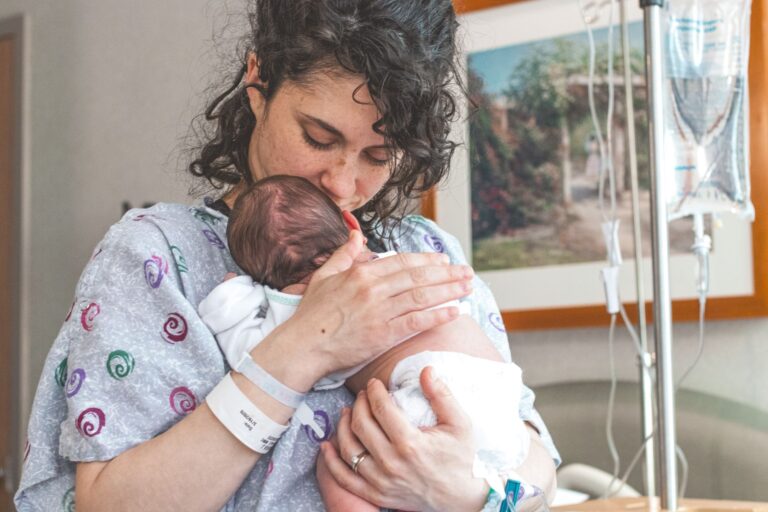
Reciprocal IVF is a fertility treatment in which one same-sex female partner provides the eggs and the other carries the pregnancy, allowing both to have a biological role in creating their child. This approach differs from traditional IVF because it unites genetic and gestational connection across both partners rather than centralizing both roles in one person.
For female same-sex couples, reciprocal IVF offers a way to share the biological experience of building a family—one partner contributes DNA through egg retrieval, the other nurtures the embryo through pregnancy. The process requires the same hormone protocols and embryo monitoring as standard IVF, plus careful coordination between two patients whose cycles must align. It is available at fertility clinics that specialize in LGBTQ+ family building, though not all clinics offer it, and the cost and timeline are similar to conventional IVF, with the added complexity of managing two medical roles simultaneously.
Table of Contents
- How the Process Actually Works
- Who Is Eligible and Why Reciprocal IVF Matters
- The Genetic and Biological Connection
- What Reciprocal IVF Costs and How to Budget
- Success Rates and What They Mean
- Medical Timeline and Clinic Visits
- Medical Risks and What to Watch For
- Deciding Which Partner Provides Eggs and Which Carries
- Choosing a Clinic and Getting Started
- Life After Reciprocal IVF—Pregnancy, Birth, and Beyond
- Frequently Asked Questions
How the Process Actually Works
Reciprocal IVF follows the standard IVF pathway with one fundamental difference: two partners participate in separate roles at the same time. The UCSF Center for Reproductive Health defines reciprocal IVF as a process in which one partner provides eggs while the other receives the embryo, enabling both to contribute genetically and gestationally to pregnancy.
The partner providing eggs undergoes ovarian stimulation with injectable hormones (gonadotropins) for 8–14 days to grow multiple follicles. Blood tests and ultrasounds monitor hormone levels and follicle size every few days. When follicles reach maturity, a minor surgical procedure called egg retrieval removes the eggs under sedation—typically 8–15 eggs are retrieved per cycle. The eggs are fertilized immediately with sperm (from a donor, a previous partner, or another source chosen by the couple) in the lab.
Embryos develop for 5–6 days to the blastocyst stage, when they are most viable for transfer. The carrying partner takes estrogen and progesterone to prepare the uterus during this same week. These hormones thicken the uterine lining so it is receptive to implantation. Timing is coordinated so that the embryo transfer happens when the lining is ready—usually 5–6 days after the egg retrieval.
During the transfer, a single embryo (or in some cases two, though single embryo transfer is now standard) is placed into the prepared uterus through a thin catheter. The procedure is quick and feels like a Pap smear for most people. The carrying partner continues progesterone and estrogen support for 10–14 days, then takes a pregnancy test. If positive, hormone support continues into the second trimester.
Who Is Eligible and Why Reciprocal IVF Matters
Reciprocal IVF is an option for female same-sex couples in which both partners are healthy enough to produce eggs and one is able to carry a pregnancy. According to Progyny, reciprocal IVF is available to same-sex female couples and requires that both partners have functioning ovaries and one has a functioning uterus.
Basic eligibility criteria include age (ideally under 43 for the egg-providing partner, though outcomes decline after 35), no history of surgical removal of the ovaries or uterus, and general good health. The egg-providing partner should not have diminished ovarian reserve (low egg count detected by FSH or AMH blood tests), though mild decreases do not always eliminate eligibility.
The carrying partner must have no untreated uterine abnormalities, active infections, or severe systemic illness. Emotional readiness matters as much as medical readiness. Both partners need to consent fully to their role and understand that they cannot simply switch roles if one person becomes uncomfortable mid-cycle. Counseling before treatment is recommended, especially to discuss what happens if the pregnancy fails, if one partner cannot complete their role, or if the relationship changes during treatment.
Some couples choose reciprocal IVF because they want genetic connection shared equally. Others choose it because one partner has low egg quality but is eager to carry, or the other has uterine reasons they cannot carry but want genetic involvement. Illume Fertility notes that reciprocal IVF allows both partners to participate biologically, which some couples find deeply meaningful.
Prior IVF failure does not rule out reciprocal IVF, but it may change the strategy—the clinic might recommend switching who provides eggs, adjusting medication protocols, or investigating whether embryo quality or uterine factors caused the prior loss. Mental health support before and during treatment is valuable, not optional. Infertility is stressful; the added coordination of two partners' medical roles can amplify anxiety and grief if outcomes disappoint.
The Genetic and Biological Connection
In reciprocal IVF, the child's DNA comes entirely from the egg-providing partner and the sperm source chosen by the couple—just as it would in traditional IVF or natural conception. The carrying partner's genes are not passed to the child, but the intrauterine environment, placental nutrients, and early microbiome exposure all influence fetal development and neonatal health.
Research shows that the carrying partner's health during pregnancy shapes the child's birth weight, immune system priming, and even long-term metabolic outcomes. The child inherits the egg-providing partner's mitochondrial DNA (contained in the egg) and nuclear DNA (in the egg nucleus). Mitochondrial DNA carries about 37 genes and passes exclusively through the maternal line—in this case, the egg provider's line.
Some couples report that the genetic and gestational split feels psychologically significant. One partner tells their child, "you have my genes and grew in your other mom's body." Others find the distinction less meaningful once the child is born. There is no "more real" parent—both roles are equally real and essential.
If you have a family history of genetic conditions, genetic counseling before treatment can clarify risks. The egg-providing partner's genetic history matters most because genetic traits pass through the egg. Testing for carrier status for conditions like cystic fibrosis or sickle cell disease is routinely offered to anyone undergoing IVF. The carrying partner's genetic history does not affect the child's DNA, but it can affect pregnancy health. A family history of gestational diabetes, preeclampsia, or blood clotting disorders in the carrying partner calls for closer monitoring during pregnancy, just as it does for any pregnancy.
What Reciprocal IVF Costs and How to Budget
Reciprocal IVF costs roughly the same as conventional IVF because the laboratory processes, medications, and clinic visits are identical. CNY Fertility reports that reciprocal IVF costs are similar to standard IVF cycles, typically ranging from $12,000 to $15,000 per cycle for the medical procedure alone, though prices vary significantly by clinic, region, and whether medications are included.
The cost breaks into several parts: clinic fees for monitoring and procedures ($8,000–$12,000), medications for both partners ($2,000–$4,000), potential genetic testing of embryos ($1,500–$2,500), and sperm source costs (free if from a partner, $500–$1,500 if from a known donor, $800–$2,000 if from a sperm bank). Insurance rarely covers any of these costs; most policies classify IVF for same-sex couples as elective fertility treatment.
Future Family's financial guide notes that planning should account for one cycle rarely succeeding on the first attempt, with many couples budgeting for two to three cycles. Freezing additional embryos for future pregnancies adds $1,000–$1,500. Annual storage of frozen embryos costs $300–$500 per year. Financial aid options include fertility loans (offered through clinics or independent lenders at 8–12% interest), flexible spending accounts (set aside pre-tax income up to $3,300 per year), employer coverage (rare, but some companies offer partial IVF benefits), and grants from nonprofits like RESOLVE and Attain Fertility.
Negotiating clinic fees is sometimes possible, especially if you are paying cash and committing to multiple cycles upfront. Some clinics offer discounted packages for couples building families through IVF. Hidden costs add up: time off work for appointments (often 4–8 days), travel if no clinic nearby offers reciprocal IVF services, and potential medication side effects requiring additional care. Budget $500–$1,000 for contingencies.
Success Rates and What They Mean
Reciprocal IVF success rates are identical to standard IVF because the embryos, sperm, and laboratory techniques are the same. Success depends primarily on the age and egg quality of the egg-providing partner, not on who carries the pregnancy. Illume Fertility reports that reciprocal IVF success rates follow standard IVF outcomes, with live birth rates around 40–50% per cycle for women under 35 and declining to 10–20% for women over 42.
Age is the single strongest predictor because egg quality declines sharply after 35. A 30-year-old has roughly a 50% chance of a live birth per cycle; a 40-year-old has roughly a 15% chance. These rates assume normal sperm quality and no uterine abnormalities. Live birth rate is different from pregnancy rate. A positive pregnancy test occurs in 60–70% of cycles, but roughly 15–20% end in miscarriage, more often in women over 40.
The live birth rate is what actually matters: the chance of taking home a baby. Success rates improve if the clinic uses pre-implantation genetic testing (PGT), which screens embryos for chromosomal abnormalities before transfer. Clinics using PGT report higher live birth rates and lower miscarriage rates, though the test adds cost and delays transfer by a few days.
Multiple cycles improve odds. After one failed cycle, changing the approach—such as switching who provides eggs if the first partner had low response to hormones—sometimes succeeds. By cycle three, cumulative pregnancy rates (at least one pregnancy across all tries) can exceed 70% even for women in their late 30s. Frozen embryo transfer, using embryos created in a prior cycle, has similar or slightly lower success rates compared to fresh transfer. One advantage: the carrying partner gets a full month to rest before preparation, not the back-to-back protocol of fresh reciprocal IVF.
Medical Timeline and Clinic Visits
A reciprocal IVF cycle takes roughly 4–6 weeks from the start of hormone stimulation to pregnancy test, though preparation (genetic counseling, baseline testing) may add 1–2 weeks beforehand. Understanding the timeline helps both partners plan work, childcare, and emotional energy. Weeks 1–2: Baseline monitoring. The carrying partner begins birth control to regulate cycles (if not already cycling predictably).
The egg-providing partner's cycle is tracked with blood tests and ultrasound to confirm ovarian reserve and plan stimulation start date. Weeks 2–3: Stimulation phase. The egg-providing partner injects hormones nightly for 8–14 days. Clinic visits happen every 2–3 days for blood work and ultrasound to monitor follicle growth and hormone levels. The carrying partner continues hormones to prepare the uterus.
Week 3: Trigger injection. When follicles reach 18–22 mm, a final "trigger" injection of hCG is given to prepare eggs for release. Week 3–4: Egg retrieval and fertilization. Retrieval happens 35–36 hours after the trigger shot, under sedation. Eggs are retrieved via needle through the vaginal wall under ultrasound guidance. The procedure takes 15 minutes.
Recovery takes a few hours; mild cramping and spotting are normal. Fertilization occurs the same day in the lab. Week 4: Embryo transfer. By day 5 or 6 after retrieval, the best-looking embryo is transferred into the prepared uterus. This takes 5–10 minutes and is usually painless. Both partners are present for the transfer in most clinics.
Week 4–5: Waiting and testing. The carrying partner continues progesterone and estrogen injections or suppositories. A pregnancy blood test happens 10–14 days after transfer. Roughly 60% of transfers result in a positive pregnancy test; of those, about 80% continue beyond 8 weeks. Clinic visit frequency can be demanding, especially if the clinic is far away. Plan for 6–10 visits over the cycle, most clustered in weeks 2–3.
Medical Risks and What to Watch For
Reciprocal IVF carries the same medical risks as standard IVF for both partners, plus the specific coordination challenges of managing two people's medical care simultaneously. Ovarian hyperstimulation syndrome (OHSS) affects the egg-providing partner in 1–2% of cycles, ranging from mild (bloating, mild pain) to severe (rapid weight gain, persistent vomiting, difficulty breathing). Mild OHSS usually resolves without treatment.
Severe OHSS requires hospitalization and careful fluid management. Risk increases with polycystic ovary syndrome (PCOS), high estrogen levels, or a very robust response to hormones. Infection after egg retrieval is rare (less than 1%) but possible. Signs include fever, severe pain, or vaginal discharge. Report these immediately to the clinic. The carrying partner faces standard pregnancy risks if the embryo implants: miscarriage (roughly 15–20% of pregnancies, higher with age), ectopic pregnancy (implantation outside the uterus), and gestational complications like preeclampsia or gestational diabetes.
Research published in the Journal of Obstetrics and Gynaecology notes that preeclampsia rates in IVF pregnancies are slightly elevated compared to natural conception, though this may reflect the underlying reasons the couple needed fertility treatment. Psychological risks include grief and trauma if cycles fail, relationship stress if one partner's medical experience is more demanding than expected, and identity questions about genetic versus gestational parenthood that surface unexpectedly postpartum.
A small risk of bleeding or bowel perforation exists during egg retrieval, though it is exceedingly rare (less than 0.1%). The needle may occasionally nick a blood vessel (causing mild bleeding that resolves) or, in extremely rare cases, perforate the bowel. Neither partner should drive home alone after retrieval; sedation impairs coordination for several hours.
Deciding Which Partner Provides Eggs and Which Carries
Some couples know immediately who does what. Others agonize over the decision. Medical, emotional, and practical factors all matter. Medical considerations come first. If one partner has known low egg quality, diminished ovarian reserve, or a history of poor response to stimulation hormones, she is likely not the egg provider. If one partner has uterine abnormalities, fibroids, or a history of uterine surgery, she is not the carrier.
Simple tests (FSH, AMH, pelvic ultrasound) can clarify these points before the decision is final. If both partners are medically eligible, emotional preference guides the choice. Some women feel a strong pull to carry because pregnancy feels like their moment of connection. Others feel a pull to provide genetics because genetic connection feels most essential to them.
Neither preference is right or wrong; both matter. Practical factors include time off work. Egg retrieval requires one week off (the day of retrieval plus a few recovery days). Pregnancy requires variable time off depending on complications. If one partner's job is less flexible or she has health insurance that covers more fertility care, that might shift the decision.
Age matters too. If one partner is significantly older, she should ideally be the egg provider because her eggs carry more chromosomal risk as age advances. A 38-year-old egg provider and a 32-year-old carrier is often wiser than the reverse. Some couples try the reverse roles in a second cycle if the first fails or if they want a second child.
This is emotionally demanding but medically safe. Previous pregnancy history matters. If one partner has been pregnant before without complication, she is a lower-risk carrier. Prior pregnancy loss in either partner deserves discussion with the doctor. Once the decision is made, both partners should feel genuinely consenting—not pressured, not resentful, not secretly hoping the other will change their mind. Pre-transfer counseling with a fertility therapist is worth the cost.
Choosing a Clinic and Getting Started
Not all fertility clinics offer reciprocal IVF, and not all that do have experience with same-sex couples. Searching for the right clinic is the first practical step. Ask whether the clinic has a dedicated LGBTQ+ fertility program or coordinator. Progyny's directory of clinics includes many that specialize in care for same-sex couples.
A clinic with experience is more likely to understand your needs, minimize awkward forms and assumptions, and have protocols optimized for reciprocal cycles. During the initial consultation, ask about the clinic's live birth rates, their specific reciprocal IVF experience, whether they use genetic testing of embryos, and what happens if you have a failed cycle.
Ask who the primary contacts are for questions—you need a specific nurse or coordinator, not a phone tree. Clarify the sperm-source process. Does the clinic have relationships with sperm banks? Can you use a known donor? How does the clinic screen for infections? Does the clinic handle these logistics, or do you? Discuss medication protocols.
Some clinics offer slightly different hormone combinations that might suit one partner better. Ask about the clinic's approach to OHSS prevention and what that costs. Review the financial agreement in writing: what is included in the quoted price, what is extra, what happens if you need to repeat a cycle, what is the refund policy if you change your mind before retrieval.
Insurance coverage varies. Verify whether your insurance covers any part of IVF, genetic testing, or the sperm bank fees. Some clinics have financial counselors who can help navigate this. Ask whether the clinic can coordinate care if one of you has an outside medical complication. A carrying partner with gestational diabetes, for example, needs joint oversight by the fertility clinic and her OB-GYN.
Life After Reciprocal IVF—Pregnancy, Birth, and Beyond
If reciprocal IVF succeeds, both partners enter a pregnancy that is simultaneously medically routine and emotionally intricate. The carrying partner carries all the usual pregnancy responsibilities—prenatal care, labor preparation, delivery. The egg-providing partner experiences a different kind of involvement: genetic contribution without the physical pregnancy. Early pregnancy (weeks 5–12) requires continued hormone support from the fertility clinic.
The carrying partner will take progesterone and estrogen until the placenta is mature enough to produce these hormones independently, typically at 10–12 weeks. Regular monitoring ensures hormone levels are adequate and the pregnancy progresses. Prenatal care proceeds with the carrying partner's obstetrician or midwife, the same as any pregnancy. Inform all providers that this was an IVF pregnancy, as it may affect monitoring slightly (slightly elevated miscarriage risk in the first trimester, slightly elevated preeclampsia risk overall).
Neither is common, but awareness allows for appropriate precautions. The egg-providing partner remains involved but in a different role. She attends some prenatal appointments, witnesses ultrasounds, and participates in birth planning, but the medical focus is on the carrying partner's health. Some couples report this division feels natural; others find it complicated. Identity questions often surface in the second or third trimester.
Discussions about names, how to explain the pregnancy to family, and what roles each parent will have postpartum are wise. Not all couples have these conversations fully beforehand, and pregnancy is a good time to revisit them. Birth planning is the carrying partner's choice, as it is for any pregnant person. Whether to attempt vaginal birth, plan a cesarean, use pain medication, or involve family are all standard decisions.
The egg-providing partner's preferences matter, but the carrying partner's body and birth experience take priority. Postpartum, both parents are equally parents. Legal adoption or co-parent designation varies by location; confirm your jurisdiction's rules before birth so paperwork is ready. Feeding is a choice. Some egg-providing partners induce lactation to share breastfeeding. Others bottle-feed. Both milk and formula feed babies; the choice is personal.
Frequently Asked Questions
Can reciprocal IVF be done with a known sperm donor instead of a sperm bank?
Yes. Many clinics accept known donors, though they require medical screening (infectious disease testing, blood type, genetic carrier screening) just as they do for bank sperm. The donor signs a legal agreement clarifying parental rights and responsibilities.
What if one partner has no ovaries or had them surgically removed?
Reciprocal IVF is not an option for that couple. Traditional IVF using a sperm source and one partner's eggs, or using donor eggs if neither can provide them, are alternatives.
How long does it take to get the first appointment at a reciprocal IVF clinic?
Wait times vary from 2 weeks to 3 months depending on the clinic's capacity. Call ahead and ask; some clinics have shorter waits for initial consultations than for scheduled stimulation cycles.
Is there a lower miscarriage risk if the egg provider is younger?
Yes. Miscarriage risk rises with the egg provider's age, not the carrier's age. A 42-year-old egg provider has roughly 20–30% miscarriage risk per cycle, while a 42-year-old carrier carrying an embryo from a 30-year-old has the lower, age-appropriate miscarriage risk of that younger egg source.
What if the first reciprocal cycle fails—can you try again with reversed roles?
Yes, many couples do. Reversing roles gives each partner a turn at their preferred role, or it can help if one partner's eggs responded poorly or the other partner had an unexpected uterine issue during the first cycle.
Do insurance companies ever cover reciprocal IVF?
Rarely. Most insurance classifies IVF for same-sex couples as elective and excludes it entirely. A few states mandate some IVF coverage, but many carve out same-sex couples. Check your specific plan; some employer plans are more generous than state law requires.