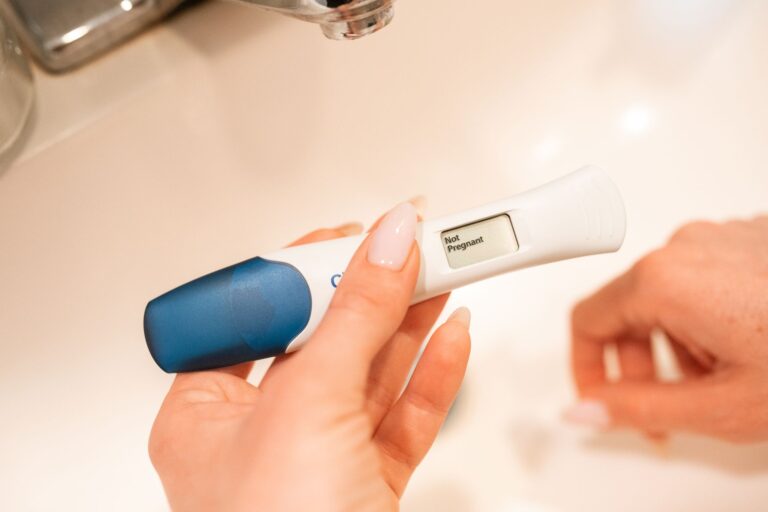
A chemical pregnancy is an early pregnancy loss that happens before an ultrasound can detect a gestational sac, usually within the first four weeks after conception. You may discover it only by a positive blood or urine test followed by falling hormone levels or a negative ultrasound, which is why it feels like a pregnancy loss even though no visible embryo was ever present. This happens to many people trying to conceive, and it is not a miscarriage in the clinical sense—ultrasound cannot confirm pregnancy until around five weeks, so a chemical pregnancy exists in that gap between a positive test and what medicine can see. It is still a loss, and your experience of that loss is legitimate even if your clinician uses the word "biochemical" or calls it a "very early loss.".
Table of Contents
- What Exactly Is a Chemical Pregnancy?
- How Common Is Chemical Pregnancy?
- Why Do Chemical Pregnancies Happen?
- How Do You Discover a Chemical Pregnancy?
- What to Expect Physically
- The Emotional Impact of Early Loss
- When to Contact Your Clinician
- Can You Try to Conceive Again?
- Recurrent Chemical Pregnancies and When Testing Helps
- Moving Forward After Loss
- Frequently Asked Questions
What Exactly Is a Chemical Pregnancy?
A chemical pregnancy is a pregnancy that tests positive on a blood test or home urine test but does not progress to a stage where an ultrasound shows a gestational sac or fetal pole. The pregnancy hormone human chorionic gonadotropin (HCG) rises enough to be detected, which is why the test is positive, but the pregnancy ends before the fifth or sixth week when ultrasound becomes reliable.
The term "chemical" refers to the fact that the pregnancy is detected only through blood chemistry—HCG levels—not through the physical structures ultrasound can see. In medical language it is sometimes called a "biochemical pregnancy" or "subclinical miscarriage," which can feel coldly clinical to you but is simply medicine's way of distinguishing this from a miscarriage that occurs after ultrasound confirmation.
A chemical pregnancy is not the same as a false positive test. Your HCG rose for a real reason: conception happened. The pregnancy was real at the cellular level. It simply did not continue to the stage where it becomes visible on ultrasound, and that almost always happens because of chromosomal abnormalities incompatible with development.
Timing matters for your understanding. Conception typically occurs around ovulation, about fourteen days before your period is due. A positive test at fourteen to eighteen days after ovulation (around the time your period would arrive) usually means HCG is detectable. An ultrasound at five weeks of gestation—counted from the first day of your last period—can usually see a gestational sac.
A chemical pregnancy ends in that window between positive test and visible ultrasound. You might also hear clinicians refer to "early pregnancy loss," which is a broader category that includes chemical pregnancies plus miscarriages diagnosed by ultrasound. The distinction matters medically because it changes when testing and evaluation begin, but emotionally the distinction is less relevant: you experienced a loss.
How Common Is Chemical Pregnancy?
Chemical pregnancies are common enough that many people trying to conceive encounter one, especially if they test early with sensitive urine tests or blood tests. Before at-home pregnancy tests became routine, chemical pregnancies were simply never detected—a person would have a late period and light bleeding and never know a pregnancy had begun.
The tests revealed a category of loss that was always happening but invisible. Estimates from fertility studies suggest that chemical pregnancies account for a meaningful fraction of all conceptions, but exact numbers vary widely depending on how studies measure (blood HCG from people trying to conceive versus positive home tests in the general population, for example).
The key point is: if you have experienced one, you are not unusual, and it does not predict future pregnancies. A single chemical pregnancy does not change your ability to get pregnant. It does not indicate a structural problem with your uterus, your ovaries, or your reproductive tract. It is not a sign of infection, hormone imbalance, or lifestyle factor.
It is typically a random chromosomal event—a one-time cellular accident that usually means the pregnancy itself could never have developed into a viable pregnancy. Recurrent chemical pregnancies—defined as multiple losses before ultrasound detection—are less common and do warrant investigation. Your clinician will want to evaluate you if you have experienced three or more chemical pregnancies in succession, or if you have experienced both chemical and ultrasound-confirmed losses. That threshold is when screening for factors like blood clotting disorders, autoimmune conditions, or thyroid disease becomes appropriate.
Why Do Chemical Pregnancies Happen?
The most common reason for a chemical pregnancy is a chromosomal abnormality in the embryo. A healthy pregnancy requires exactly the right number of chromosomes and the right balance of genetic material. If an egg or sperm carries an error in the number or structure of chromosomes—something that happens randomly during the division of these cells—the resulting embryo may have too many or too few chromosomes, or a duplication or deletion of a piece of chromosome.
Chromosomal abnormalities become more common with maternal age, which is why chemical pregnancies are slightly more frequent in people over thirty-five trying to conceive. However, they happen at all ages and can happen in your first pregnancy or after many successful ones. Age is a tendency, not a guarantee, and does not explain every chemical pregnancy.
These chromosomal problems are not caused by anything you did, ate, thought, felt, or did not do. They are not inherited from you or your partner in the sense that you carry a genetic disease. They are random errors that happen when reproductive cells divide, and they are incompatible with continued pregnancy development. This is a protective mechanism: a pregnancy that cannot develop normally ends before it causes physical harm or emotional investment in a longer-term loss.
Other causes of chemical pregnancy are much less common. Thyroid disease, blood clotting disorders, and certain autoimmune conditions can increase the risk of early loss. Infections or inflammation may rarely play a role. Uterine abnormalities sometimes contribute to early loss, though they more often affect later pregnancy. A single chemical pregnancy will not be investigated for these conditions; investigation begins only after recurrent loss.
Lifestyle factors—diet, exercise, stress, caffeine, sexual activity—do not cause chemical pregnancies. This is important because grieving people often search for something they could have done differently. The research is clear: a chemical pregnancy happened because an embryo carried a genetic incompatibility with development, not because of your choices.
How Do You Discover a Chemical Pregnancy?
You discover a chemical pregnancy by testing before your period is due or around the time it should arrive, and then learning through follow-up testing or ultrasound that the pregnancy did not progress. The path looks different depending on how you tested and when. If you take a home pregnancy test days before your period is due and see a positive result (even a faint line), that positive is real.
HCG is present. You might then take another test a few days later and see the line fainter, or take a blood test and see HCG levels that are lower than they should be at that stage. Or you might proceed to an ultrasound and see an empty uterus with no gestational sac. Any of these paths leads to the diagnosis of a chemical pregnancy.
Some people test daily or every other day and watch HCG numbers from blood tests. Those numbers typically rise roughly every two to three days in a healthy early pregnancy, doubling or increasing significantly with each test. In a chemical pregnancy, HCG rises initially but then plateaus or falls, indicating the pregnancy is not progressing.
If you wait and test only after a missed period, you might see a positive test, assume you are pregnant, and then have your period arrive anyway within a few days. That pattern strongly suggests a chemical pregnancy. By contrast, a clinical miscarriage is one confirmed by ultrasound after the gestational sac is visible. Some people do not test at all and simply experience what feels like a slightly heavier or longer period than usual.
If you never tested, you might not realize a chemical pregnancy occurred—it would simply look like a period that came a few days late or felt different. This is why chemical pregnancies went unrecognized before home testing became routine.
What to Expect Physically
The physical experience of a chemical pregnancy varies widely. Some people have minimal symptoms and notice nothing different from a regular period. Others experience heavier cramping, more substantial bleeding, or passing clots. Bleeding from a chemical pregnancy typically begins a few days after HCG stops rising or after a negative ultrasound, though in some cases the bleeding comes first and HCG is already falling.
The flow is often heavier than a typical period for the first day or two, sometimes with tissue or clots visible. This is physically normal—the uterine lining sheds, and you may see evidence of that. Cramping can range from absent to quite painful. You might feel cramping similar to a period, or it might be sharper.
Ibuprofen or naproxen is safe and often helps, though some people prefer acetaminophen. If you are soaking through more than one pad per hour for several hours, or if you are passing large clots, report this to your clinician to rule out other causes—though heavy bleeding from a chemical pregnancy alone does not usually require emergency care.
Symptoms like breast tenderness or nausea may continue briefly after HCG starts falling, since hormones take time to adjust. These symptoms typically fade within a few days as your body returns to its baseline. Some people feel relief when the bleeding starts; others feel grief. Most people recover from a chemical pregnancy physically within a couple of weeks.
Bleeding typically stops within a week, and hormone levels return to baseline as HCG clears from your system. Your menstrual cycle usually resumes normally within four to six weeks. You can attempt to conceive again in your next cycle if you wish—there is no medical reason to wait.
The Emotional Impact of Early Loss
Grieving a chemical pregnancy is legitimate even though no ultrasound ever showed visible pregnancy. You saw a positive test. You had hopes. You calculated a due date in your mind. You imagined a future. That loss is real regardless of medical definitions. Different people experience this loss differently. Some feel relief—the pregnancy was not viable and ended naturally.
Some feel grief that surprises them in its intensity. Some feel ambiguous, grieving the loss and yet also feeling gratitude that it happened early rather than later. None of these responses is wrong. Loss is loss, and your right to feel affected by it does not depend on how far the pregnancy progressed. The phrase "chemical pregnancy" can feel minimizing.
Medicine uses it to distinguish this event from later miscarriage, but the word choice can make you feel like your loss was somehow less real or less valid. It was not. You were pregnant. The pregnancy ended. That matters. Talking to your partner, a trusted friend, or a counselor can help you process the loss.
Some people find online communities where others have experienced chemical pregnancies; knowing you are not alone can be comforting. Some clinicians can refer you to grief support or counseling. Acknowledging your loss privately—writing about it, creating a small ritual—can help some people move forward.
When to Contact Your Clinician
Contact your clinician if you are unsure whether a chemical pregnancy occurred versus another cause of bleeding. Light positive tests or confusing results deserve evaluation—your clinician can measure HCG levels and clarify what is happening. Seek care urgently if you experience severe pain, very heavy bleeding (soaking through pads), fever, or foul-smelling discharge. These can indicate infection or another complication that needs treatment.
Most chemical pregnancies do not cause these symptoms, but if they occur, they warrant medical evaluation. If you have had three or more chemical pregnancies in a row, schedule an appointment with your clinician to discuss evaluation. Testing may include thyroid function, blood clotting studies, or autoimmune screening. Chromosomal testing of the pregnancy tissue itself is sometimes possible if you preserve tissue, though this is not standard care.
If you are under age thirty-five and have had one chemical pregnancy, no special testing is needed. One chemical pregnancy is common and expected, and does not predict future pregnancies. Your clinician will likely reassure you and encourage you to try again if you wish. If you have had a chemical pregnancy plus one or more ultrasound-confirmed miscarriages, tell your clinician. This pattern may warrant investigation for recurrent pregnancy loss, which typically begins after two consecutive losses rather than three.
Can You Try to Conceive Again?
Yes, you can begin trying to conceive again immediately after a chemical pregnancy if you wish. There is no medical reason to wait. Your menstrual cycle will resume as HCG clears, usually within a few days to a couple of weeks, and you can attempt pregnancy in your next cycle. Some people prefer to wait a cycle or two to process the loss emotionally before attempting again.
That is a reasonable choice for your own wellbeing, even if it is not medically necessary. Others feel that attempting again quickly honors their desire to have a child and helps them move forward. There is no right choice—it depends on what feels right for you. Your fertility after a chemical pregnancy is the same as it was before.
A chemical pregnancy does not damage your reproductive tract, lower your egg supply, or harm your future ability to carry a pregnancy. The fact that you did conceive is actually reassuring—it shows you can become pregnant, and most chemical pregnancies are followed by healthy pregnancies in subsequent cycles. Some people find that data tracking or ovulation testing helps them feel more in control after a chemical pregnancy.
Others prefer not to track and simply try without the monitoring. Both approaches work. The best approach is the one that reduces stress for you, since sustained stress does not help fertility.
Recurrent Chemical Pregnancies and When Testing Helps
If you have experienced two chemical pregnancies, this is still within the range of normal, and most clinicians will reassure you that investigation is not yet indicated. Random chromosomal errors happen, and experiencing two in a row is unfortunate but not predictive of future losses. If you experience three or more chemical pregnancies in succession, or a pattern of chemical pregnancy followed by later miscarriage, investigation becomes appropriate.
Your clinician may order blood tests including thyroid function (TSH and free T4), blood clotting studies (PT, PTT, and sometimes testing for thrombophilia), and testing for antiphospholipid antibodies. These conditions, when present, can increase the risk of early loss and are sometimes treatable. Testing of the pregnancy tissue itself for chromosomal abnormalities is sometimes possible if tissue is available, usually through a procedure called dilation and curettage, though this is not standard after a chemical pregnancy alone.
If you have had a pattern of losses and your clinician recommends this, it may help clarify whether chromosomal problems are random or whether a pattern suggests a different cause. Genetic counseling or fertility specialist evaluation may be recommended if recurrent loss is confirmed. These specialists can discuss your specific situation and whether further testing or treatment might help. Some couples benefit from preimplantation genetic testing if they proceed with fertility treatment.
Moving Forward After Loss
Honoring your experience matters. Acknowledging that you were pregnant, that the loss was real, and that you are allowed to feel affected by it can help you move forward. This might mean talking to someone, writing about it, or simply giving yourself permission to feel whatever emotions arise. Physical recovery from a chemical pregnancy is usually complete within two to three weeks.
Your period resumes, your hormone levels normalize, and your body returns to its baseline state. Emotional recovery takes longer and follows its own timeline—there is no standard schedule. Many people who experience a chemical pregnancy go on to have healthy pregnancies in subsequent cycles. A single or even a few chemical pregnancies do not predict future outcomes.
The fact that you became pregnant is evidence that your reproductive system is working; the loss was almost certainly a one-time chromosomal event beyond anyone's control. If you are still trying to conceive and finding the process emotionally taxing after a chemical pregnancy, reaching out to a mental health professional, a support group, or a fertility counselor can provide real help. The path to parenthood is not linear, and getting support along the way is not weakness—it is self-care.
Frequently Asked Questions
Is a chemical pregnancy the same as a miscarriage?
No. A chemical pregnancy is detected only by blood test or home urine test before ultrasound can see a gestational sac. A miscarriage is diagnosed by ultrasound confirmation of pregnancy. The medical distinction does not make your loss less real, but it affects how doctors evaluate you.
Can I get pregnant again right after a chemical pregnancy?
Yes. Your menstrual cycle resumes within days to a couple of weeks, and you can attempt pregnancy in your next cycle. There is no medical reason to wait, though you may choose to wait for emotional recovery.
What causes chemical pregnancy?
Usually a chromosomal abnormality in the embryo—too many or too few chromosomes, or an imbalance of genetic material. This is random and incompatible with continued development. It is not caused by anything you did, ate, or felt.
Do I need testing after one chemical pregnancy?
No. One chemical pregnancy is common and expected. Testing for underlying causes is typically recommended only after three or more chemical pregnancies in a row, or after a pattern combining chemical and later miscarriages.
How heavy is the bleeding from a chemical pregnancy?
Usually similar to a heavy period, sometimes heavier for the first day or two. You may pass clots. Bleeding typically lasts a few days to about a week. Contact your clinician if you soak through more than one pad per hour for several hours or pass very large clots.
Will a chemical pregnancy affect my ability to get pregnant in the future?
No. A chemical pregnancy does not damage your reproductive tract, reduce your egg supply, or lower your fertility. The fact that you became pregnant shows your system is working. Most people who experience a chemical pregnancy have healthy pregnancies afterward.