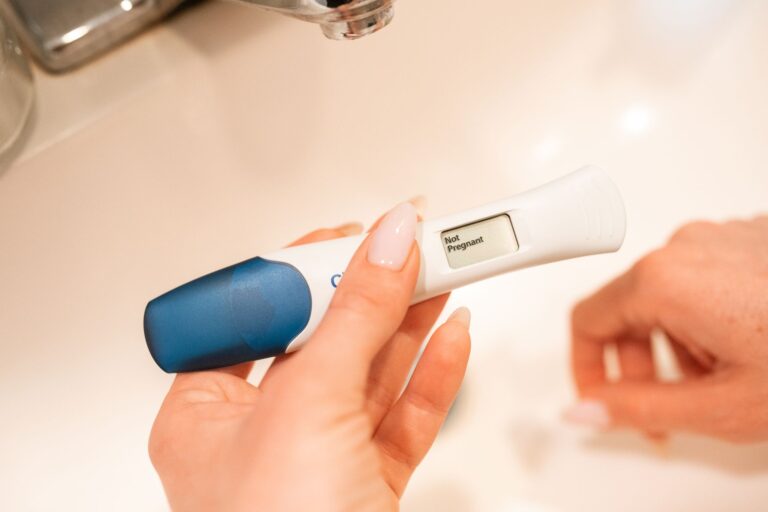
A faint line on a pregnancy test is still a positive result—any visible line, no matter how faint, indicates that human chorionic gonadotropin (hCG), the pregnancy hormone, is present in your urine. If you see a line appear within the test's time window (usually three to ten minutes), the test is detecting a real chemical change in your body. The faintness of the line does not mean you are "less pregnant" or that the pregnancy is weaker.
It reflects the concentration of hCG at the moment you took the test—a measurement that changes daily in the first weeks after conception. A faint line can occur with a perfectly healthy pregnancy, especially if you tested very early, drank a lot of water beforehand, or used a test that is not as sensitive to low hCG levels. Understanding what a faint line means and what comes next can ease the worry that often follows.
Table of Contents
- How Pregnancy Tests Detect hCG
- Why Your Pregnancy Test Shows a Faint Line
- How hCG Levels and Line Darkness Change Over Days
- Understanding Different Pregnancy Test Types
- Faint Lines and Chemical Pregnancy
- When to Call Your Doctor About a Faint Line
- False Positives and Evaporation Lines
- What Happens After You See a Faint Positive
- Questions You Still Might Have
- Managing Anxiety While Waiting for Confirmation
- Frequently Asked Questions
How Pregnancy Tests Detect hCG
Pregnancy tests work by detecting a hormone called human chorionic gonadotropin, which your body produces only after a fertilized egg implants in the uterus. This hormone begins rising immediately after implantation and doubles roughly every two to three days during the first four weeks. The test strip contains chemical markers that bind to hCG molecules and create a visible line when they encounter the hormone in urine.
The presence of hCG is what makes the line appear, and even a trace amount will produce a faint line. Tests do not measure "how pregnant" you are—they simply indicate whether hCG is present above the test's detection threshold. A faint line means hCG is there, just in lower concentrations than a darker line would show.
Different tests have different sensitivities, measured in milliunits per milliliter (mIU/mL), ranging from 10 to 50 mIU/mL for mainstream brands. The line appears as the urine sample passes through the test strip and rehydrates the dried chemicals embedded there. If you see a line appear and then disappear, that is an evaporation line, which forms as the urine dries on the strip after the test window has closed.
A true positive line appears within the time window and will not fade if the test dries. Your body produces hCG whether the pregnancy will continue or not. A faint line reflects hCG at that moment, not a prediction of what will happen next. This is why a faint line does not indicate miscarriage risk, low viability, or any other outcome—it is simply a measurement of hormone concentration at a specific point in time.
Why Your Pregnancy Test Shows a Faint Line
The most common reason for a faint line is timing. If you test before your missed period or within a few days after it, hCG levels are still climbing and may be below 100 mIU/mL. The lower the hCG concentration, the fainter the line. Testing at six to eight days after ovulation (roughly four to six days before a missed period) may show only a very faint line, while the same pregnancy tested a week later will show a much darker line.
Urine dilution affects line darkness significantly. If you drink large amounts of water, coffee, or other fluids before testing, your urine is more dilute and hCG concentration drops, making the line appear fainter. Testing with your first urine of the morning—which is more concentrated because your body has not diluted it overnight—typically produces a darker line than testing later in the day.
Test sensitivity matters. Some over-the-counter tests detect hCG at 10 or 20 mIU/mL, while others need 25 or 50 mIU/mL to show a line. If you used a less sensitive test very early in pregnancy, the line will be fainter than if you use a more sensitive test days later. Reading the test package will tell you the sensitivity threshold.
How long you hold the test under urine affects the result. If you do not saturate the test strip thoroughly, less urine reaches the chemical strip and hCG concentration in the sample is lower, producing a fainter line. Holding the stick in the stream for three to five seconds ensures adequate saturation. Certain medications and health conditions that affect hCG levels are rare but possible.
Most over-the-counter medications do not interfere with pregnancy tests. However, fertility drugs that contain hCG can cause a false positive that fades and disappears within days as the injected hormone leaves your system. If you used hCG injections for fertility treatment, tell your doctor when you test positive so they know to expect this pattern.
How hCG Levels and Line Darkness Change Over Days
During a viable pregnancy, hCG roughly doubles every 48 to 72 hours in the first four weeks after implantation. This means if a faint line appears today, a test taken in two days should show a noticeably darker line. Tracking this progression can provide reassurance while you wait for a doctor's appointment.
Day one after a faint positive might show hCG around 10 to 25 mIU/mL—barely visible. Two days later, hCG could be 25 to 75 mIU/mL, producing a more obvious line. By day seven after the first faint line, hCG typically reaches several hundred mIU/mL and the line is clearly dark. This progression is normal and expected.
If you test multiple times over several days and the line stays equally faint or becomes lighter, that is unusual and warrants a call to your doctor or midwife. Most viable pregnancies show a clear progression to darker lines. However, one faint test followed by a dark test is normal and does not indicate a problem during those two days.
The darkness of the line does not affect the test's reliability once a line appears. A faint line is just as positive as a dark line—it is not less of a pregnancy. The darkness reflects only the hCG concentration at that moment, not the health or viability of the pregnancy. Retesting with a more sensitive test can show a darker line even when hCG has not changed much.
If you tested with a test that detects hCG at 50 mIU/mL and got a faint line, switching to a test that detects at 10 mIU/mL might show a much darker line with the same urine sample. The line darkness is relative to the test's sensitivity, not an absolute measurement.
Understanding Different Pregnancy Test Types
Qualitative tests—the standard over-the-counter stick you pee on or dip in a cup—tell you either "pregnant" or "not pregnant." They do not measure the exact hCG level. A faint line on a qualitative test means hCG is present, but you cannot determine the exact amount. Many brands produce faint lines in early pregnancy because even low hCG triggers their chemical markers.
Digital tests display words like "pregnant" or "not pregnant" instead of a line. These tests often require higher hCG to trigger a result and may not show a positive until hCG is higher than some qualitative tests require. If you got a faint line on a qualitative test but no result on a digital test taken the same day, the qualitative test has detected very low hCG the digital test's threshold did not reach yet.
Quantitative tests, called beta hCG or serum hCG tests, are blood tests your doctor orders. They measure the exact hCG number—for example, 15 mIU/mL or 250 mIU/mL. Blood tests are more sensitive than urine tests and can detect hCG several days before a home urine test shows a line. Blood tests are the gold standard for confirming pregnancy and tracking hCG progression.
Early detection tests marketed as detecting hCG five or six days before a missed period have very low detection thresholds (often 10 mIU/mL). These tests frequently show faint lines in very early pregnancy. Using one of these tests days before your missed period increases the chance of seeing a faint positive early, but also increases the risk of false results if the test is past its expiration date or if you misread the result.
Test brand matters less than you might think. All urine pregnancy tests detect hCG; the differences are mainly in sensitivity and test design. No brand is dramatically more accurate than another for detecting hCG once a line appears. If a line is visible, hCG is present regardless of brand.
Faint Lines and Chemical Pregnancy
A chemical pregnancy is an early miscarriage that happens before the gestational sac is visible on ultrasound, usually before five to six weeks. It occurs when a fertilized egg implants and begins producing hCG (producing a positive test), but the pregnancy stops developing. Chemical pregnancies account for 50 to 75 percent of all miscarriages. A faint positive test alone does not predict a chemical pregnancy.
Most faint positives in early pregnancy progress to darker lines and viable pregnancies. Chemical pregnancies typically follow a pattern: a faint positive line, possibly a slightly darker line over the next few days, then a lighter line, then a negative test, followed by a period. This pattern takes one to two weeks to unfold. You cannot distinguish a chemical pregnancy from a viable pregnancy based on line darkness alone.
A faint line today could be a chemical pregnancy or a completely normal early viable pregnancy—neither outcome is determined by how faint the line is. Only time and follow-up testing reveal what is happening. If you experience a period after a positive test, or if urine tests show hCG rising for a few days then falling, contact your doctor to confirm the miscarriage and discuss any next steps or testing.
Your doctor may order blood tests to track hCG levels and confirm they are falling, or an ultrasound to rule out other causes. Chemical pregnancies are not caused by anything you did or did not do. They are not preventable and occur in healthy people with healthy habits. If this happens to you, taking time to grieve is appropriate; a loss at any stage is real. Your doctor can discuss timing for trying again and any testing or monitoring that might be helpful for future pregnancies.
When to Call Your Doctor About a Faint Line
Contact your obstetrician, midwife, or primary care doctor as soon as you see a faint positive line, even if it is very early. Do not wait for the line to get darker. Your doctor needs to know you are pregnant to discuss prenatal care, medications you are taking, lifestyle factors, and any risk factors specific to your pregnancy.
Call during business hours; most practices can fit in a brief call about a positive test quickly. Bring the pregnancy test with you to your appointment if you have kept it. Your doctor may want to see it, though they will rely mainly on a blood hCG test to confirm the pregnancy and rule out causes of low hCG levels (such as an ectopic pregnancy, in which the fertilized egg implants outside the uterus).
If you have a history of miscarriage, ectopic pregnancy, or other pregnancy complications, tell your doctor this when you report your positive test. They may want to see you sooner and may order specific blood tests or ultrasounds based on your history. Early reassurance and close monitoring can ease anxiety in these situations. Seek immediate medical attention—call your doctor or go to an emergency room—if you have severe abdominal pain, heavy vaginal bleeding, dizziness, or fainting after a positive test.
These can signal an ectopic pregnancy or other urgent conditions that need immediate evaluation. If you have taken fertility medications containing hCG (such as Ovidrel or Pregnyl), tell your doctor when and how much you injected. The test might be detecting injected hCG rather than pregnancy-related hCG, which would explain a faint line that fades over days. Blood tests can distinguish between injected hCG and naturally produced hCG, so your doctor can sort out what is happening.
False Positives and Evaporation Lines
True false positives—a line that appears in the test window indicating hCG when you are not actually pregnant—are very rare with modern pregnancy tests. Urine pregnancy tests have a false positive rate under 1 percent when used correctly. When false positives do occur, the most common cause is a fertility medication containing hCG that was recently injected.
Evaporation lines are not positive tests; they are a common source of confusion. An evaporation line appears as the urine dries on the test strip after the test time window has closed (typically after ten minutes). The urine itself leaves a faint mark on the strip as it evaporates, which can resemble a faint positive line.
The key difference is timing: a true positive appears within the test window (usually three to ten minutes), while an evaporation line appears after. To avoid confusing an evaporation line with a true positive, read your test within the time window specified on the package insert and discard it afterward. Do not set a test aside and check it an hour later; lines that appear after the time window has elapsed are evaporation lines, not positives.
If you are unsure whether you saw a line in the correct time window, take a fresh test. Certain conditions affecting urine—such as kidney disease, protein in the urine, or very high urine concentration—can theoretically interfere with test results, but this is exceptionally rare and would require significant underlying illness. If you have a known kidney condition or other serious illness, tell your doctor when you get a positive test so they can factor this in.
Medications do not generally cause false positives unless they contain hCG. Over-the-counter pain relievers, antibiotics, anti-nausea medications, and most other common drugs do not affect pregnancy test accuracy. Thyroid medications, antidepressants, and hormonal birth control do not cause false positives either.
What Happens After You See a Faint Positive
Your first step is to schedule an appointment with your doctor or midwife within the next week if possible. Your doctor will confirm the pregnancy with a blood hCG test, which is more sensitive than urine tests and can measure the exact level. A baseline blood test also establishes your hCG level, which your doctor can compare to a second blood test 48 hours later to confirm hCG is rising as expected.
An ultrasound is typically scheduled for around eight weeks of pregnancy (six weeks from your missed period) to confirm a gestational sac in the uterus, rule out an ectopic pregnancy, and assess whether the pregnancy appears viable. Before this ultrasound, a faint line and rising hCG are reassuring signs, but the ultrasound is the first definitive confirmation that the pregnancy is developing in the right place.
In the meantime, start taking prenatal vitamins containing folic acid if you are not already taking them. Folic acid reduces the risk of neural tube defects and is most important in the first 28 days after conception. Your doctor will recommend a prenatal vitamin that meets current guidelines. Avoid activities and substances known to harm early pregnancy: alcohol, tobacco smoke, illicit drugs, unpasteurized dairy, undercooked meat, raw fish, high-mercury fish, and excessive caffeine.
Maintain normal activity and exercise unless your doctor advises otherwise. Many common concerns people have about early pregnancy—exercise, normal work activities, sex, travel—are not harmful and your doctor can address any specific concerns. If you were not seeing a regular doctor before your positive test, use this as an opportunity to establish prenatal care. Your obstetrician, midwife, or primary care doctor can all provide prenatal care and delivery services depending on your preferences and health situation.
Questions You Still Might Have
Does a faint line mean I ovulated late? A faint line indicates hCG is present at that moment, but says nothing about when you ovulated. Ovulation timing determines how far along you are in pregnancy, which determines expected hCG levels at any given point. Your doctor will estimate your due date based on your last menstrual period and ultrasound findings, not on how faint your first test was.
Could a faint line mean twins? No. Line darkness does not indicate the number of fetuses. Twins do produce hCG faster than singletons (because two placentas produce more hCG), but you cannot determine this from a urine test. Twins are confirmed with ultrasound, typically around eight to ten weeks, when two gestational sacs or fetal heartbeats are visible.
Is a faint line on a pregnancy test as reliable as a dark line? Yes. Any line that appears during the test's time window indicates hCG is present. The faintness reflects hCG concentration at that moment, not test reliability. Both faint and dark lines are equally reliable positive results. Should I test again tomorrow to see if the line gets darker? Testing again a few days later is fine and many people do this for reassurance.
However, testing daily or multiple times per day adds cost and anxiety without providing useful information. Waiting 48 to 72 hours allows hCG to rise enough to see a visible change in line darkness. What if my line never gets darker? If you retest two to three days later and the line looks the same or lighter, contact your doctor.
This is unusual in an ongoing pregnancy and warrants blood tests to check hCG levels. Your doctor can determine whether hCG is rising appropriately or whether something else is happening.
Managing Anxiety While Waiting for Confirmation
Seeing a faint positive pregnancy test can trigger intense emotions—joy, fear, uncertainty, or a complicated mix. If you have experienced pregnancy loss, infertility, or other pregnancy complications before, a faint line may bring up trauma or anxiety. These feelings are valid and common. Limit pregnancy testing once you have one positive result. Repeated testing does not change the outcome and often amplifies anxiety.
Your body is producing hCG and will continue to do so; more tests will not make the pregnancy more real or more viable. One positive test is enough to move forward with a doctor's appointment. If you are waiting for a doctor's appointment, a therapist, counselor, or support group for people navigating early pregnancy can help.
Many communities have in-person or online groups for people managing early pregnancy anxiety, miscarriage support, or fertility challenges. Your doctor can refer you to mental health resources if you need them. Avoid researching rare complications online. Reading about ectopic pregnancies, molar pregnancies, or other uncommon conditions will heighten anxiety without helping you. Your doctor is trained to identify these conditions through blood tests and ultrasound; worry will not prevent them.
Trust the medical process and reach out to your doctor if specific symptoms develop. Talk to your partner, a trusted friend, or family member if you want support. Some people find it helpful to share the news early; others prefer to wait until after the first ultrasound. Either choice is fine. What matters is having the support structure you need during this uncertain time.
Remember that a positive test, even a faint one, means hCG is present and your body has undergone a real change. Millions of pregnancies that begin with faint lines continue normally and result in healthy babies. Faintness does not predict your outcome, and waiting for confirmation appointments is hard but temporary.
Frequently Asked Questions
Does a faint line mean I'm less pregnant?
No. A faint line means hCG is present; darkness reflects hormone concentration at that moment, not how "pregnant" you are. A faint line is just as much a positive result as a dark line.
When should I test again after seeing a faint line?
Wait 48 to 72 hours for hCG to rise enough to see a visible change. Testing earlier will likely show a similarly faint line and adds unnecessary anxiety. One positive test is enough to call your doctor.
Could a faint line be an evaporation line, not a real positive?
Only if the line appeared after the test time window closed (usually after 10 minutes). A line appearing within the time window indicates hCG is present. Read your test while it is still wet, not hours later.
Do I need a blood test to confirm a faint line?
Yes. Call your doctor after seeing a positive test. Blood tests confirm pregnancy, measure exact hCG levels, and rule out ectopic pregnancy or other complications. Blood tests are the medical standard for confirming pregnancy.
Why is my line faint when I tested early?
hCG doubles every 48 to 72 hours in early pregnancy. Testing before your missed period or just after means hCG is still low, producing a faint line. The same pregnancy tested days later will show a much darker line.
Could a faint positive mean I'm having a miscarriage?
A faint line does not predict miscarriage. Most faint positives progress to viable pregnancies. If hCG is rising over several days, that is a good sign. Only time and follow-up testing reveal what happens next.