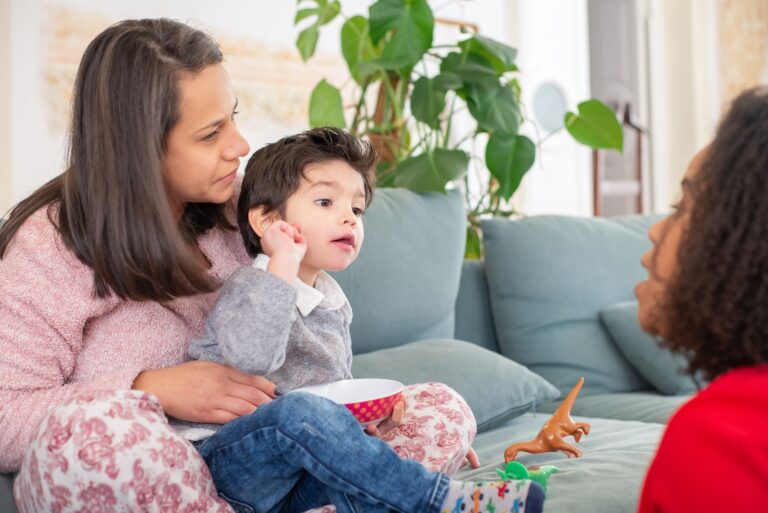
Quality family time is intentional connection—putting away distractions and paying genuine attention to each other—rather than hours spent in the same room. It works best when activities match your child's age and your family's actual life, not an idealized version of it.
Family time does not require a Pinterest-perfect activity or advance planning. A fifteen-minute conversation over lunch, building with blocks side by side, or walking to the mailbox together all count if your attention is there. What matters is showing your child that being with them is worth your focus, and that can happen during a meal, a car ride, or a quiet afternoon at home.
Table of Contents
- Why Connection Matters Across Ages
- Activities for Infants and Newborns
- Toddlers and Play-Based Connection
- Preschoolers and Creative Play
- School-Age Children and Shared Interests
- Teenagers and Low-Pressure Togetherness
- Making Time Without Screens
- Low-Cost and Free Activities
- Building Consistency Without Perfection
- Adjusting as Your Family Grows and Changes
- Frequently Asked Questions
Why Connection Matters Across Ages
The payoff of family time changes as your child grows, but it stays important at every stage. Infants need your face, voice, and touch to build security and learn language—holding your baby while you talk or narrate what you're doing ("Now I'm changing your diaper, you're so clean") is teaching, not entertainment.
Toddlers use play alongside you to learn how to manage emotions and try out new skills; your presence and encouragement matter more than the toy itself. School-age children still crave your attention but often hide the need—they ask about your day, show you something they made, or want you to watch them play.
Adolescents need you nearby and available, even if they seem not to care; research on brain development shows that teenagers benefit from family meals and shared activities that keep you in regular contact. When you prioritize time with your child, you also learn what is actually happening in their world. You notice when something is bothering them, what they find funny, what skills they are practicing.
That information helps you know whether behavior is typical for their age or a sign something needs attention. Quality time is not a separate activity you add to an already full day. It is how you reshape the time you already spend with your child, turning it into something that feels genuinely connected.
Activities for Infants and Newborns
With a newborn, quality time happens during caregiving: diaper changes, feeding, and getting ready for bed. Make eye contact, talk or sing, and let your baby watch your face. Newborns cannot focus on toys yet, but they focus intensely on you.
Narrate what you are doing in a calm voice: "You are eating; your tummy is getting full" or "I am washing your face, it is warm water." Tummy time with you on the floor nearby—or on your chest—is both an activity and connection. Babies around three months old begin to smile socially and track movement.
Place a toy just out of reach during tummy time and let them practice reaching. Your encouraging voice ("You are trying so hard") matters more than the toy. Simple routines become your main family activity: a bath with warm water and gentle splashing, getting dressed with songs, or a short walk in a stroller where you point out birds or leaves and your baby listens to your voice.
Babies learn language through hearing you talk naturally, not through special teaching moments. Around six months, babies enjoy sitting on your lap while you look at high-contrast picture books together or let them touch fabric with different textures—soft, bumpy, smooth. Keep these moments brief (five to ten minutes) because infants tire quickly. The goal is togetherness, not completing an activity.
Physical play becomes important: gentle bouncing, being held up high so your baby sees the room from your perspective, and clapping along to songs. These games teach coordination and also feel like celebration to a baby—they make your child feel delighted to be with you.
Toddlers and Play-Based Connection
Toddlers (ages one to three) learn through play, and playing alongside them is the deepest family time you can offer. You do not need to direct the play or make it educational. Sit on the floor and build a tower, knock it down together, and let your toddler rebuild it however they want. Hand them a wooden spoon and a pot and let them bang; the noise is practice, not mess.
Toddlers love parallel play where you each do something near each other: you fold laundry while your child sorts toys into a basket, or you water plants while they pour water with a cup. They feel included without needing constant entertainment. Narrate what you see: "You are putting the red block on top—that is so tall." Simple sensory play costs nothing: water play in the bathtub or sink, playing with dried pasta or beans in a shallow container (supervise closely to prevent choking), making marks with crayons on paper, or digging in a dirt pile outside.
Your toddler explores while you sit nearby, available to help when they ask. Cooking together works with toddlers if you adjust expectations. Let them stir, pour (with your hand guiding), and taste. Washing vegetables, tearing lettuce, or mashing soft foods teaches them about food and gives them your full attention for ten or fifteen minutes.
The meal takes longer, but the connection is real. Outdoor time is free and restorative: walking to a park, sitting on a bench while your toddler plays, exploring a trail, or playing in the yard. Your presence while they run and climb is family time, even when you are quiet. Toddlers often talk more freely when you are side-by-side rather than face-to-face.
Bedtime routines become sacred connection time. A bath, stories in your lap, a song, and tucking in take thirty minutes and happen every night. Your child feels secure because it is predictable, and you are fully present for it.
Preschoolers and Creative Play
Preschoolers (ages three to five) develop imagination rapidly and create their own games. Your role shifts: you are no longer the director but a participant who follows their lead. If your child wants to play restaurant, be the customer. Ask what the menu is, make a choice, and let them serve you. These games teach your child social skills and give them space to be creative while you are there.
Art projects require minimal setup: paper, crayons, markers, or paint. Your child creates; you sit nearby and notice. Comment on what you see without judgment: "You used so many colors" or "That is a big circle." Do not ask "What is it?"—let your child decide what it represents. Keep artwork displayed for a few days so your child knows it matters to you.
Building with blocks, LEGOs, or sticks becomes more complex as their skills grow. Your child may ask you to build something specific, or you may build side-by-side and talk about what you are making. Let your child lead the conversation about their creation rather than directing it. Pretend play deepens: playing house, store, doctor, or school.
Your child assigns you a role and may be very specific about what you should do. Following their direction is the gift—they are developing imagination and social understanding. These games often teach you what your child is thinking about or worried about. Everyday tasks become play: sorting laundry by color, putting toys in a bin, or helping set the table.
A four-year-old is slow at these tasks, but working together is quality time and teaches responsibility. Praise effort: "You are working hard to match the colors." Reading together grows richer as your child asks questions and remembers stories from previous readings. Let them pick the book and reread favorites as many times as they want. Stopping to talk about the pictures and discuss what characters are doing strengthens vocabulary and lets your child know their thoughts matter.
School-Age Children and Shared Interests
School-age children (six to eleven) begin to have their own interests and opinions. Quality time now often means joining their world rather than them joining yours. If your child loves soccer, attend games and practice and watch them play. If they love drawing, sit at the table and draw alongside them without instruction or criticism.
Conversation becomes a main form of connection. Ask open-ended questions: "What was the best part of your day?" or "What are you interested in learning about?" Listen to their answer without immediately offering solutions or redirecting. Children shut down conversation quickly if they sense you are distracted or waiting for your turn to talk. Game nights and puzzle-building together create structured family time: board games, card games, or a 500-piece puzzle spread on a table you return to over several days.
These activities have a built-in endpoint and give you something to focus on while you talk. Cooking or baking together becomes more productive as children develop skills. Your child can measure, stir, crack eggs, or follow a recipe. Talk about what you are making and why—why baking needs exact measurements, why some foods need heat.
These conversations teach both skills and thinking. Outings tailored to your child's age and interests matter more than generic "family activities." If your child likes nature, take walks and identify insects or plants. If they like building, visit a hardware store and let them choose a small project for home. If they like animals, plan trips to farms, parks with trails, or aquariums.
Your child's enthusiasm makes these moments feel special. Bedtime conversations, even brief ones, maintain connection. Ask about friendships, school worries, and what they are proud of. Do not use this time for lectures or discipline.
Teenagers and Low-Pressure Togetherness
Teenagers seem to reject family time, but they still need connection—it just looks different. They need your presence without constant attention: being in the same room without interruption, car rides where conversation can happen naturally, or shared activities that do not require constant eye contact. Sitting together to watch a show or movie you both enjoy creates shared experience.
You can pause to talk about what is happening or discuss characters. Food makes these moments feel more intentional: popcorn during a movie or snacks during a game turns it into an occasion. Car rides work because talking happens side-by-side rather than face-to-face, which feels less intense to a teenager. Use these moments to ask about their day, their friends, and what they are thinking about.
Resist the urge to fix everything or respond immediately with your opinion. Shared hobbies create natural connection: playing music together, hiking or biking, cooking, building something, or gaming. Your teenager feels respected when you engage with something they care about, even if it is not your preference. Meals together, even once or twice a week, help maintain connection.
Put phones away and ask about their life without turning it into an interrogation. Share something about your day. Teenagers remember these conversations and feel genuinely known when you take time to ask. Driving your teenager places, attending their events, and helping with projects they care about shows them that their interests matter to you.
A parent sitting in the audience at a concert, game, or performance is saying "I show up for you." Respecting their growing independence while staying available is the core of teenage family time. You are not their main friend, but you are the steady adult who knows them and is there.
Making Time Without Screens
Screens are everywhere, and constant background TV or phone scrolling erodes family connection. Setting boundaries does not mean no screens ever—it means being intentional about when screens are part of family time and when they are not. Screen-free meals, at least some of the time, let conversation happen naturally. Without a device in hand, family members pay attention to each other.
Meals do not need to be long—fifteen minutes at a table with no phones teaches your child that they are worth your undivided attention. Creating a device-free hour or two most days opens space for other activities. During this time, put phones and tablets out of sight (not just silent) so you are not tempted.
This is different from banning screens; it is scheduling time for other connection. Games and puzzles work partly because they have a natural endpoint and because your hands and minds are occupied together in one activity. The conversation that happens during a board game is different from conversation over dinner—it is lighter and less forced.
Reading aloud works for all ages, even teenagers, though they may not admit it at first. Shared stories create shared experience and talking points. A book gives you something to discuss beyond daily logistics. Building projects—a birdhouse, a planter, a fort—create shared goal and conversation. Your child learns to follow steps and solve problems while spending time with you.
The finished project becomes a reminder of time spent together. Outdoor time naturally limits screens. A walk, a bike ride, playing in the yard, or a trip to a park gives you time together without the distraction of devices.
Low-Cost and Free Activities
Family time does not require spending money. Many of the deepest connections happen during ordinary moments that cost nothing. Outdoor exploration is free: walking a neighborhood trail, visiting a park, sitting in your yard, or exploring a creek. Bring a bucket and collect leaves or rocks; hunt for bugs; watch clouds; listen to birds. Your child learns to be curious and you are there noticing what excites them.
Sidewalk chalk, sticks, and mud are endless play materials. A cardboard box becomes a fort, a castle, a car, or a store. Your child's imagination drives the play and you follow along. Cooking and baking with ingredients you have at home teaches skills and creates memories. Even simple cookies or a pan of brownies becomes an event when it is something you do together.
Library visits are free and give your child access to books, movies, and sometimes programs. Letting your child choose what interests them shows respect for their developing taste. Creating and performing: sing together, dance, put on a play or puppet show using stuffed animals, draw or paint. Your child becomes the performer and you are the audience.
This builds their confidence. Gardening in any form—planting seeds in pots, tending a small vegetable patch, or watering plants—teaches patience and lets your child see growth over time. The responsibility of caring for something together builds connection. Rearranging furniture, creating new spaces in your home, or organizing a closet together can feel like an adventure.
Your child feels involved in decisions about the home environment. Storytelling and making up games: "I spy" in the car, creating silly stories where you take turns adding sentences, or making up a game using things around the house. These cost nothing and often create moments your child remembers years later.
Building Consistency Without Perfection
Quality family time does not happen by accident. It needs to be a decision you make and protect, but it does not need to be elaborate or perfect. Start small with one regular commitment: a family meal three times a week, a weekly game night, or a bedtime routine you do not skip. Consistency matters more than duration.
A fifteen-minute routine that happens every day builds deeper connection than occasional long activities. Protect this time the way you would a work meeting or an appointment. Turn off notifications, put devices away, and make it clear that this time is for your family. Your child will notice and feel valued. Expect imperfection. An activity will be interrupted, someone will be grumpy, the meal will be rushed.
These moments are still family time. It is not the absence of difficulty that makes time quality—it is showing up even when things are messy. Let your child set the tone sometimes. If they do not feel like the planned activity, you can adjust. Flexibility teaches them that relationships matter more than perfect execution. Notice small moments: the joke your child made, the way they helped without being asked, the skill they developed.
Acknowledging these things tells your child what you value about them. Remember that being present is enough. You do not need to be entertaining or productive. Simply being together, available, and genuinely interested in your child is quality family time.
Adjusting as Your Family Grows and Changes
Family time looks different depending on your family's stage and circumstances. A single parent's family time might be shorter but more focused. A blended family might spend time building connection with new relationships. A parent working multiple jobs might have less time but can still create meaningful moments. During pregnancy and the newborn stage, family time might feel impossible and that is normal.
Simple togetherness—eating a meal while someone else holds the baby, sitting together while your older child plays—counts. As the newborn settles, family routines can expand again. When you add a second or third child, family time includes the whole group. Your older child may need one-on-one time with you too, which can be a short walk or a trip to the store together.
One-on-one time with each child, even fifteen minutes a week, matters alongside whole-family activities. Illness, job stress, and life changes interrupt routines. When things return to normal, you can rebuild without feeling like you failed. Consistency is a practice, not perfection. As your child ages, what they need from family time changes. A toddler who loved playing alongside you will eventually want to do their own thing.
A school-age child interested in every activity will become a teenager who needs privacy and independence. Your willingness to adapt shows that you see your child as a growing person, not a younger version of themselves forever. Your own mental health and well-being matter to family time too. A parent who is overwhelmed or burned out cannot show up fully.
Taking care of yourself—sleeping enough, getting a break, managing stress—makes you more present when you are with your child. Family time is not a checklist to complete or a way to prove you are a good parent. It is a choice you make to be genuinely present with the people you love, in whatever form that takes in your real life.
Frequently Asked Questions
How much family time do children actually need?
There is no set number of hours. Children benefit from regular, consistent connection rather than occasional long blocks. Fifteen minutes of undivided attention daily works better than several hours one weekend day. What matters is showing up regularly and being genuinely present.
What should I do if my family never has time together?
Start with one regular commitment you can realistically keep: a meal together three times a week, a ten-minute bedtime routine, or a game night once a month. Consistency and presence matter more than duration. Build from there as your schedule allows.
How do I keep family time from feeling forced or boring?
Let your child's interests guide activities instead of planning activities you think should happen. Ask your child what they want to do, not what you think they should do. Follow their lead and let the time feel natural rather than structured.
Are screen-based activities okay for family time?
Watching a movie or show together can be family time if you are interacting—pausing to talk, sharing snacks, discussing what you see. All screens all the time erodes connection, but intentional shared screen time is different from background TV while everyone is on devices separately.
What if I have multiple children with different ages?
Some activities work for whole families—meals, outdoor time, game nights. One-on-one time with each child, even briefly, also matters. A five-minute car ride alone with your oldest or a few minutes playing with your toddler while the baby sleeps counts as individual connection.
How do I make family time happen when I work long hours?
Focus on consistency over duration. A ten-minute conversation before bed, a meal together three times a week, or a weekend activity you commit to matters more than long stretches. Brief, regular connection teaches your child that you prioritize them.