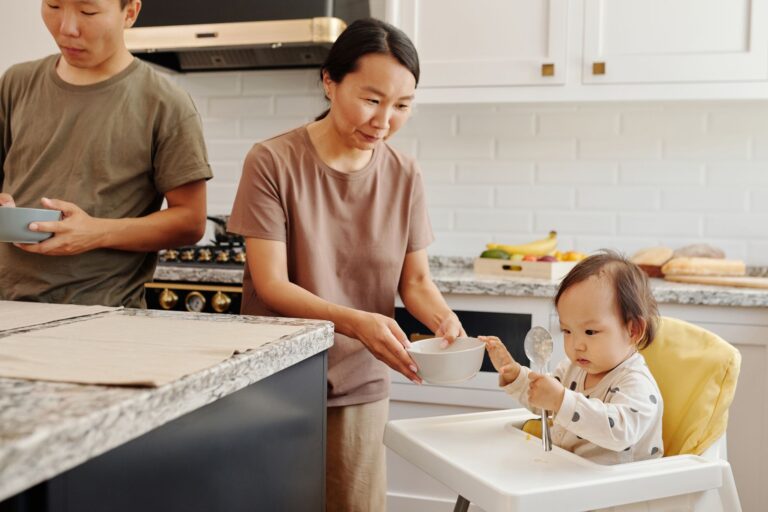
Your baby shows readiness for finger foods through a cluster of physical and developmental signs rather than age alone, typically emerging around six months but varying widely between babies. The clearest signals include sitting upright with minimal support, using a thumb-and-finger grasp to pick up small objects, keeping food in their mouth rather than spitting it out immediately, and actively watching you eat—not just one sign, but several working together.
Starting finger foods is a gradual process, not a sudden switch from purees. Your pediatrician can confirm readiness at your baby's next checkup if you're unsure, but most parents recognize it when they see their baby focused on what they're eating and able to coordinate hand and mouth in new ways. This shift happens on your baby's timeline.
Table of Contents
- The Physical Signs That Matter Most
- Digestive and Swallowing Readiness
- Age, Readiness, and Individual Variation
- Foods to Start With and Texture Progression
- Choking Hazards and What to Avoid
- How to Introduce Finger Foods Safely
- What You Might Do Wrong and How to Adjust
- Mess, Coordination, and What's Normal
- When to Pause and What's a Red Flag
- Combining Finger Foods with Spoon Feeding and Milk
- Frequently Asked Questions
The Physical Signs That Matter Most
your baby needs to sit upright, either independently or with light back support from a high chair, to eat finger foods safely. A baby slumping forward or needing both your hands to stay upright is not yet ready—the position matters because gravity helps move food down the throat and reduces aspiration risk.
Test readiness by placing your baby in the high chair and checking whether they can hold their head centered and stable for at least a few minutes. The ability to bring objects to their mouth and release them intentionally is the next signal. Around five to seven months, babies develop the raking grasp—curling four fingers inward while the thumb stays out—letting them grab and hold food.
Shortly after, the pincer grasp emerges: thumb and forefinger working together like tweezers, letting them pick up smaller pieces. Watch your baby practice this with toys before assuming they're ready for food. Babies also stop automatically thrusting their tongue forward when something enters their mouth. This tongue-thrust reflex protects newborns from choking on objects, but it also pushes food out of the mouth.
Around six months, many babies lose this reflex, suddenly able to keep food in their mouth long enough to swallow it. You'll notice the difference immediately—food stays put instead of dribbling back out. Reaching for food on your plate or your utensil is genuine interest, not just grabbing anything within arm's reach. This intentional focus signals that your baby understands food means something different from other objects.
Some babies show this interest at five months; others take longer. Neither timeline is wrong. Hand-to-mouth coordination improves rapidly over a few weeks, so readiness is not a single moment but a window. Your baby may successfully pick up a piece of soft food, bring it partway to their mouth, then drop it or push it into their ear instead. This awkwardness is completely normal and gradually improves with practice.
Digestive and Swallowing Readiness
Your baby's digestive system needs to handle more complex food than puree, and this happens gradually. The gut barrier—the lining of the small intestine—continues maturing through the first year, becoming less permeable to large proteins and pathogens. At six months, it's developed enough for most babies to begin solids, but this is why introducing new foods one at a time over several days helps you spot reactions before they become severe.
Swallowing solid food requires different muscle coordination than drinking milk. With breast milk or formula, your baby uses a suck-swallow reflex that has been automatic since birth. Spoon feeding and finger foods demand that your baby learn to manipulate food in their mouth, position it, and swallow it without inhaling it. This coordination takes weeks to master, which is why choking risk is highest in the first months of solid foods.
The gag reflex is protective, not a sign of choking, and it's stronger in younger babies. A baby who gags on a piece of banana is showing that their body is working to move food safely backward. Gagging frequently decreases as babies practice chewing and swallowing, so a sensitive gag reflex at six months is normal and expected.
Saliva production increases around six months, and this matters more than many parents realize. Saliva begins breaking down starches and helps form a bolus—a ball of food held together—that can be swallowed as one piece rather than separate bites. Without adequate saliva, food stays dry and harder to manage. If your baby seems to have minimal drool or saliva, your pediatrician should know.
Stomach acid and digestive enzymes continue developing through the first year, so your baby cannot process every food your family eats. Honey, for example, can contain botulism spores that a baby's stomach acid cannot kill; most other foods are safe if they're soft and not choking hazards. Your pediatrician can guide you on specific foods if you have concerns.
Age, Readiness, and Individual Variation
The American Academy of Pediatrics recommends starting solids around six months of age, not because all babies are ready then, but because that's when most show several readiness signs together. Some babies are ready at five and a half months; others are not ready until seven or eight months. Pushing an unready baby creates frustration and mess; waiting for readiness makes the transition smoother.
Developmental age matters more than chronological age, especially for babies born prematurely. If your baby was born eight weeks early, a four-month-old chronologically is only two months developmentally. The readiness signs still apply—this baby may not sit independently or have the grasp coordination needed, and that's expected. Continue watching for the cluster of developmental signals rather than a calendar date.
Growth rate also influences readiness. A baby doubling their birth weight by five months may show readiness signs earlier than a slower-growing baby. Exclusively breastfed babies sometimes show hunger cues and interest in food around six months that formula-fed babies show later, though overlap is common. Neither pattern is wrong. Twin and multiples develop on their own schedules too, even identical twins.
One sibling may sit independently at five and a half months while the other takes two more weeks. Watching for individual readiness signs prevents you from pushing one baby or holding back another. Medical conditions can delay readiness signs. A baby with low muscle tone, reflux, or jaw tension may sit and grasp later than typical, and finger foods may take longer to master. Your pediatrician can help you distinguish between normal variation and a reason to pause solids temporarily.
Foods to Start With and Texture Progression
Your first finger foods should be soft enough to squish between your thumb and forefinger, not requiring chewing. Well-cooked pieces of sweet potato, ripe banana, avocado, or steamed broccoli florets work well because they dissolve easily in a baby's mouth. Avoid foods that are hard, round, sticky, or require significant chewing in the early weeks.
Size matters for safety. Pieces should be about the size of your baby's pinky fingernail at first—small enough that if swallowed whole, they pass safely. Oversize pieces are choking hazards; tiny crumbs that fall apart are generally safer because babies cannot inhale them as easily as whole chunks. As your baby's chewing improves over weeks and months, you can slightly increase piece size.
Rice crackers, teething biscuits, and baby-specific puffs dissolve rapidly and are popular early finger foods, though they offer minimal nutrition compared to actual food. Whole grain options provide more fiber and nutrients. Read the ingredient list to avoid excess salt or sugar, especially early on while your baby is still learning. Proteins like shredded chicken, flaked fish, or ground meat that has been cooked until very soft work well once your baby has practiced with fruits and vegetables for a week or two.
Wait until your baby eats a few different foods confidently before expanding to proteins, giving you time to spot food reactions. Dairy finger foods come later, once milk allergy has been ruled out. Soft cheese, yogurt pieces, or cottage cheese can be messy but are nutritious. Hard cheeses are choking hazards and should be shredded or very small.
Introducing foods one at a time over several days lets you spot allergic reactions or digestive upset. Even though most babies tolerate new foods without issue, early introduction of common allergens like peanut, tree nuts, egg, and fish is now recommended by allergists as a strategy to prevent allergy development. Your pediatrician can advise on your family's specific situation.
Choking Hazards and What to Avoid
Choking happens when food blocks the airway instead of traveling safely to the stomach. It's not the same as gagging—a gagging baby is coughing and moving the food out. A choking baby cannot cough or cry. Know the difference so you can act quickly if needed: with gagging, your baby will usually clear it; with choking, you need immediate intervention.
Round, hard, or sticky foods are the highest risk. Whole grapes, cherry tomatoes, popcorn, whole nuts, marshmallows, large globs of nut butter, hard candy, and whole hot dogs are classic choking hazards. Cut round foods like grapes in half lengthwise; scoop nut butters into small amounts on a spoon rather than letting your baby grab the jar.
Fibrous foods like large pieces of celery, corn on the cob, or tough meat can lodge in the throat even if small. Sticky foods like raisins or dried fruit need to be supervised closely or softened with a bit of water before serving. Raw apples are often overlooked as choking hazards but are firm and can be hard to gum apart.
Steam or roast them until soft, or grate them finely. Raw carrots are traditionally listed as choking hazards; cooked carrots that are very soft are safe. Honey should not be given to babies under one year because of botulism risk. This is a firm rule with no exceptions. Unpasteurized dairy products are also not recommended in the first year for the same reason.
Supervise eating constantly during this phase. Your baby should eat in the high chair, not in a car seat, bouncer, or stroller where you cannot intervene quickly. Sit close and watch, not texting or distracted.
How to Introduce Finger Foods Safely
Start with one or two soft foods that your baby has already eaten from a spoon, so it's not surprising to their digestive system. The transition is about texture and self-feeding, not about new foods. Offer a tiny piece on the high chair tray next to a spoon-fed meal so your baby can try it without pressure.
Your baby will probably drop most pieces on the floor at first. This is not waste; it's how they learn the relationship between hand position, release, and mouth. Let them explore without rescuing every dropped piece immediately—the frustration of trying again teaches them to adjust. Sit at your baby's level and model chewing and swallowing.
Let them watch you eat the same foods they're trying. Narrate what you're doing: "I'm picking up the banana. I'm putting it in my mouth. I'm chewing it." This narration helps babies understand that food is meant to be eaten, not just played with. Offer finger foods two to three times per week at first, alongside bottle or breastfeeding and spoon-fed purees.
There's no rule saying you have to drop spoon feeding. Many families use all three methods for months, and this is fine. Some babies enjoy spoon feeding and finger foods equally; others strongly prefer one. Thicker purees on a pre-loaded spoon that your baby holds are a bridge between spoon feeding and complete self-feeding. Your baby learns control of the spoon gradually while you can guide it toward their mouth if needed.
Watch for foods that your baby gags on repeatedly. One gag is normal; frequent gagging on a particular texture may mean your baby isn't ready for that consistency yet. Pause it for a week and try again.
What You Might Do Wrong and How to Adjust
Offering too many textures at once confuses babies and increases frustration. Stick with very soft foods for the first few weeks, introducing slightly firmer textures gradually as your baby's skills improve. Rushing past spoon feeding because finger foods seem more advanced is unnecessary. Spoon feeding and finger feeding work together and should overlap for months.
A baby who has practiced coordinating their mouth and swallowing from a spoon will pick up finger foods more easily. Pureeing everything is the opposite mistake—assuming your baby cannot handle texture when they actually need the practice. Between three and four months of spoon feeding, most babies are ready for soft lumps. By five to six months of spoon feeding, small pieces in a thick puree are appropriate.
Offering pieces that are too large forces your baby to either gag them down dangerously or choke. If your baby is struggling to swallow a piece, it's too big. Scale back for a few weeks. Skipping the introduction-one-at-a-time guideline because it feels excessive can happen if you have no family history of allergies. But early allergen introduction is now recommended precisely because it can be protective.
Doing this methodically early (week one: banana; week two: avocado; week three: pumpkin; week four: peanut) gives you a clear record if something causes a reaction. Assuming your baby dislikes a food after one refusal is premature. Most babies need exposure to a new food ten to fifteen times before accepting it, especially with textures or tastes that are unfamiliar. Offer it again in a few days without pressure.
Mess, Coordination, and What's Normal
Your baby will get food everywhere at first. In their hair, on their face, smeared across the high chair, on the floor. This is normal development, not a sign of readiness. Babies learn through sensory exploration, and food texture, taste, and the feel of it squishing between their fingers are all data. Coordination is clumsy and unpredictable.
Food aimed at their mouth ends up in their ear. A piece successfully brought to their mouth drops out before swallowing. They may bring an empty hand to their mouth instead of the one holding food. None of this means they're not ready; it means they're learning. Cleaning up after finger-food meals is legitimately time-consuming.
Many parents put newspaper or a splash mat under the high chair to catch dropped food and make cleanup easier. Expect meals to take longer once finger feeding begins, at least at first. A spoon-fed meal might take fifteen minutes; introducing finger foods might extend that to thirty or forty. As your baby becomes more skilled over weeks, speed increases.
Some babies become frustratingly selective once finger foods start, wanting only to self-feed and refusing spoon feeding. This is a control preference, not an actual preference for finger foods being better. Offering both and letting your baby choose what they want to try helps them learn autonomy while you ensure they're getting adequate food. Appetite may seem to decrease temporarily when starting finger foods.
Your baby is learning coordination and may not actually eat much food for the first week or two. Calories still come from breast milk or formula, which should remain the primary nutrition source until at least one year. Solids supplement, not replace, milk feeding.
When to Pause and What's a Red Flag
If your baby seems to gag excessively on every texture and has significant drooling difficulty, check with your pediatrician. Some babies benefit from a speech pathologist's guidance on swallowing and oral motor skills. This is not common, but it's worth investigating if feeding seems persistently difficult. Repeated vomiting after finger food meals may indicate the food is too thick, too large, or that your baby is overwhelmed.
Try pausing finger foods for two weeks and going back to spoon feeding purees. When you restart, use even softer textures and smaller pieces. If your baby has had a reaction to foods during spoon feeding—vomiting, diarrhea, rash, or wheezing—discuss finger feeding with your pediatrician before progressing. The risk profile doesn't change with texture, but introducing one component at a time is safer.
A baby who shows no interest in finger foods even when offered week after week may need more time. Some babies are perfectly happy with spoon feeding and don't fully self-feed until ten to twelve months. This is developmentally normal. Tongue tie (tight tissue connecting the tongue to the floor of the mouth) or other oral anatomical variations can affect coordinated eating.
If your baby had a feeding struggle with milk, they may also struggle with solids. Your pediatrician can assess or refer to a specialist. Severe constipation or significant change in bowel patterns when starting solids warrants discussion with your pediatrician. Most babies adjust within a week or two, but some foods cause more constipation risk—rice cereal, bananas, and refined foods top the list.
Combining Finger Foods with Spoon Feeding and Milk
Finger foods and spoon feeding should overlap for months, not replace each other. The coordination skills your baby learns from self-feeding transfer to spoon skills, and vice versa. A typical feeding session at seven to eight months might include breast or bottle feeding, a spoonful of thicker puree with soft lumps, and a few pieces of finger food to explore.
The main nutrition your baby needs still comes from breast milk or formula—approximately 500 to 900 calories per day depending on age. Solids add variety, iron, and exposure to different foods and textures, not bulk calories. Pushing your baby to eat more solids to get more nutrition is backwards. Milk feedings should remain the nutritional foundation through the first year.
As your baby improves at eating finger foods over weeks and months, you can gradually offer more complex foods alongside or mixed into spoon-fed meals. A piece of soft pasta with tomato sauce, ground meat mixed into mashed vegetables, or a combination plate with different foods all work. By nine to twelve months, many babies enjoy exploring a family meal plate with soft, unsalted versions of what everyone else is eating.
This is the goal of starting finger foods—learning to eat like your family, not because your baby needs these particular foods nutritionally. Paced bottle feeding or responsive breastfeeding can continue unchanged while you add solids. Let your baby indicate when they've had enough milk, and make solids a choice, not a requirement. A baby who refuses solids after drinking a full bottle is not underfed; they're satiated.
Frequently Asked Questions
What's the difference between gagging and choking?
Gagging is a protective reflex where your baby coughs or makes noise and usually clears the food themselves. Choking is silent—your baby cannot cough or cry and cannot breathe. Gagging is normal and expected; choking requires immediate intervention.
Can I give my baby finger foods before six months?
Only if your baby shows all the readiness signs together—sitting with minimal support, grasping and bringing objects to their mouth intentionally, and loss of the tongue-thrust reflex. Chronological age is just one factor. Many four- to five-month-olds are not physically ready.
Should I skip spoon feeding and go straight to finger foods?
No. Spoon feeding and finger feeding teach different coordination skills that work together. Most babies benefit from learning both over several months rather than switching abruptly.
How do I know if my baby is allergic to a new food?
Introducing one new food every three to five days lets you spot reactions. Watch for vomiting, diarrhea, rash, swelling, or wheezing in the hours or days after a new food. If you suspect an allergy, stop that food and discuss it with your pediatrician before reintroducing it.
Is it true that introducing allergens early prevents allergies?
Recent research suggests that early introduction of common allergens like peanut, tree nuts, and egg may help prevent allergies from developing, but this is still emerging guidance. Your pediatrician can advise on your family's specific risks and timing.
How much food should my baby actually eat?
In the early weeks, your baby may eat very little. Solids are exploratory and supplemental. Milk remains the main nutrition source. By one year, most babies eat three meals and snacks daily with solids, but quantities are small—a few tablespoons to half a cup per meal.