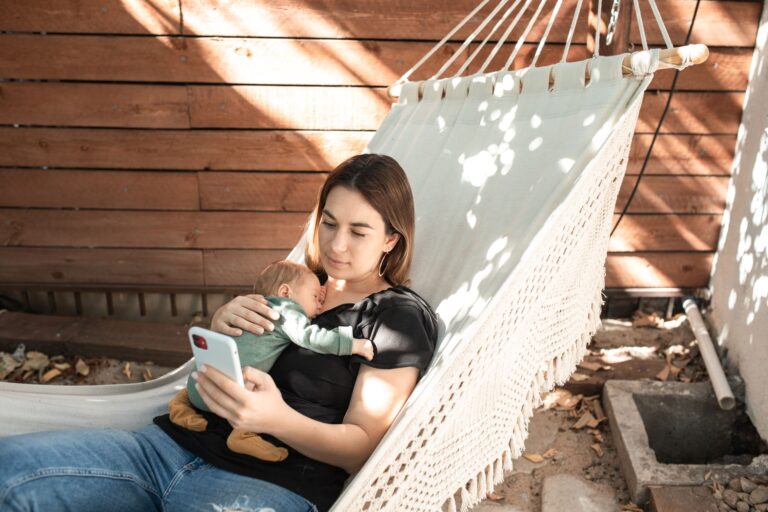
Babies begin reaching toward you around 6 to 9 months of age with an unmistakable gesture: lifted arms, open hands, and a clear signal aimed directly at you. Before that milestone, reaching develops through earlier physical stages—random arm movements appear around 3 months, followed by intentional grasping for objects by 4 to 5 months, and finally social reaching directed at caregivers. The journey from your newborn's reflexive hand movements to that first clear reach is a story of brain development, vision, and the building blocks of physical coordination. Understanding what to expect—and what each stage means—helps you recognize normal development and know when your pediatrician should take a look.
Table of Contents
- The Timeline: When Reaching Actually Starts
- The Role of Vision and Brain Development
- From Batting to Grasping: How Reaching Develops
- Reaching for Objects vs. Reaching for You
- Reaching as a Sign of Attachment and Social Development
- How to Encourage Reaching and Grasping
- When Reaching Develops Differently: Signs of Delay
- The Sensory and Motor Systems Behind Reaching
- Reaching Milestones Month by Month
- Talking to Your Pediatrician About Reaching Concerns
- Frequently Asked Questions
The Timeline: When Reaching Actually Starts
Around 3 to 4 months, babies begin moving their arms toward dangling toys and parents leaning over the crib, though these are still uncoordinated batting motions rather than purposeful reaches. These movements look intentional but are still quite imprecise because the connection between your baby's eyes, brain, and arms is still developing.
Your baby may swing wildly before making contact or miss entirely. By 4 to 6 months, intentional reaching and grasping develop more rapidly. Babies grasp objects with a raking hand motion—all fingers curling around together rather than thumb opposing the fingers—and bring almost anything within reach to their mouth as part of exploration.
Their accuracy improves as their brains process distance and depth more reliably. Around 6 to 7 months, babies begin lifting their arms in response when parents reach toward them, marking an early social reaching behavior. This arm-lifting is not yet the full "pick me up" signal but shows growing awareness of your movements and a desire to connect with you.
By 9 months, reaching for caregivers becomes unmistakable: lifted arms, open hands, and a clear signal aimed directly at you. At this age, the gesture is unambiguous and typically means your baby wants to be held, brought closer, or comforted. This is the milestone many parents recognize as "reaching for me." By 10 to 12 months, intentional arm-raising to request pickup is an expected milestone. Most babies have refined the gesture into a reliable communication tool that signals their needs and desires.
The Role of Vision and Brain Development
Reaching depends entirely on your baby's developing ability to see depth and judge distance accurately. A baby cannot successfully reach for an object she cannot see at the correct distance, so vision is the foundation for this skill. Without depth perception, reaching is impossible no matter how strong your baby's arms are. Binocular vision—using both eyes together to see depth—emerges around 3 to 4 months of age.
This is when your baby's brain begins to process information from both eyes in a way that creates a sense of 3D space, allowing her to understand where an object truly is in relation to her body. Stereopsis, or depth perception, becomes measurable at approximately 16 weeks (4 months) and rapidly refines, reaching remarkable precision by 21 weeks.
By 5 months, babies can judge distances with impressive accuracy, enabling them to grasp objects with intention rather than just flailing at them hopefully. This rapid refinement explains why reaching becomes noticeably more coordinated between 4 and 6 months. Before 3 months, your baby's visual system is still developing.
Newborns see in shades of gray and cannot track objects smoothly or understand that objects exist in 3D space. Their eyes are still learning to work together, which is why reaching is impossible at birth. Babies tested at 4 and 5 months reached more consistently for nearer objects when using both eyes than when seeing with only one eye, confirming that binocular vision is essential to reaching. This shows that reaching is not random—it requires the brain to process real spatial information from the eyes and translate it into arm movement.
From Batting to Grasping: How Reaching Develops
The first reaching movements are called batting motions: your baby swings her arm toward an object, often missing or barely making contact. These movements look purposeful to a parent but are still quite imprecise because the connection between your baby's eyes, brain, and arms is still developing.
The repetition is practice, and each attempt strengthens the neural pathways connecting vision to movement. Around 4 months, reaching becomes slightly more coordinated, though still clumsy. Your baby may bat at a toy multiple times before finally grasping it, and she may overshoot and hit the toy but not grab it. The progress between 3 and 4 months is noticeable: more hits, fewer misses, slightly better timing.
By 5 to 6 months, your baby develops a raking grasp, in which all the fingers curl around an object together. This grasp is less refined than the pincer grasp (thumb and one or two fingers) that comes later, but it is effective for holding larger toys and is entirely normal at this age. It shows that your baby now understands she can hold something intentionally.
Your baby also begins to bring everything within reach directly to her mouth. This is not a feeding behavior—it is a sensory exploration tool. Mouthing helps your baby learn about texture, temperature, and shape through the most sensitive parts of her body: her lips and tongue. As weeks pass, each grasp and reach refines further. Your baby's brain is literally mapping the distance from her eyes to her hand to the object, learning through thousands of repetitions where things actually are in space and how much force is needed to grasp them.
Reaching for Objects vs. Reaching for You
Reaching for a toy and reaching for a caregiver involve the same physical movements but represent different skills and stages of development. One is about grasping an object; the other is about seeking comfort and connection. Both develop on related but slightly different timelines. Object reaching—reaching toward toys, rattles, or other items—develops first and is largely about motor coordination and spatial awareness.
By 5 to 6 months, most babies reach consistently for toys they see, learning to judge distance and control their arms. This skill depends primarily on the motor and visual systems. Social reaching—lifting your arms toward a parent and expecting to be held—develops a few months later because it involves recognizing you as a specific person.
Your baby must understand that lifting her arms is a way to communicate, expect that you will respond by picking her up, and want to be near you specifically. This requires attachment and social awareness, not just motor skill. Around 7 to 8 months, babies become more discriminating about whom they reach for and who they allow to hold them.
This discrimination is a sign of healthy attachment and shows that your baby recognizes you as her primary caregiver. She may eagerly reach for you but be hesitant when a stranger leans in. By 9 months, social reaching is unmistakable and usually directed specifically at the caregivers your baby knows best. A baby who reaches for one parent but not another, or who reaches more readily for Mom than for a visiting aunt, is showing healthy attachment and preference.
Reaching as a Sign of Attachment and Social Development
Reaching for people is not just a physical milestone—it is a sign that your baby is forming secure attachments and recognizing herself as a social being. The behavior emerges alongside stranger anxiety, which typically appears around 10 to 12 months, and both reflect the same developmental change: your baby now sees the world as divided into familiar and unfamiliar people.
Before 6 months, your baby may smile at almost anyone or go to almost anyone who offers comfort. She does not yet distinguish strongly between strangers and loved ones. This is normal and does not mean she is not bonding with you—her brain simply has not yet developed the ability to compare and prefer. Around 6 to 7 months, selective reaching begins.
Your baby reaches more readily for you or a primary caregiver than for a stranger. This preference shows that your baby is learning to identify specific people as safe and worthy of trust. You may notice her reaching differently for you than for others. By 9 to 12 months, stranger anxiety often emerges alongside more selective reaching and holding behavior.
Your baby may cry when an unfamiliar person approaches, prefer to stay with you in new settings, and reach specifically for you when frightened. This anxiety is not rejection—it is a sign of healthy bonding. Reaching is therefore connected to emotional security. When your baby reaches for you, she is saying "you are my person, and I trust you to keep me safe." It is both a physical achievement and an emotional statement.
How to Encourage Reaching and Grasping
Encouraging reaching is straightforward: provide objects at the right distance and repeat the opportunity many times. Your baby learns to reach through practice, so the more she attempts it, the better she becomes. Here are concrete ways to support her development: Avoid leaving toys far out of reach or making reaching so difficult that your baby gives up. The goal is practice and improvement, not frustration.
- Place toys within reach but not so close that your baby cannot practice extending her arms. A toy just out of reach—about 8 to 12 inches away—encourages your baby to stretch and reach. Once she grasps it, praise the effort and let her explore.
- Vary the textures and weights of objects your baby reaches for. Lightweight toys are easier to grasp, while slightly heavier toys require more strength and control. This variety builds different aspects of coordination.
- Lean in close and hold your arms out when your baby is on a play mat or safe space. Make eye contact and encourage her to reach toward you. This practice builds the social reaching that leads to clear "pick me up" signals.
- Include tummy time, which is essential for reaching development. When your baby spends time on her belly (always supervised), she practices lifting her head and chest, which strengthens the arms and shoulders needed for reaching. Aim for several short sessions throughout the day.
- Respond quickly when your baby reaches for you. Picking her up, holding her, and giving her your attention reinforces the behavior and tells her that reaching is an effective way to communicate her needs.
When Reaching Develops Differently: Signs of Delay
If a baby is not reaching or grasping for objects by 6 months of age, pediatric consultation is recommended, as this may indicate a developmental delay requiring early intervention. Early intervention is most effective, so do not hesitate to ask your pediatrician for advice if your baby seems behind. A 6-month-old who does not reach at all—not even batting motions at toys—is not progressing typically.
This could reflect low muscle tone, vision problems, coordination issues, or other developmental concerns that benefit from early evaluation. The absence of any reaching movements is different from reaching that is simply less coordinated than expected. A baby who reaches with only one arm consistently and shows no movement on the other side may have an issue with one side of the body.
Though babies often use one hand preferentially by 6 to 8 months, one-sided reaching combined with no effort on the other side warrants attention from your pediatrician. Very low muscle tone (floppiness) or very high muscle tone (stiffness) can affect reaching development. If your baby's limbs feel unusually loose or rigid compared to other babies you know, mention this to your pediatrician.
These differences can slow or alter reaching development. Vision problems can delay reaching. If your baby does not seem to track objects with her eyes, does not follow your face as you move, or does not reach even when a toy is clearly visible and well-placed, a vision screening may be helpful. By 9 months, if your baby does not reach for caregivers at all and shows no social interest in you—no eye contact, no smile in response to your smile, no preference for you over strangers—ask your pediatrician for a developmental screening. Reaching development is one piece of overall social and motor development, so any concerns should be discussed as part of a larger picture.
The Sensory and Motor Systems Behind Reaching
Reaching requires the integration of multiple systems: vision, proprioception (body awareness), balance, and fine and gross motor control. Your baby's brain must see an object, know where her body is in space, maintain balance, and control her arm and hand muscles all at the same time. Each system develops on its own timeline, and reaching emerges when they finally work together.
Proprioception—your baby's sense of where her body is—develops alongside vision and movement. By 4 to 6 months, your baby is beginning to understand that her arm is part of her body and can be controlled to move toward an object. She is developing a mental map of her own body. Balance development in the first year affects reaching because your baby must maintain a stable posture in order to free her arms for reaching.
A baby who cannot sit up or is very wobbly at 6 months may have less opportunity to practice reaching safely. Postural stability comes first; reaching follows. The grasp reflex—present from birth—gradually transitions into voluntary grasping. At birth, your baby will automatically grasp anything that touches her palm. By 3 to 4 months, this reflex begins to fade, and your baby gains control over when to grasp and when to release.
This transition is necessary for reaching to develop into intentional grasping. Hand-eye coordination improves steadily from 3 months onward as the pathways between the eyes, brain, and hand muscles strengthen. This is why a 3-month-old's reach is so imprecise and a 9-month-old's is so accurate. Each week of practice refines this coordination. Muscle strength in the shoulders and arms must develop to support reaching.
Tummy time, reaching practice, and free play all contribute to this strength, which is why movement opportunities are critical in the first year. Without adequate strength, even a well-coordinated reach cannot succeed.
Reaching Milestones Month by Month
Here is a month-by-month reference for reaching development. Remember that healthy babies develop at slightly different rates, and variations within a range are normal. to 4 months: Your baby begins making non-random arm movements toward dangling objects and parents leaning over the crib, though these are still uncoordinated batting motions. to 6 months: Intentional reaching and grasping develop rapidly.
Your baby grasps objects with a raking hand motion and brings almost anything within reach to her mouth as part of exploration. to 7 months: Your baby begins lifting her arms in response to parents' reach, a precursor to clearer social reaching. Some babies also begin transferring objects from one hand to the other. to 9 months: Social reaching becomes more selective.
Your baby reaches more readily for familiar caregivers and may show early signs of stranger anxiety. Object reaching is now quite coordinated. months: Reaching for caregivers becomes unmistakable with lifted arms, open hands, and a clear "pick me up" signal aimed directly at you. months: The gesture reaches its clearest, most consistent form. Most babies at this age use reaching reliably to communicate.
months: Intentional arm-raising to request pickup is an expected milestone. Most babies have refined the gesture and use it consistently to communicate their needs for closeness, food, comfort, or play. Use these milestones as a reference, but recognize that a baby who reaches at 10 months instead of 9 may be entirely normal. A baby who shows no reaching movements at all by 6 months, however, warrants a conversation with your pediatrician.
Talking to Your Pediatrician About Reaching Concerns
If you are concerned about your baby's reaching development, your pediatrician can assess whether your baby is on track and whether any evaluation is needed. Bring specific observations rather than vague concerns, as these help your pediatrician understand what you have noticed. Instead of "I think she is behind," say something like: "My baby is 6 months old and does not seem to reach for toys even when I hold them in front of her" or "He reaches only with his left arm and does not move his right arm toward toys." Specific examples help your pediatrician identify patterns.
If your baby reached for objects at 5 months but has stopped reaching by 6 months, mention this immediately. Loss of a skill is more concerning than slower development and warrants prompt attention. It may indicate a change that needs evaluation. Bring up any other concerns alongside reaching: difficulty with vision, very low or very high muscle tone, feeding difficulties, lack of social interest, or asymmetrical movement.
Reaching does not develop in isolation, so your pediatrician will consider your baby's overall development. Early intervention services are free or low-cost in most states for babies under 3 with developmental concerns. If your pediatrician suspects a delay, ask about a referral to early intervention for a comprehensive developmental evaluation. Early identification leads to better outcomes.
Keep a simple note of milestones your baby reaches—when she started batting at toys, when she first grasped something intentionally, when she began lifting her arms for you. These notes help you track progress and give your pediatrician useful specific information at checkups. Remember that many variations in reaching development are normal, but early identification of genuine delays leads to better outcomes. Trust your instincts, trust your observations, and trust your pediatrician's expertise.
Frequently Asked Questions
What does it mean if my baby hasn't reached for me by 9 months?
If your baby is 9 months and not reaching for you yet, she may simply be progressing at her own pace, as development varies widely. However, if she is also not reaching for toys and shows no reaching movements at all, this is worth mentioning to your pediatrician. Most babies show some form of reaching (batting, grasping, or social reaching) by 7-8 months, so a complete absence of reaching is less common and warrants evaluation.
Is it normal for babies to reach with only one hand?
Around 6 to 8 months, babies often start to prefer one hand over the other, which is normal handedness developing. However, if your baby consistently reaches with only one arm and shows no movement or effort with the other arm, this should be mentioned to your pediatrician, as it could indicate a difference in strength or control on one side of the body.
How can I tell if my baby's reaching is delayed?
By 6 months, babies should reach for toys in front of them, even if clumsily. If your baby is 6 months or older and shows no reaching attempts, no batting motions, and no grasping, contact your pediatrician. Early intervention services can provide a free evaluation to rule out delays or confirm that your baby is developing typically.
Do babies reach for everything and everyone at first?
Around 6 to 7 months, babies begin to show preference for familiar caregivers when reaching and may be hesitant to go to strangers. By 9-12 months, this preference is clear and is tied to attachment and the early stages of stranger anxiety, which is a healthy sign of bonding with you.
What is the difference between a raking grasp and a pincer grasp?
A raking grasp (used around 4-6 months) involves all four fingers curling around an object together, like a rake. A pincer grasp (which develops later, around 8-9 months) uses the thumb and one or two fingers to grasp smaller objects with more precision. Both are normal at their appropriate ages and represent natural progression.
Should I worry if my baby mouths everything she reaches for?
No, mouthing is a normal sensory exploration tool that helps your baby learn about the world. It is how she explores texture, temperature, and shape using the most sensitive parts of her body. All toys your baby reaches for should be clean and free from choking hazards. Mouthing decreases as your baby gets older and learns other ways to explore.