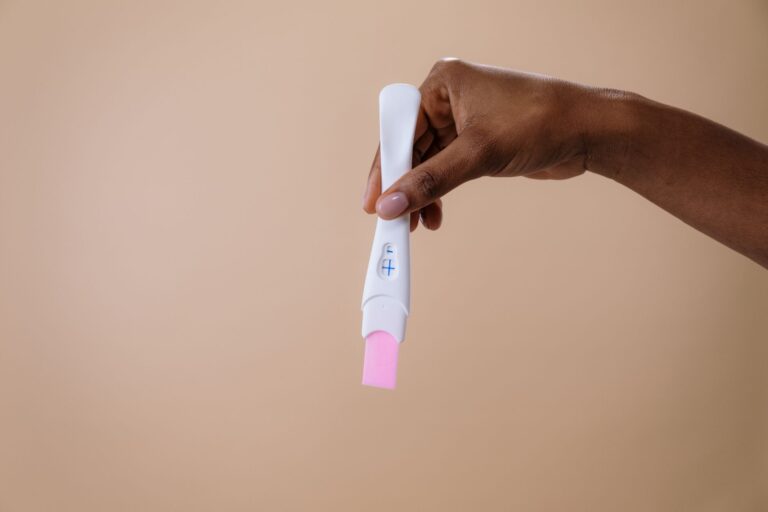
You can confirm pregnancy with a home urine test about 12 to 14 days after ovulation (when your period would be due), or with a blood test a few days earlier if your doctor orders one. A positive test detects the hormone hCG (human chorionic gonadotropin), which your body produces only during pregnancy, but timing, test type, and how much hCG is present all affect whether a test will show a clear answer.
Most people see a positive urine test by the first day of a missed period, though some may need to wait a few more days or test again to get a reliable result. A doctor's office can confirm the pregnancy with either a blood test or ultrasound, and your first prenatal appointment usually happens four to eight weeks after your last menstrual period. Understanding how these tests work, when they become accurate, and what to do when you get a result helps you move forward with confidence.
Table of Contents
- How Pregnancy Tests Detect Pregnancy
- Home Pregnancy Tests—Accuracy and When to Use Them
- Blood Tests and What the Numbers Mean
- Ultrasound and Visual Confirmation
- The Role of Implantation Timing
- False Negatives—Why Some Early Tests Fail
- False Positives—When a Test Shows Pregnant But May Not Mean What You Think
- Different Timelines for Irregular Cycles and Fertility Treatment
- Warning Signs After a Positive Test
- What to Do After You Get a Positive Test
- Frequently Asked Questions
How Pregnancy Tests Detect Pregnancy
Home pregnancy tests measure hCG in your urine, a hormone your body makes only when a fertilized egg implants in your uterus. Before implantation (which usually happens 6 to 12 days after ovulation), no hCG appears in your body, so a test will be negative. Once the embryo implants, your body begins making hCG, and the level rises steadily; it roughly doubles every two to three days in the first few weeks.
The test strip detects hCG molecules and changes color or displays "pregnant" when hCG is above a certain threshold. Different tests have different sensitivities—some can detect hCG at 10 to 25 mIU/mL (milliunits per milliliter), while others need 25 mIU/mL or higher. On the first day of your missed period, hCG is usually high enough that most standard tests catch it, but if you test too early, hCG may still be too low for your particular test to register.
Your hCG level peaks around 8 to 11 weeks of pregnancy and then gradually falls. This is normal and not a sign of miscarriage—it is simply the body's way of transitioning from early pregnancy support to support from the placenta. Doctors measure hCG in two ways: a qualitative test (yes or no, you are pregnant) and a quantitative test (a number showing exactly how much hCG is present).
The timing of ovulation matters more than the date on a calendar. If you have regular 28-day cycles, ovulation usually happens around day 14; if your cycles are shorter or longer, ovulation shifts. Testing a few days after a missed period gives the most reliable result, but many people want to test as early as possible.
Home Pregnancy Tests—Accuracy and When to Use Them
A home pregnancy test is about 95 to 99 percent accurate when used correctly on the first day of a missed period. "Correctly" means following the instructions exactly: collecting a fresh sample (ideally first morning urine), using the test before its expiration date, waiting the full recommended time, and reading the result within the window described.
First morning urine is most likely to give an accurate result because hCG is more concentrated overnight. If you test with dilute urine (later in the day or after drinking a lot of water), hCG may be too diluted to register even if you are pregnant. Drinking extra water to test sooner does not make the test more likely to work—it does the opposite.
If you test before your missed period, you are testing when hCG may still be below your test's detection threshold. many home tests advertise they can detect pregnancy a few days before a missed period, but accuracy is lower those early days. Testing on the day your period is due or a day or two after gives you the most reliable single result.
A positive test is almost always accurate. False positives (where a test shows pregnant but you are not) are very rare when you follow instructions correctly, though certain medications or medical conditions can cause them. A negative test can be false if you test too early, use dilute urine, or test with a test past its expiration date.
If you get a negative result but still think you might be pregnant, wait a few days and test again, preferably with first morning urine. Many people get a clearly positive result on a second test when the first one was too early or inconclusive. If you have a positive test, you do not usually need to retest—seeing your doctor is the next step.
Blood Tests and What the Numbers Mean
Your doctor can order a blood test to detect hCG before a home test would show a positive result, sometimes as early as 6 to 8 days after ovulation. Blood tests are more sensitive than urine tests because they measure hCG directly in your bloodstream rather than detecting it in diluted urine. Two types of blood tests exist: qualitative (which simply says yes or no, you have hCG) and quantitative (which gives an exact number).
A quantitative hCG test (also called beta hCG) gives you the actual number, measured in mIU/mL. At around the time of a missed period, hCG might be anywhere from 50 to 400 mIU/mL depending on exactly how far along you are; there is wide variation and any number in this range can be normal for early pregnancy.
The specific number matters less than the pattern: hCG should roughly double every two to three days in the first four weeks after a positive test. Some doctors order two beta hCG tests a few days apart to confirm the hCG is rising appropriately. A slower rise or a falling hCG can sometimes indicate a miscarriage, ectopic pregnancy (pregnancy outside the uterus), or other complications, though a single test cannot tell you this—the trend over time does.
If your hCG is not rising as expected, your doctor may order an ultrasound to see what is happening. Blood tests are useful if you have irregular cycles and are not sure when your period is due, if you are using fertility treatment and your doctor wants precise information, or if you have already had one positive test and your doctor wants to confirm the pregnancy is progressing normally.
Insurance sometimes covers them; sometimes they cost extra. Asking your doctor when a blood test is necessary helps you understand what information you actually need at this stage.
Ultrasound and Visual Confirmation
An ultrasound is the first time your doctor can actually see the pregnancy inside your uterus rather than just measuring a hormone. Ultrasounds happen at different points for different reasons, and the timeline depends on your specific situation and your clinic's protocol. Typically, a dating ultrasound (to confirm how far along you are) happens between 8 and 14 weeks, though some doctors do an earlier ultrasound around 6 to 8 weeks.
A transvaginal ultrasound (where the probe goes inside the vagina) can see a pregnancy as early as 4.5 to 5 weeks from the first day of your last period—earlier than a regular abdominal ultrasound. At this point, you usually see a gestational sac (a fluid-filled space) but not yet a heartbeat. Seeing the gestational sac inside the uterus confirms the pregnancy is not ectopic, which is important information if you had concerning symptoms.
By 6 to 7 weeks from your last period, an ultrasound typically shows a fetal pole (the earliest visible embryo) and often a heartbeat. The heartbeat can sometimes be detected on transvaginal ultrasound by 6 weeks and almost always by 7 weeks. Hearing or seeing a heartbeat can be very reassuring, but the absence of a heartbeat at 6 weeks does not mean there is a problem—dates can be off, or the pregnancy may not yet be far enough along.
At 10 to 14 weeks, a dating ultrasound is much clearer and can measure the fetus to estimate the due date. This is also when early anatomy screening can begin, though detailed anatomy scans happen later (typically around 18 to 22 weeks). Your doctor uses the ultrasound findings plus your hCG numbers plus your dates to piece together a clear picture of your pregnancy's status and timeline.
If your hCG is very high but an ultrasound does not show what is expected for how far along you are, it could mean your dates are off, you are carrying multiples (which you cannot know until the ultrasound), or something else is happening. Follow-up ultrasounds and tests help clarify what is really going on.
The Role of Implantation Timing
Implantation—when the fertilized egg burrows into the uterine lining and hCG production begins—is the critical moment for pregnancy confirmation. Implantation usually happens 6 to 12 days after ovulation, which means there is a window of time when hCG first appears in your body. This timing varies from person to person, and even in the same person it can vary from cycle to cycle.
If you ovulate on a predictable day 14 in a regular 28-day cycle, implantation might happen between days 20 and 26 of your cycle. A home test taken on the first day of your missed period (day 29) would likely detect hCG by then. But if implantation happens later, it might take until day 30 or 31 to see a positive test—which means you would need to wait a few extra days past your missed period for an accurate result.
The only way to know your exact ovulation date is with fertility tracking methods (like ovulation predictor kits or precise temperature tracking), which most people do not use. Without that, you can only estimate: your period is due about 12 to 16 days after ovulation for most people, depending on how long the second half of your cycle lasts.
Testing around the time of your missed period or a day or two after is the practical approach. Some people have shorter luteal phases (the time after ovulation before the period) or later implantation, which is why their first test might be negative even though they are pregnant. This is completely normal variation and not a sign of a problem. If you get a negative test but your period does not arrive, testing again a few days later usually gives you an answer.
False Negatives—Why Some Early Tests Fail
A false negative happens when you test while you are actually pregnant but the test shows negative. This is usually a timing issue: you tested before hCG was high enough for your test to detect. Testing several days before a missed period is the main reason false negatives happen, even with "early detection" tests, because hCG may genuinely still be low.
Dilute urine also causes false negatives. If you drink a large glass of water and immediately test, hCG gets diluted enough that it may not reach your test's detection threshold. Using first morning urine (concentrated) or not over-hydrating before testing helps avoid this. Waiting until your period is actually due or a day or two late makes a missed-period test much more reliable than an early test.
Using an expired test or storing a test in a place that is too hot or humid can reduce its sensitivity. Pregnancy tests should be stored at room temperature and kept dry. If you have tests that are a year or more old, they might not work as intended. Checking the expiration date before testing is a quick way to rule out this source of error.
Testing with very dilute urine (like late afternoon urine after a lot of drinking) can produce a false negative even if hCG is present in your body. The same hCG is there, but it is spread through more liquid, so the concentration is too low for the test to detect. This is another reason first morning urine is recommended.
If you get a negative test but your period does not come and you have symptoms like breast tenderness, nausea, or fatigue, retest in a few days rather than assuming you are not pregnant. Many people need a second or third test to get a clear positive, especially if they tested on the earlier side.
False Positives—When a Test Shows Pregnant But May Not Mean What You Think
True false positives (where you test positive but are not pregnant) are extremely rare with home pregnancy tests when used correctly. But certain situations can produce a positive test result that does not mean you are carrying a pregnancy that will continue. Understanding the difference helps you avoid confusion at the doctor's office. A pregnancy loss that happens very quickly after implantation and hCG production begins can leave hCG in your system for several days even though the pregnancy is no longer viable.
You might see a positive test, then start bleeding a few days later. This is sometimes called a chemical pregnancy—you had hCG in your system but the pregnancy did not survive past the earliest stage. Your doctor can distinguish this from a viable pregnancy by checking whether hCG is rising appropriately or falling. Rarely, certain medications (like some fertility treatments containing hCG) can produce a positive test because the medication itself contains hCG.
If you are in a fertility program, your doctor will advise you on when a real positive test (from your body, not the medication) would appear. Usually this is 10 to 14 days after an hCG injection. Molar pregnancy (a very rare condition where pregnancy tissue grows abnormally) can produce a positive test and very high hCG levels.
Your doctor would catch this with an ultrasound, which would show an abnormal pattern rather than a normal gestational sac and embryo. This is uncommon but worth mentioning because symptoms can seem like normal early pregnancy. Some medical conditions unrelated to pregnancy can cause very slightly elevated hCG in some people, though a clearly positive home test almost always means pregnancy. If you have a positive home test, see your doctor for confirmation rather than assuming the test is wrong.
Different Timelines for Irregular Cycles and Fertility Treatment
If your cycles are irregular or you use fertility treatment, confirming pregnancy works a little differently because dating is not based on a missed period. With irregular cycles, you may not know when to expect your period, so testing by date is not practical. Instead, doctors often order a blood test or ask you to test based on symptoms or ovulation timing if you have been tracking it.
If you used an ovulation predictor kit to identify ovulation, you can count forward about 12 to 16 days to estimate when your period is due, and test then. If you do not track ovulation, testing two weeks after intercourse is a rough estimate that gives you time for implantation to have occurred and hCG to have built up.
Many people with irregular cycles benefit from a blood test ordered by their doctor rather than relying on a home test. With fertility treatment like IVF, your clinic has precise dates for embryo transfer and will usually tell you exactly when to test. Embryos transferred at the blastocyst stage (around day 5 after retrieval) would be tested about 10 to 12 days after transfer.
Your clinic's specific instructions matter because they know your exact timeline. After an IVF trigger shot (an injection of hCG to prepare eggs for retrieval), you need to wait long enough for the injected hCG to leave your system before testing. This usually takes 7 to 10 days depending on the dose. Testing too soon after the injection produces a false positive from the medication rather than a true pregnancy. Your clinic will advise when it is safe to test.
Warning Signs After a Positive Test
After confirming you are pregnant, most early pregnancies progress normally, but certain symptoms warrant a call to your doctor. Severe abdominal pain (especially one-sided), heavy vaginal bleeding, dizziness or fainting, or shoulder pain can signal an ectopic pregnancy (where the embryo implants outside the uterus) or other complications that need immediate attention. Light vaginal bleeding or spotting in early pregnancy is fairly common and does not always mean miscarriage, but contact your doctor about any bleeding.
Some bleeding is normal (implantation spotting, or spotting from cervical irritation during a pelvic exam), but your doctor needs to know to rule out miscarriage or other issues. Do not assume bleeding always means something is wrong, but do get it checked. Severe nausea, vomiting, or abdominal swelling could indicate hyperemesis gravidarum (severe morning sickness) or ovarian hyperstimulation syndrome (if you used fertility treatment).
Both are manageable with your doctor's help but need to be addressed. Mild nausea and sensitivity to smells are normal, but inability to keep down any food or fluids needs medical attention. Sudden loss of pregnancy symptoms (like breast tenderness or nausea) can occasionally signal a miscarriage, but symptoms also fluctuate naturally in early pregnancy and sometimes simply subside without meaning anything is wrong. One day of less nausea is not a concern; a complete change over several days is worth mentioning to your doctor.
What to Do After You Get a Positive Test
Once you have a positive test, your next step is to make an appointment with your doctor or midwife to confirm the pregnancy and begin prenatal care. Most providers like to see you somewhere between four and eight weeks from your last menstrual period (or about two to three weeks after a positive test). An early ultrasound at this appointment confirms the pregnancy is in the uterus, not ectopic, and checks your due date.
Until your appointment, you do not need to do much, but a few practical steps help: starting a prenatal vitamin with folic acid if you are not already taking one, making a note of your last menstrual period date, and listing any medications or supplements you take so you can review them with your doctor. Avoid anything you would normally avoid in early pregnancy (undercooked meat, unpasteurized dairy, high-mercury fish, heavy lifting, or high-impact exercise), though most things you have already done during the first few weeks before a positive test do not pose a risk.
You may wonder whether to tell people right away or wait until after the first ultrasound. This is entirely a personal choice—some people feel comfortable sharing the news immediately, while others prefer to wait until they have seen the heartbeat or reached the second trimester. There is no rule, and both choices are completely reasonable.
Getting a due date is one of the first things your doctor will figure out, usually based on your last menstrual period or an ultrasound measurement. Due dates are estimates; babies are born within a few weeks before or after, and only about 5 percent arrive exactly on their due date. You will update your due date as your pregnancy progresses and you have more ultrasounds.
Frequently Asked Questions
Can I test positive before a missed period?
Yes, if the test is sensitive enough and hCG levels are high enough, but accuracy is lower. Testing a few days before a missed period may give a negative result even if you are pregnant, and retesting on or after your missed period gives a more reliable answer.
How often does hCG double in early pregnancy?
In the first few weeks after a positive test, hCG roughly doubles every two to three days. Your doctor looks at the pattern over time rather than a single number to assess whether pregnancy is progressing normally.
What does a blood test show that a home test does not?
A blood test can detect hCG several days earlier than a home urine test because the hormone concentrates in blood before showing up in urine. A quantitative blood test also gives you the exact hCG number, which helps track progression.
Is a negative test definitive if my period has not come?
No. If you test too early or with dilute urine, a negative test does not rule out pregnancy. Wait a few days and test again with first morning urine if your period does not arrive.
When would I need an ultrasound to confirm pregnancy?
An ultrasound is not always necessary right after a positive test but is usually done at your first prenatal appointment to date the pregnancy and confirm it is in the uterus, not ectopic.
Can medication affect a pregnancy test result?
Most medications do not affect home pregnancy tests, but fertility medications containing hCG can produce a false positive if taken shortly before testing. Your fertility doctor will advise when a real positive would appear.