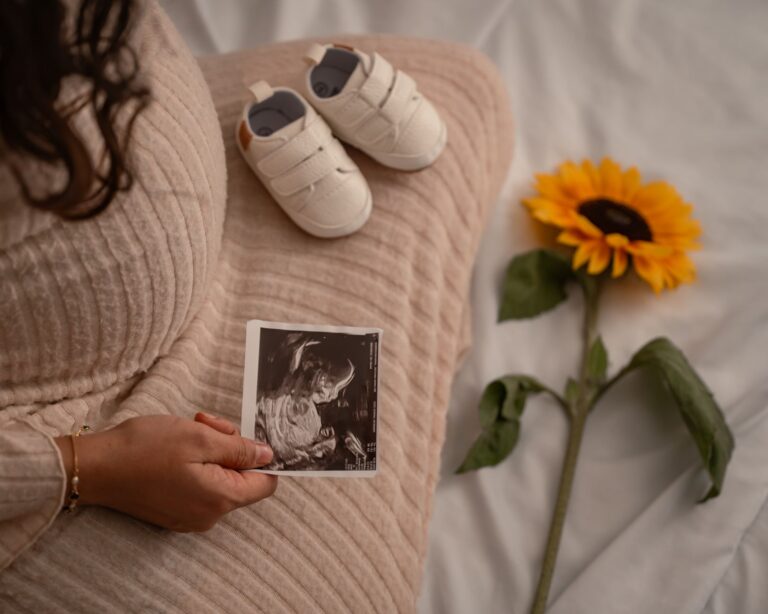
Baby drop, medically called lightening or engagement, happens when your baby descends lower into your pelvis in the final weeks of pregnancy. In first pregnancies, this typically occurs 2 to 4 weeks before labor begins; in subsequent pregnancies, it may happen closer to labor or even during active labor itself. The drop is a normal physical shift as your baby settles into position for birth. It is one of several late-pregnancy changes, though not every person experiences it as a noticeable event—some pregnancies progress smoothly toward labor without a distinct moment of drop, and that is normal too.
Table of Contents
- What Baby Drop Is and Why It Happens
- When Does Baby Drop Happen?
- Physical Changes You'll Notice When Baby Drops
- How to Tell If Your Baby Has Dropped
- Baby Drop and Labor: What's the Connection?
- Variations: Not All Babies Drop on Schedule
- Changes in Breathing, Digestion, and Comfort
- What If Your Baby Doesn't Drop?
- When to Tell Your Care Provider About Baby Drop
- Comfort and Positioning in the Final Weeks
- Frequently Asked Questions
What Baby Drop Is and Why It Happens
Baby drop is the downward movement of the baby's head (or presenting part) deeper into the mother's pelvis. The baby was already positioned low during pregnancy, but lightening refers to the distinctive shift deeper that many people notice during the final weeks. Your baby floats in amniotic fluid throughout most of pregnancy, held by uterine muscles and ligaments.
As your body approaches labor readiness, hormonal and biomechanical changes cause the baby to settle into a lower, more fixed position. Gravity and the tightening of Braxton-Hicks contractions gradually push the baby's head through the pelvic inlet. This shift serves a practical purpose: a lower position means the baby's head is better aligned with the pelvic canal for birth.
Once engaged this deeply, the baby cannot easily shift back out of the pelvis, which is why the drop is often a point of no return. The drop is not the same as dilation or effacement—those cervical changes that indicate readiness for labor. Baby drop can happen without cervical changes, and cervical changes can progress without a noticeable drop.
They are separate mechanisms, though they often happen near the same time in late pregnancy. First-time mothers tend to experience a more dramatic drop because their pelvic muscles and ligaments have not stretched before. Second and later pregnancies may show a more gradual descent because the pelvic structures are already looser and more accommodating.
Not all pregnancies look identical on ultrasound or feel the same to the person carrying. Babies of different sizes, presentations, and pelvic shapes all reach "dropped" positions in different ways and at different speeds.
When Does Baby Drop Happen?
Timing varies widely and depends on whether this is your first pregnancy, how your body is built, and your baby's position and size. There is no single moment that applies to everyone. In first pregnancies, baby drop typically occurs between week 36 and week 38, though it can happen anywhere from week 32 onward.
Some people notice it around week 34; others do not experience a clear drop until week 39 or even during labor itself. In second and later pregnancies, the timeline is less predictable. Because pelvic ligaments are already stretched, the baby may drop later—sometimes just days before labor—or may not drop noticeably at all before contractions begin.
Some second-time mothers have their babies engage weeks before labor, then settle more deeply as labor nears. The term "drop" suggests a sudden event, but most people experience it gradually over days or even weeks. You might notice small changes in how your belly sits, or the shift might feel abrupt over a single night.
Both patterns are common and normal. Babies who are breech (buttocks down instead of head down) will not drop in the same way because their buttocks engage first, not their head. Your care provider will discuss what engagement means for breech presentations specifically. Position matters: if your baby is posterior (facing forward instead of back), engagement may take longer or feel different.
Occiput anterior babies (facing your spine) typically engage more easily and may drop earlier. Timing also depends on your pelvis size and shape. A naturally wide pelvis may allow deeper engagement earlier; a narrower pelvis may require more adjustment, and engagement may be later or more gradual.
Physical Changes You'll Notice When Baby Drops
Many people describe a sudden feeling of relief in the upper abdomen and rib cage once the baby drops. The sensation is often compared to a weight lifting—literally, because your baby is no longer pressing quite so hard on your stomach, lungs, and lower ribs. Breathing becomes noticeably easier.
If you have felt short of breath in late pregnancy, that sensation often improves significantly after the drop. You can take fuller breaths, and the sense of being squished under your ribs eases considerably. Eating often becomes less of a struggle. Your stomach has more room, and heartburn may decrease because the baby is no longer compressing your digestive organs quite so much.
Some people find they can eat fuller meals again without feeling immediately full or uncomfortable. Your belly shape changes visibly in many cases. The mounded, high shape of late pregnancy may flatten or drop noticeably forward and lower. Some people say their bump looks "different" or "lower" after drop—sometimes so obviously that others notice without being told.
You may feel increased pressure in your lower abdomen, pelvis, and perineum once the baby has dropped. This is the counterpoint to the relief above: as pressure decreases on your ribs, it increases on your pelvic floor. Walking, sitting, and lying down may feel different. Pelvic pain or pressure can increase temporarily or become a new sensation entirely.
Ligaments and joints are stretching to accommodate the baby's new position, and that stretch can feel like an ache, a heaviness, or sharp twinges in the pubic bone, groin, or hip area. Urination frequency may increase dramatically. The baby's head is now lower and pressing more directly on your bladder, so the urge to urinate becomes more frequent and sometimes more urgent, especially at night.
How to Tell If Your Baby Has Dropped
The most reliable sign is how your belly looks and feels to you. If you can suddenly fit your hand between your ribs and your bust more easily, or if people comment that you "look different" or "dropped," those are common and accurate indicators. Your breathing improves noticeably. If you have struggled with shortness of breath in the third trimester, this clears up in many cases, often quite suddenly.
You notice you can fill your lungs more completely without gasping. You feel pressure lower—in your pelvis, pubic bone, or bladder area—that was not there before or has intensified recently. This lower pressure is a clear signal that the baby has shifted into a deeper position. Your care provider can check during an abdominal exam.
By feeling your abdomen, they can estimate how low the baby has dropped by locating where the baby's head sits relative to your rib cage and pelvis. This palpation gives them a good sense of engagement. A pelvic exam can confirm engagement more precisely. When you have a cervical check, your provider can feel how far into the pelvis the baby's head has descended.
The station system measures this: 0 is fully engaged at the pelvic inlet, negative numbers mean higher up, and positive numbers (up to +3) mean lower. Ultrasound can show engagement clearly, though most providers do not perform ultrasound late in pregnancy just to confirm drop—the clinical exam is usually sufficient. If you have an ultrasound for other reasons near term, the technician will note how engaged the baby is.
You might not feel certain whether your baby has dropped, and that is perfectly okay. Not every person experiences it as an obvious change, especially in second or later pregnancies. Your provider's assessment is more reliable than your own sense.
Baby Drop and Labor: What's the Connection?
Baby drop and labor onset are related but separate events. The drop prepares the baby for birth, but it does not guarantee that labor is imminent or will begin on any particular timeline. In first pregnancies, the drop often precedes labor by weeks. A baby that engages at week 36 may not go into labor until week 40 or beyond.
Many first-time mothers drop early and then experience a long wait before active labor begins. In second and later pregnancies, the drop is often a later sign, sometimes happening days before labor or even during labor itself. The closer the drop happens to labor, the shorter the wait often is—though exceptions are common. Some people go into labor without their baby having dropped at all, or with only shallow engagement.
Contractions can pull the baby deeper during early labor, and full engagement can happen as labor progresses. This is not failure or delay—it is normal variation. False labor (Braxton-Hicks contractions) can make you feel like labor is starting and often happens around the time of or shortly after baby drop. The two events are coincidental, not causal.
Braxton-Hicks contractions do not typically accelerate the drop or indicate actual labor timing. Being fully engaged does not mean labor will begin within days or even hours. Engagement is one factor; actual labor depends on hormones, cervical readiness, and other biological cues your body sends. Some people wait weeks after engagement for labor to start.
Your care provider will tell you what to expect based on your specific situation. They can explain whether the baby's position and engagement suggest labor is approaching or whether you may have longer to wait.
Variations: Not All Babies Drop on Schedule
Some babies never experience a noticeable drop. This is especially common in second and later pregnancies, where pelvic structures are already loose and the baby may settle gradually without a moment you recognize as "drop." Babies in occiput posterior position (sunny side up, facing forward) may engage more slowly or may not engage fully before labor starts.
These babies often rotate during labor, and full engagement can happen as contractions help position the baby correctly for birth. Large babies may drop more slowly because they take up more space and have less room to maneuver through the pelvis. Smaller babies may drop earlier and more noticeably because they fit more easily. Polyhydramnios (excess amniotic fluid) can prevent a clear drop because there is more fluid and more room for the baby to move.
The baby may be higher for longer or may engage only as labor begins and fluid is released through amniotic sac rupture. Placental position matters: a placenta on the front of the uterus (anterior) versus the back (posterior) can affect how the baby positions and engages during the final weeks. Maternal pelvic shape and size influence timing.
A naturally roomy pelvis may let the baby drop earlier; a narrow pelvis or a baby with a larger head may result in later or incomplete engagement. Twins and multiples often have one baby engage while the other stays higher. The lower twin may drop weeks before the higher one, or only one may engage if a planned cesarean is scheduled.
None of these variations means something is wrong. Your provider will track your baby's position and engagement and will let you know if anything requires attention or changes the birth plan.
Changes in Breathing, Digestion, and Comfort
Relief from shortness of breath is one of the most welcome changes after baby drop. You can take deeper breaths, climb stairs without gasping, and sleep in positions that felt suffocating before the drop. Improved appetite often follows. Your stomach feels less crowded, and eating full meals becomes easier. Nausea and early satiety (feeling full too quickly) often ease, though they may not disappear entirely by term.
Heartburn and reflux may improve because the baby is no longer compressing your stomach and esophagus quite so much. Some people find they can eat spicier or richer foods again or can lie down after eating without immediate discomfort. Lower abdominal pressure and pelvic pressure increase noticeably. The relief above comes with a new sensation below: heaviness, fullness, or aching in your lower belly and pelvic area.
This is normal and expected as the baby settles lower. Walking and sitting may feel different—sometimes more uncomfortable, sometimes easier depending on the baby's exact position. You might walk with a different gait or find that certain positions that were comfortable before now feel awkward or straining. Sleep position changes. Many people find that lying on their side becomes uncomfortable once the baby drops very low.
Propping up with pillows under the bump or between the knees helps redistribute the weight and ease pressure. Bladder pressure increases dramatically for most people. You may urinate every 15 to 30 minutes in some cases, especially at night. This is frustrating but normal and temporary—it typically eases significantly after birth.
What If Your Baby Doesn't Drop?
Some pregnancies progress toward due date without a clear drop or full engagement, and this does not automatically mean something is wrong or requires intervention before your due date arrives. If your baby remains high as your due date approaches, your care provider will likely do palpation (feeling your abdomen) and possibly a cervical exam to confirm the baby's position and explain what they feel.
They may order an ultrasound to measure amniotic fluid, confirm the baby's size, and verify the baby's position and presentation before planning the next steps. Failure to engage can be caused by several factors: a large baby in a smaller pelvis (cephalopelvic disproportion or CPD), a baby in a posterior or transverse position, excess amniotic fluid, or variations in umbilical cord length.
Your provider will investigate if engagement is not happening as expected. If full engagement does not happen by your due date or shortly after, induction of labor or planned cesarean birth may be discussed. Your provider will explain your options based on your individual situation and what they find on examination. High station (the baby remaining higher in the pelvis) at term is an indicator for closer monitoring and may influence decisions about induction timing or method of birth.
Your provider will outline what to watch for and when to follow up. Babies can engage during labor itself, and that is medically normal and happens regularly. Strong contractions can pull the baby deeper into the pelvis, and this deepening often happens in early or active labor without any issue.
When to Tell Your Care Provider About Baby Drop
Mention baby drop or lightening at your regular prenatal appointments, especially if you notice it happen over a short time frame. Your provider will want to know and will assess the baby's position and engagement during your exam. If you notice significant shortness of breath suddenly returning, new pelvic pain, or intense pressure that feels concerning, contact your provider to rule out complications.
Most of these changes are normal, but your provider needs to evaluate your individual situation. Vaginal bleeding, heavy vaginal discharge, or fluid leakage after a noticeable drop should be reported right away. The amniotic sac may have ruptured (your water may have broken), and this needs evaluation urgently. If you feel the baby has "dropped" but you also have severe pain, contractions that do not ease with movement or position changes, or fever, contact your care provider or go to the hospital immediately.
These combinations can indicate complications that need attention. Persistent pelvic pain after drop that limits walking or causes severe discomfort should be mentioned at your next appointment. Pelvic girdle pain or symphysis pubis dysfunction (SPD) can worsen in late pregnancy, and your provider can suggest management strategies. If you have not noticed any drop by week 39 or 40 in a first pregnancy, or your provider says the baby is not engaging as expected, bring this up during your visit.
Your provider will investigate and advise you on what to expect next. During labor, mention any changes you notice—pressure differences, new pain, or the sense that something has shifted. Your care provider will assess your progress and the baby's descent through the pelvis. Report anything that feels wrong or different from what you expected. Your intuition matters; you know your body best and are the expert on what feels normal for you.
Comfort and Positioning in the Final Weeks
Once your baby has dropped, certain positions may feel better or worse than they did earlier in pregnancy. Many people find that walking helps ease discomfort; others find that a reclining position takes pressure off the pelvis. Pelvic floor stretches and gentle hip opens can ease discomfort significantly. Squats (supported by a partner or a sturdy chair), child's pose, and side-lying position often feel better than standing or sitting unsupported for long periods.
A maternity support belt or bump band worn lower over the pelvis can help distribute the baby's weight and take some pressure off your pelvic floor and ligaments. Some people find this makes a noticeable difference in comfort during the day and night. Kegel exercises (pelvic floor muscle contractions) should be balanced with pelvic floor relaxation work.
Overly tight pelvic floor muscles can increase pain and may complicate labor, so working on relaxation—breathing into the pelvic floor and consciously softening—is equally important. Ice packs, heating pads, and warm baths can ease aching and pressure. The specific temperature that feels best is individual; try both and see what your body prefers during this stage.
Sleeping on your side with a pillow between your knees and under your bump takes pressure off your lower back and pelvis. Many people sleep better this way once the baby has dropped low and the belly position shifts. Frequent position changes during the day help manage discomfort. Sitting for long periods becomes more uncomfortable once the baby has dropped low; moving, walking, and changing your position every 20 to 30 minutes feels noticeably better. Most physical discomfort eases significantly once labor begins, when movement, breathing, and position changes become tools for managing contractions and working with your body's progress.
Frequently Asked Questions
Can baby drop happen and then re-engage higher?
No. Once the baby has fully engaged and dropped into the pelvis, it cannot move back out. The baby's head remains in that lower position through labor and birth. Some babies experience gradual engagement rather than a dramatic drop, so you might not feel a single "moment," but the downward trend continues.
Does baby drop mean labor will start within days?
Not necessarily. In first pregnancies, the drop often happens 2 to 4 weeks before labor begins, and you can have a fully engaged baby and still wait weeks. In later pregnancies, the timeline is less predictable—labor might start soon after, or you might wait much longer.
Can you tell if your baby has dropped without a doctor's exam?
You can notice changes—easier breathing, different belly shape, lower pressure—but a care provider's exam is the most reliable way to confirm engagement. During a pelvic exam, they can feel the baby's head and measure how far it has descended using the station system.
Does baby drop happen with every pregnancy?
Most pregnancies include some degree of baby drop or engagement, but not every person experiences it as a noticeable event. In later pregnancies especially, the drop can be so gradual that you do not feel a clear moment of change. Some babies engage fully during labor rather than before it.
What if baby drop causes severe pain?
Some pelvic aching and pressure after drop is normal, but severe pain that prevents walking or does not ease with position changes should be reported to your care provider. Pelvic girdle pain or symphysis pubis dysfunction can worsen in late pregnancy and may benefit from physical therapy or other support.
Is there anything you can do to encourage your baby to drop?
Certain positions—walking, squatting, hands-and-knees positioning—may encourage engagement, and pelvic floor relaxation can help. But the timing and depth of the drop are controlled by your body's readiness and your baby's position and size. It will happen when your body is ready.