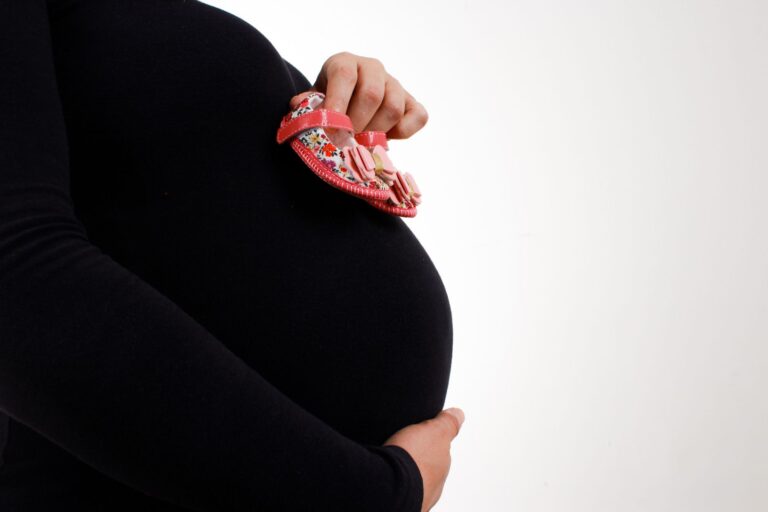
Contact napping—when a baby falls asleep only while being held or against your body and wakes if put down—is a normal developmental phase, not a habit to break. It happens because newborns and young infants find security and physical regulation through close contact, and their ability to sleep independently develops gradually over months.
If you're exhausted from holding a sleeping baby for hours, that's a real problem for your own rest and functioning. Gradual transitions work better than forcing independence, and the process depends on your baby's age, temperament, and readiness signals rather than a rigid timeline. Most babies make this shift on their own between 6 and 12 months, though some take longer and others never have a strong contact-napping phase at all.
Table of Contents
- Why Babies Fall Asleep Only When Held
- When Contact Napping Becomes a Strain
- Gradual Transitions Work Better Than Forcing
- Creating the Right Environment
- Timing and Readiness Matter More Than Age
- Partner and Family Support During Transitions
- Managing Your Own Rest and Wellbeing
- Common Pitfalls in Transition Attempts
- Contact Sleeping in Toddlers and Beyond
- Knowing When to Seek Professional Guidance
- Frequently Asked Questions
Why Babies Fall Asleep Only When Held
Newborns and young infants sleep better in contact because your body provides regulation they cannot yet manage alone. Your warmth, heartbeat, breathing rhythm, and movement help their nervous system settle. Physical contact also triggers release of hormones that promote sleep and calm, so a baby sleeping against you is not being spoiled—your presence is a biological sleep aid.
The first months of life involve significant adjustment from the womb, where babies were contained, fed continuously, and rocked by movement. Your arms recreate some of that environment. Babies also lack the ability to self-soothe and do not yet understand object permanence (that you still exist even when they cannot see you), so separation creates genuine distress, not obstinacy.
Contact napping peaks in intensity around 3 to 6 months for many babies, though every baby is different. Some infants show interest in independent sleep earlier; others remain contact sleepers well into toddlerhood. Temperament plays a significant role—alert, sensitive babies or those with higher sensory needs often show stronger contact-napping patterns. during the newborn period especially, contact sleep is not a habit to discourage.
Babies this age need frequent feeding, parents need to watch for breathing and color changes, and the contact itself supports bonding and breastfeeding success. Viewing contact sleep as a problem too early creates unnecessary pressure during a phase when rest in any form is the real goal. Sleep deprivation is real for parents in the contact-napping stage, but the solution is support and strategic resting, not forced separation before your baby is ready. A partner holding the baby while you shower, a friend bringing meals, or sleeping when your baby sleeps (even at odd hours) preserves your wellbeing while this phase runs its natural course.
- —
When Contact Napping Becomes a Strain
If your baby naps only in your arms and you have other children to care for, elder relatives to support, or your own health needs, contact napping genuinely affects your ability to function. That is a legitimate reason to work on transitions—not because independent sleep is inherently "better," but because your wellbeing matters.
Parental burnout is not weakness; it is a sign that your current arrangement is not sustainable. If you are resentful, exhausted, unable to eat regular meals, or missing sleep entirely because naps cannot happen except in your arms, that is a flag to make changes gradually. Burned-out parents are less patient and more stressed, which affects the whole family.
Some babies are naturally better independent sleepers from early on, while others remain contact sleepers longer. This is temperament, not parenting failure. Some families also make a deliberate choice to continue contact napping because it works for their situation. There is no single right age to transition, and there is no moral failure in deciding the current arrangement is unsustainable.
Contact napping also changes over time. A baby who napped independently at 5 months may regress during teething, illness, developmental leaps, or schedule changes around 7 to 9 months. These regressions are normal, not setbacks, and do not mean all prior progress is lost—it usually returns fairly quickly once the disruptive event passes. If your baby is healthy, gaining weight, and meeting developmental milestones, contact napping alone is not a medical concern.
The only reason to address it is parental wellbeing and family functioning. Pediatricians support parents in making changes when needed, not in forcing them before families are ready.
- —
Gradual Transitions Work Better Than Forcing
Starting to practice independent napping before your baby is ready usually backfires—your baby becomes more distressed, you become more frustrated, and both of you end up back in the contact-napping pattern anyway, often with added anxiety on both sides. Watch for readiness signs around 4 to 6 months: your baby staying awake for 60 to 90 minutes (not sleeping every 30 to 45 minutes), showing interest in objects and the environment while drowsy, or going down drowsy but awake in your arms sometimes without needing to be fully asleep first.
These are signals that your baby's nervous system is gaining capacity for independent sleep. One gradual approach: Once your baby is deeply asleep in your arms, wait five to ten minutes before attempting to put them down. If they stay down, leave them. If they startle and wake, pick them back up, let them fully fall back asleep, and try again later.
This teaches your baby's body that sleep can happen both in arms and in a crib, without the shock of a sudden transition. Another option: Hold your baby through the drowsy phase and the initial descent into deeper sleep (usually 15 to 20 minutes), then transfer once they are in a deeper stage (less likely to startle).
This takes patience but builds the skill gradually. Some parents use a contact nap on the couch, then slide themselves out from under the baby once asleep, leaving the baby on the couch (if safe) or moving to a crib once transfer is feasible. Consistency matters more than speed. If one caregiver is working on transitions and another continues unrestricted contact napping, your baby learns that effort will be rewarded if they fuss enough. Partners or caregivers need to be aligned on the approach and realistic about how long gradual shifts take—usually several weeks to months, not days.
- —
Creating the Right Environment
A sleep space that is comfortable and predictable helps babies make the transition. Temperature matters significantly: your body is warm, and a cool crib can trigger startle reflexes and wakefulness. Using a sleep sack rated for your room temperature, or prewarming a crib sheet with a hot water bottle (removed before baby is placed) can reduce the shock of transfer.
White noise mimics the womb's constant sound and masks household noises that might wake a light sleeper. A simple white noise machine or app at a consistent volume helps some babies sleep more deeply and stay asleep through transfers. Experiment with volume—loud enough to mask but not loud enough to startle. Positioning during the transfer matters too.
If you rock your baby to sleep, they associate that motion with sleep onset. Gradually reducing motion (rocking more slowly, then swaying, then just standing still) helps them learn to fall asleep without it. Some parents sit quietly with their baby instead of rocking, or transition to side-by-side contact where the baby is on a surface next to them rather than in their arms.
Room-sharing without bed-sharing (your baby in a bassinet or crib next to your bed) offers a middle ground. Your presence is still available, and you can respond quickly to hunger or distress, but your baby learns to sleep on their own surface. This can reduce the urgency of transfer during naps. Scent can also support the transition: wearing the same shirt or blanket during contact naps, then placing it in the crib or beside your baby, provides a familiar smell that may ease separation slightly.
- —
Timing and Readiness Matter More Than Age
There is no magic age when independent napping suddenly works. A 5-month-old ready for change will respond faster than an 8-month-old who is not, so watching your individual baby is more useful than following an age-based timeline. Avoid starting transitions during obvious high-stress periods: major schedule changes, new caregiving situations, teething, illness, or developmental leaps.
If your baby is in a clingy phase, working through it with patience often resolves it faster than pushing for independence before the baby is ready. Babies cycle through clingy and independent phases as part of normal development. Nap timing within the day also matters. Many babies transition best to independent sleep during their longest, most predictable nap—often the first nap after waking in the morning, when they are most tired and less reactive.
Trying to implement changes during a baby's already-short afternoon cat nap is fighting biology. Establish a simple, consistent nap routine even if it currently includes contact sleep. A reliable sequence (diaper change, feeding, white noise on, into arms for drowsy holding) signals to your baby that sleep is coming. Once the routine is predictable, you can gradually shift which parts are done in contact and which are not.
Some babies respond well to a very gradual distancing approach: sitting with your baby while they sleep in a crib, then sitting slightly farther away each day, until eventually you can read or rest in the room without contact. This keeps your presence available while building independence.
- —
Partner and Family Support During Transitions
Contact napping often affects one primary caregiver more than others—usually the nursing parent if breastfeeding, or the parent spending most time with the baby. Division of contact-napping responsibilities can preserve one caregiver's wellbeing while spreading the demand. Partners can take specific naps: one parent handles the morning nap while the other is free to shower, eat, or rest; the other parent manages the afternoon nap.
This shares the load and gives each parent a predictable window for personal needs. It also helps the baby learn that sleep can happen with different people and in different situations. Some babies respond differently to different caregivers—perhaps sleeping independently more readily with one parent than the other. This is not favoritism or rejection; babies often vary their behavior based on who they are with and what they expect from that person.
Both patterns are normal, and the variation can actually be useful during transitions. If your baby is in part-time care (grandparent, sitter, nursery), they may already nap independently there because the caregiver's expectations and environment are different. This proves your baby can do it, even if they do not currently do it with you. It also means caregivers are not undermining your efforts—your baby simply adapts differently in different contexts.
Extended family or friends sometimes have opinions about contact napping or "spoiling" babies through contact. Your baby's wellbeing and your own rest matter more than judgment from others. You do not need to defend gradual approaches or justify the current arrangement to people who are not managing the day-to-day reality.
- —
Managing Your Own Rest and Wellbeing
Sleep deprivation from contact napping is real, and it is not solved by "just resting when baby rests" if you have other children, household responsibilities, or cannot sleep easily when you are worried about holding a baby safely. Protect at least one nap per day by shifting it to a partner or caregiver, or by planning a time when you can hand off the baby once they are asleep.
You need actual rest, not just time sitting still. If sleep is difficult, resting quietly with your eyes closed in a dark room or sitting outside for fresh air also recharges depleted nervous systems. If you are experiencing rage, resentment, depression, or panic related to sleep deprivation and contact napping, these are signs that your situation is not sustainable right now.
Reaching out to your provider, a therapist, or a postpartum support hotline is not overreacting—it is appropriate care when parenting demands are outpacing your capacity. Feeding (yourself, not the baby) matters tremendously. Malnutrition and dehydration make every parenting challenge feel worse and make your nervous system less able to regulate. Keeping water and shelf-stable snacks within reach at all times, and asking others to bring you meals, is not picky—it is essential.
Some parents find that accepting contact napping for a limited, defined time ("I will contact nap during the first week of month; other times we practice independent sleep") makes the arrangement feel more manageable. Knowing there is an end point or a rhythm to it reduces the sense of being trapped indefinitely.
- —
Common Pitfalls in Transition Attempts
The most common mistake is starting transitions too early and too aggressively, then becoming more frustrated when the baby resists. Babies are not being stubborn—they genuinely lack the neurological readiness, and pushing usually makes them cling harder and sleep worse overall. Another pitfall is inconsistency: working on independent napping sometimes but reverting to contact sleep when tired or stressed.
Babies need several weeks of consistent practice to build new sleep skills, and inconsistent attempts teach them that if they resist enough, things will go back to the familiar way. Creating new problematic associations during transitions is also common. If you start contact napping and then add rocking, singing, or other new soothing tools, you have replaced one habit with multiple ones.
Simpler is often better: maintain what is already working (your presence, maybe white noise) and just adjust the location or body position. Some parents get caught in the trap of a "failed" transfer: baby wakes when put down, parent picks up immediately every single time. If you are always transferring when baby is only lightly asleep or at a vulnerable point in the sleep cycle, the baby learns that waking will bring you back.
Waiting for deeper sleep, or waiting longer before the first transfer attempt, often means fewer interrupted transfers overall. Comparing your situation to other families or online posts often creates unnecessary pressure. Some babies truly contact nap much longer; others never do much at all. The wide range of normal is real, and your baby's pattern is not a reflection of your parenting.
- —
Contact Sleeping in Toddlers and Beyond
Contact sleeping naturally evolves in the toddler years. Many toddlers still prefer a parent nearby and may want to fall asleep in your lap or holding your hand, even if they nap in their own bed. This is different from contact napping and usually does not interfere with independent sleep itself. If your toddler continues to contact nap into the 18-month to 2-year range, the same gradual principles apply.
Toddlers are often more mobile and may not stay still in your arms, so some families find that the contact-napping phase naturally resolves as the toddler becomes more active and less interested in prolonged stillness. Some toddlers seek contact before sleep but not during it—falling asleep while holding your hand or sitting beside you, then sleeping independently.
This is a healthy middle ground and requires less of you while maintaining connection. This is also more typical than continuing to be pinned under a sleeping toddler. For older toddlers or preschoolers who still prefer contact sleep or extended cuddling before sleep, assess whether it is genuinely interfering with family functioning or just different from what peers do.
A 3-year-old who naps independently 90 percent of the time but wants a cuddle before sleep is not a crisis. A 4-year-old who cannot nap without an adult present is worth addressing if it is causing problems. Regression into contact sleeping during stress, illness, or big transitions (new sibling, starting school) is expected. Return to old comforts during disruption is normal and usually temporary. Reintroducing independence once the stressor passes is usually faster than the initial transition was.
- —
Knowing When to Seek Professional Guidance
If your baby is sleeping only in contact at ages when some independent napping is developmentally typical (past 6 months, and your baby shows readiness signs) and your own wellbeing is suffering, a pediatric sleep consultant or your pediatrician can help you plan a realistic transition strategy tailored to your baby's temperament and your family's situation. Not every family needs professional help—many work through contact napping transitions independently through trial and error.
But if you are stuck, exhausted, or your approaches consistently backfire, an expert can provide specific strategies and support accountability through the process. Your pediatrician should be involved if you suspect medical factors: chronic ear infections, reflux, or allergies that make your baby uncomfortable lying flat; developmental delays that affect sleep skills; or anxiety symptoms that go beyond normal infant stranger awareness.
These conditions require different approaches than standard transition strategies. A pediatrician is also the right person if your baby is not meeting other developmental milestones, if sleep deprivation is affecting your mental health significantly, or if you are unsure whether your baby's contact-napping pattern is typical for their age. These conversations are within standard pediatric care and do not require specialist referral unless your doctor recommends it.
Trust your own judgment about what is sustainable. You are not failing if contact napping is not working for your family. You are also not failing if you decide to continue it because your family functions better that way. The right answer is the one that keeps both baby and parents reasonably rested and functioning.
- —
Frequently Asked Questions
Is it bad to let my baby nap only in my arms?
No. Contact napping is a normal developmental phase and provides real benefits—security, regulation, and physical bonding—especially in the early months. It becomes a problem only if it is harming your own rest or functioning. There is no moral failure in letting it continue while it works, and no moral victory in forcing independence early.
At what age should babies be able to nap independently?
There is no set age. Babies gradually develop the ability to self-soothe and sleep independently between 3 and 12 months, with huge individual variation based on temperament and development. Some babies show readiness at 4 months; others do not until 9 months or later. Watching for readiness signs (staying awake longer, showing interest in surroundings, going drowsy-but-awake sometimes) is more useful than an age target.
My baby sleeps independently at daycare but only in contact naps with me. Why?
Babies adapt behavior to different people and environments. Daycare providers have different expectations and routines, and your baby has learned different patterns there. Your baby is not rejecting you or proving they "can" do independent sleep—they are just behaving differently in a different context. This actually proves capability and can help you feel more confident attempting transitions at home.
How long does it take to transition from contact to independent napping?
It typically takes several weeks to a few months with consistent, gradual practice. Rushing usually prolongs the process because it creates anxiety for both you and your baby. Expecting change within days or even a few weeks often leads to frustration and abandoning the approach, so slower and steadier approaches often work faster overall.
What is the best age to stop contact napping?
When your family is ready—not before. If contact napping works and everyone is sleeping adequately, there is no deadline. If it is unsustainable for you, any age past 4 to 6 months (when some readiness signs typically appear) is reasonable to start gradual transitions. The "best" age is when your baby shows readiness and your wellbeing is suffering enough that change is necessary.
Should I use sleep training methods like cry-it-out to fix contact napping?
Forced sleep training usually makes contact napping worse initially and does not address why contact napping happens (your baby's genuine need for regulation and presence). Gradual, responsive approaches respect your baby's developmental needs and tend to work better. Cry-it-out methods are not wrong, but they are one option among many, not the default.