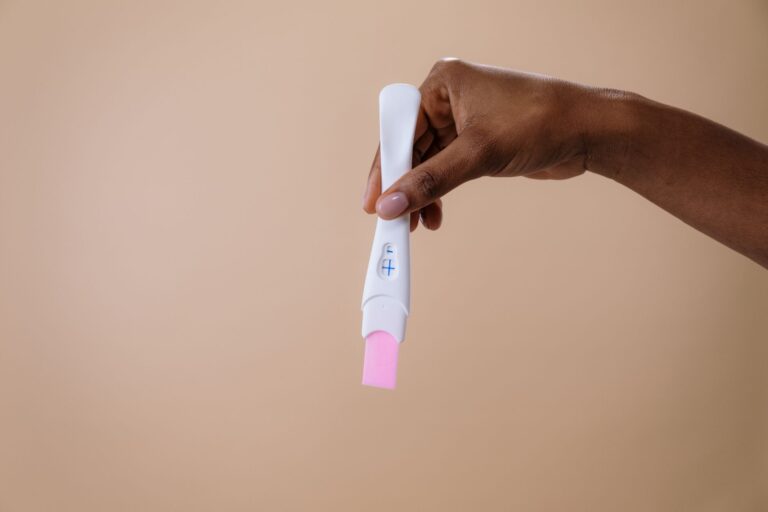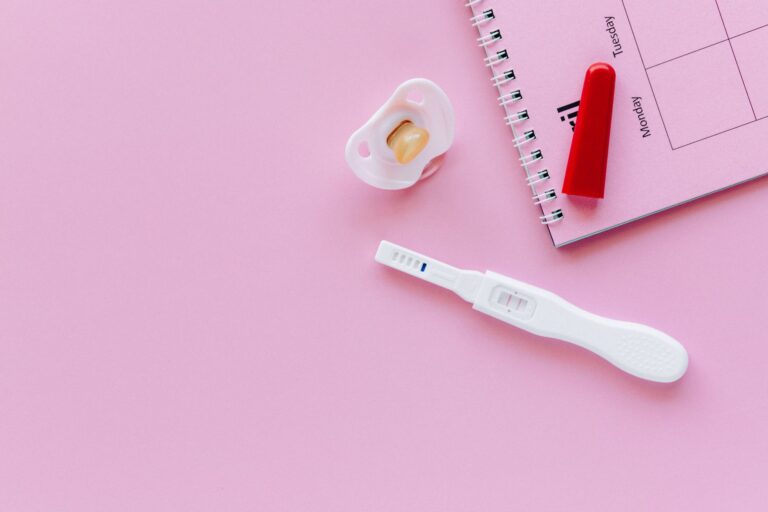
Yes, you can get pregnant during your period, though it's less likely than at other times in your cycle. Pregnancy during menstruation is possible because sperm can survive in your reproductive tract for up to five days, and ovulation timing varies more than many people realize—especially in shorter cycles or when cycles are irregular. Whether you're using contraception or trying to conceive, understanding how your cycle actually works helps you make decisions that fit your situation. This article explains why period-sex pregnancy is possible, how likely it really is, and what changes your actual risk.
Table of Contents
- How Your Menstrual Cycle Works
- Why You Can Get Pregnant During Your Period
- How Likely Is Pregnancy During Menstruation
- Shorter Cycles and Higher Pregnancy Risk
- Spotting and Unusual Bleeding During Your Cycle
- Birth Control and Period Sex
- Early Pregnancy Signs and When to Test
- When to See a Healthcare Provider
- Trying to Conceive During Your Cycle
- Making Your Decision About Period Sex
- Frequently Asked Questions
How Your Menstrual Cycle Works
your menstrual cycle runs about 28 days on average, but normal ranges from 21 to 35 days. The cycle has four phases: menstruation (days 1–5, when the uterine lining sheds), the follicular phase (building toward ovulation), ovulation (the release of an egg, typically around day 14), and the luteal phase (after ovulation, when pregnancy either happens or the cycle resets).
Ovulation is the only time you can become pregnant—your ovary releases an egg that travels down the fallopian tube. If sperm meets that egg within about 12 to 24 hours, fertilization can occur. The egg then travels to your uterus and implants in the uterine lining. Individual timing varies widely. A 21-day cycle means ovulation happens earlier than in a 28-day cycle.
A 35-day cycle means it happens later. Even your own cycles shift: stress, illness, exercise, diet changes, and weight shifts all affect ovulation timing. Tracking your cycle by counting days alone misses this variation. Some people ovulate early or late in their cycle; some have multiple surges; some cycles skip ovulation entirely.
No calendar method predicts your actual ovulation with certainty. Hormones drive the cycle, not a fixed schedule. Follicle-stimulating hormone (FSH) rises to recruit an egg; luteinizing hormone (LH) surges to trigger ovulation. These hormones shift based on your body's readiness, not a date.
Why You Can Get Pregnant During Your Period
Sperm lives longer than the bleeding phase lasts. Sperm can survive in cervical mucus, the uterus, and fallopian tubes for up to five days—sometimes longer in the right conditions. Menstruation typically lasts three to seven days, but often the bleeding is heaviest and the cervix is most closed during days one and two. If you have sex on the last days of your period, sperm can still be alive when you ovulate days later—even if you ovulate earlier than "expected." Early ovulation is real: some people ovulate on day seven, eight, or nine of a 28-day cycle, not day 14.
That means ovulation can happen while you're still bleeding or just after it stops. Shorter cycles compress this risk. If your cycle is 21 to 23 days, ovulation might arrive on day 9 or 10. If you have sex on day 5 of your period, sperm from that day can wait for an egg that arrives in four or five more days—well within its lifespan.
Irregular cycles make the risk harder to predict. If your cycles vary from 21 to 35 days, you cannot reliably know when ovulation will arrive. A cycle that was 30 days last month might be 26 days this month, shifting your fertile window by days. Over time, someone with an irregular cycle faces a longer window of genuine fertility risk.
Hormonal shifts can also cause unexpected bleeding. Breakthrough bleeding on hormonal contraception, implantation bleeding early in pregnancy, or mid-cycle spotting can look like a period but have a different cause. If you think you're having your period but the bleeding is unusual, the timing could still allow pregnancy.
How Likely Is Pregnancy During Menstruation
Pregnancy during your period is uncommon but not rare. The risk depends entirely on your cycle length, your ovulation timing, and whether you use contraception. For people with regular 28-day cycles and predictable ovulation, the risk during heavy bleeding days is low. For people with shorter cycles or irregular timing, the risk is much higher.
No two bodies follow the same pattern. One study of ovulation timing showed that among people with "regular" cycles (defined as 28 days), ovulation still occurred between day 8 and day 20. That's a twelve-day spread. For cycles longer or shorter than 28 days, the spread is even wider. The fertile window—the days when pregnancy is possible—typically spans five days before ovulation and one day after.
If your cycle is shorter or you ovulate early, that window shifts closer to your period. If your cycle is longer or you ovulate late, the window is safely in the middle of your cycle, away from menstruation. Without tracking tools, you're guessing about your actual ovulation date. Calendar apps that predict ovulation based on cycle length alone are not reliable, especially if your cycles vary.
Apps that track cervical mucus changes, basal body temperature, or use ovulation predictor kits are more accurate but still not foolproof. Contraception changes the equation entirely. If you use hormonal birth control correctly, condoms consistently, or an IUD, pregnancy during menstruation becomes extremely unlikely—but "extremely unlikely" is not impossible. No method is 100 percent effective.
Shorter Cycles and Higher Pregnancy Risk
If your cycle is 21 to 24 days, pregnancy during your period is genuinely more likely. Ovulation in a 21-day cycle happens around day 7 or 8. Menstruation often lasts five to seven days. Sperm from day 5 or 6 of your period can survive until day 7 or 8 when ovulation occurs. This timing matters if you do not use contraception or if you rely on the calendar rhythm method.
The rhythm method (predicting safe days by cycle length) fails most often in people with shorter cycles because the fertile window overlaps with the bleeding phase. Irregular cycles add unpredictability. If your cycles vary between 21 and 35 days, you cannot predict ovulation. In a month when your cycle is shorter, ovulation might arrive during menstruation.
In a month when it is longer, ovulation might be safely in the middle, away from bleeding. Cycle length often changes over time. In your teens and twenties, cycles are more likely to be irregular and shorter. In your thirties, cycles often become more regular and predictable. After 40, cycles begin to shorten and become less predictable again as hormone levels shift toward perimenopause.
Tracking your own cycle over several months shows you your actual pattern. Note the length of each cycle (day 1 of bleeding to day 1 of the next bleeding), the days ovulation happens if you can detect it (using ovulation kits or observing cervical mucus), and any unusual bleeding or spotting. That real data is far more useful than a calendar prediction.
Spotting and Unusual Bleeding During Your Cycle
Not all vaginal bleeding is your period. Breakthrough bleeding on hormonal contraception can look like a light period but arrive at unexpected times. Implantation bleeding—light spotting about 6 to 12 days after ovulation and fertilization—can be mistaken for an early period. Mid-cycle spotting from the hormonal shift during ovulation is also possible. If you have bleeding that looks different from your usual period—lighter, shorter, different color, or at an unusual time—the actual cause might not be menstruation.
You could be ovulating, implanting an embryo, or experiencing a side effect of a contraceptive method. Implantation bleeding is often lighter and shorter than a period. It might be pink or brown rather than red, and it typically stops quickly. If you had unprotected sex, any unusual bleeding in the two weeks after could indicate pregnancy rather than your period.
Breakthrough bleeding on the pill, patch, ring, or shot can confuse the timeline. Some hormonal methods thin the uterine lining or prevent it from building up fully, so bleeding is lighter or skipped entirely. If you bleed when you expect your period but you are also having unprotected sex, you cannot assume the bleeding means you are not pregnant.
If you are unsure whether bleeding is your period or something else, a pregnancy test answers the question definitively. Home pregnancy tests detect the hormone hCG, which appears in blood and urine after implantation. A test taken five to six days after ovulation (about seven to twelve days after unprotected sex) is usually accurate.
Birth Control and Period Sex
If you use condoms, they work the same way during your period as any other time—when used correctly and consistently. A condom prevents sperm from reaching the egg whether you are bleeding or not. If a condom breaks, slips, or is not used, pregnancy risk exists during your period just as it does at any other time.
Hormonal birth control (the pill, patch, ring, or shot) prevents ovulation when taken correctly. If you take the pill every day at the same time, ovulation does not happen, and pregnancy cannot occur—not even during your period. But if you miss pills, start late, or have vomiting or diarrhea that affects absorption, the protection drops.
Hormonal methods also thin the uterine lining and thicken cervical mucus, both of which reduce pregnancy risk. But ovulation is the main mechanism: no ovulation means no egg to fertilize. When that protection fails, period sex carries the same pregnancy risk as any unprotected sex. Copper IUDs (like the Paragard) prevent pregnancy by creating an environment sperm cannot navigate and by preventing implantation.
They work the same way during your period, during ovulation, or any other time. Pregnancy risk with an IUD used correctly is extremely low. Hormonal IUDs (like Mirena, Kyleena, or Skyla) release small amounts of progestin that prevent ovulation and thicken cervical mucus. They work continuously, during your period and otherwise. When used correctly, pregnancy risk is extremely low.
If you use any method imperfectly—missing pills, inconsistent condom use, an IUD that has shifted—your actual protection drops. Pregnancy during menstruation then depends on whether ovulation happens while sperm is alive, the same as for anyone not using contraception.
Early Pregnancy Signs and When to Test
Pregnancy symptoms can appear before a missed period, but they are not reliable guides. Breast tenderness, nausea, fatigue, and mood changes all happen in early pregnancy and also happen before your period. You cannot know which one is causing them without a test. A home pregnancy test is the fastest way to know. Tests detect hCG (human chorionic gonadotropin), a hormone produced after a fertilized egg implants in the uterus.
hCG appears in urine and blood about 6 to 8 days after ovulation, which is about 8 to 14 days after unprotected sex. Testing too early gives a false negative—the test says not pregnant when you are. If you test before hCG has built up to detectable levels, the result is inaccurate. Testing on the day of a missed period or later is most reliable.
Some sensitive tests can detect pregnancy a few days before a missed period, but accuracy improves with time. A positive test is usually accurate. False positives—tests that say pregnant when you are not—are rare. If a test is positive, a second test or a doctor's blood test confirms it. A blood test measures hCG levels precisely and can detect pregnancy earlier than a home test.
If you had unprotected sex during your period and want to know if you are pregnant, wait until at least the day your next period would be due. That gives hCG the most time to build up. If you cannot wait that long, know that testing earlier means you might need to test again days later to get an accurate answer.
When to See a Healthcare Provider
If you think you might be pregnant, contact a healthcare provider for confirmation and early prenatal care. Prenatal care in the first weeks of pregnancy helps identify any issues early and lets you make informed decisions about your pregnancy. If you are using a birth control method and believe it failed—a condom broke, you missed pills, or you had other concerns—tell your provider as soon as possible.
They can discuss emergency contraception (the morning-after pill) if it has been less than three to five days since unprotected sex. Emergency contraception is most effective when taken as soon as possible after intercourse. If you have irregular periods and you are not sure when your period is due, a healthcare provider can help you figure out your actual cycle.
A blood test, ultrasound, or hormonal testing can clarify your ovulation pattern and help you understand your actual fertility window. If you are on hormonal contraception and experiencing unusual bleeding, tell your provider. Breakthrough bleeding can have different causes—missed pills, drug interactions, or other health issues. Your provider can assess whether the bleeding suggests a problem with your method or something else.
If you want to prevent pregnancy and are not currently using a method that works for you, a provider can discuss options. Long-acting methods like IUDs and implants have lower failure rates than pills or condoms when used over time, because they do not require you to remember to use them correctly every time.
Trying to Conceive During Your Cycle
If you want to get pregnant, having sex during your period is not an efficient strategy, even though it is technically possible. Pregnancy is most likely when sex happens during the five days before ovulation or on the day of ovulation itself. During menstruation, ovulation is usually still days away. Tracking your cycle helps you time sex around your fertile window.
The fertile window is the five days before ovulation plus the day of ovulation—six days total, but it varies by person. For someone with a 28-day cycle and consistent ovulation on day 14, the fertile window is typically days 9 through 14. Ovulation predictor kits detect the LH surge that happens the day before or morning of ovulation.
Using one tells you when ovulation is about to happen so you can time intercourse to the most fertile days. For the most accurate prediction, test starting a few days before you expect ovulation. Cervical mucus changes also signal fertility. As ovulation approaches, cervical mucus becomes clear, stretchy, and slippery—like egg white. This is the most fertile mucus.
After ovulation, mucus becomes thick and cloudy again. Learning to recognize these changes helps you identify your fertile window. Basal body temperature (BBT) rises after ovulation, confirming that ovulation has happened. Taking your temperature first thing every morning and charting it shows the shift. But BBT tracking works best for confirming ovulation after the fact, not predicting it in advance.
Having sex regularly—two to three times a week throughout your cycle—is often the simplest approach if you are trying to conceive. That way, sperm is present whenever you ovulate, without requiring precise tracking. This works well if you are having regular, predictable cycles.
Making Your Decision About Period Sex
Whether period sex is right for you depends on whether you want to prevent pregnancy or are open to conceiving. If preventing pregnancy is your goal and you are not using a reliable method, period sex carries the same pregnancy risk as sex at any other time. If you use a reliable method correctly, period sex is no riskier than sex at any other time.
Condoms, birth control pills, IUDs, and other methods work during your period if you use them consistently and correctly. Some people prefer to avoid period sex because of comfort, flow, or other practical reasons. That is a valid choice. Other people are comfortable with it. Neither choice is wrong; it depends on what works for you and your partner.
If you do have period sex and do not want to become pregnant, use the same contraception you would use any other time. If you are not using contraception and you do not want to conceive, understand that pregnancy is possible. Emergency contraception can reduce that risk if used within three to five days of intercourse.
If you have questions about your cycle, your contraception, or pregnancy risk, a healthcare provider can give you answers specific to your body and your situation. They can also discuss all available options for pregnancy prevention or conception, so you can make choices that fit your goals.
Frequently Asked Questions
Can you get pregnant on the first day of your period?
Yes, though it's less likely than on later days. If you ovulate early in your cycle, sperm from day one could still be alive when the egg is released. Shorter or irregular cycles increase this risk.
What's the actual percentage chance of getting pregnant during your period?
The risk varies widely based on your cycle length and ovulation timing. For people with regular 28-day cycles, it's lower during heavy bleeding days. For shorter cycles (under 24 days) or irregular cycles, the risk is much higher. Your individual pattern matters more than any single number.
Does period bleeding mean you're definitely not pregnant?
Not always. Implantation bleeding early in pregnancy can look like a light period. Breakthrough bleeding on hormonal contraception can also occur. A pregnancy test gives you a definitive answer, not the appearance of bleeding.
If I'm on the pill, can I get pregnant during my period?
If you take the pill correctly every day, you don't ovulate and pregnancy cannot occur during your period or any other time. But missed pills, vomiting, diarrhea, or drug interactions reduce protection. If you miss pills and have unprotected sex, pregnancy risk exists.
How long can sperm survive inside my body?
Sperm can survive in cervical mucus, the uterus, and fallopian tubes for up to five days and sometimes longer in the right conditions. This is why period sex can result in pregnancy if ovulation happens in the days following intercourse.
If I use condoms during my period, am I protected?
Yes, condoms prevent pregnancy the same way during your period as at any other time—when used correctly and consistently from start to finish. If a condom breaks or slips off, pregnancy risk exists just as it would during any unprotected sex.